
Home EV Charging Installation in Oahu
Quick Summary:
Home EV Charging Installation in Oahu, Done Right the First Time
What’s Covered on This Page
- What Oahu Homeowners Need to Know Before Installing an EV Charger
- How True Power Electrical Services Handles Home EV Charging Installation in Oahu
- Choosing the Right Charger Setup for Your Oahu Home
- Electrical Panel Requirements for EV Charger Installation in Oahu
- Permits and Inspections Required for EV Charger Installation in Oahu
- Do I need a permit to install a home EV charger on Oahu?
- Will my current electrical panel support a Level 2 EV charger?
- Can I install an EV charger if I have a carport instead of a garage?
- How long does a home EV charger installation take?
- What’s the difference between a Level 1 and Level 2 home EV charger?
- Do older Oahu homes need extra work before an EV charger can be installed?
Need home ev charging installation?
Schedule Electrical Service. Call True Power Electrical Services now.
What Oahu Homeowners Need to Know Before Installing an EV Charger
Your car charges fine at a public station. But you’re tired of waiting in line at Kapolei Commons or driving out of your way just to top off. That’s the moment most folks on Oahu start thinking about charging at home.
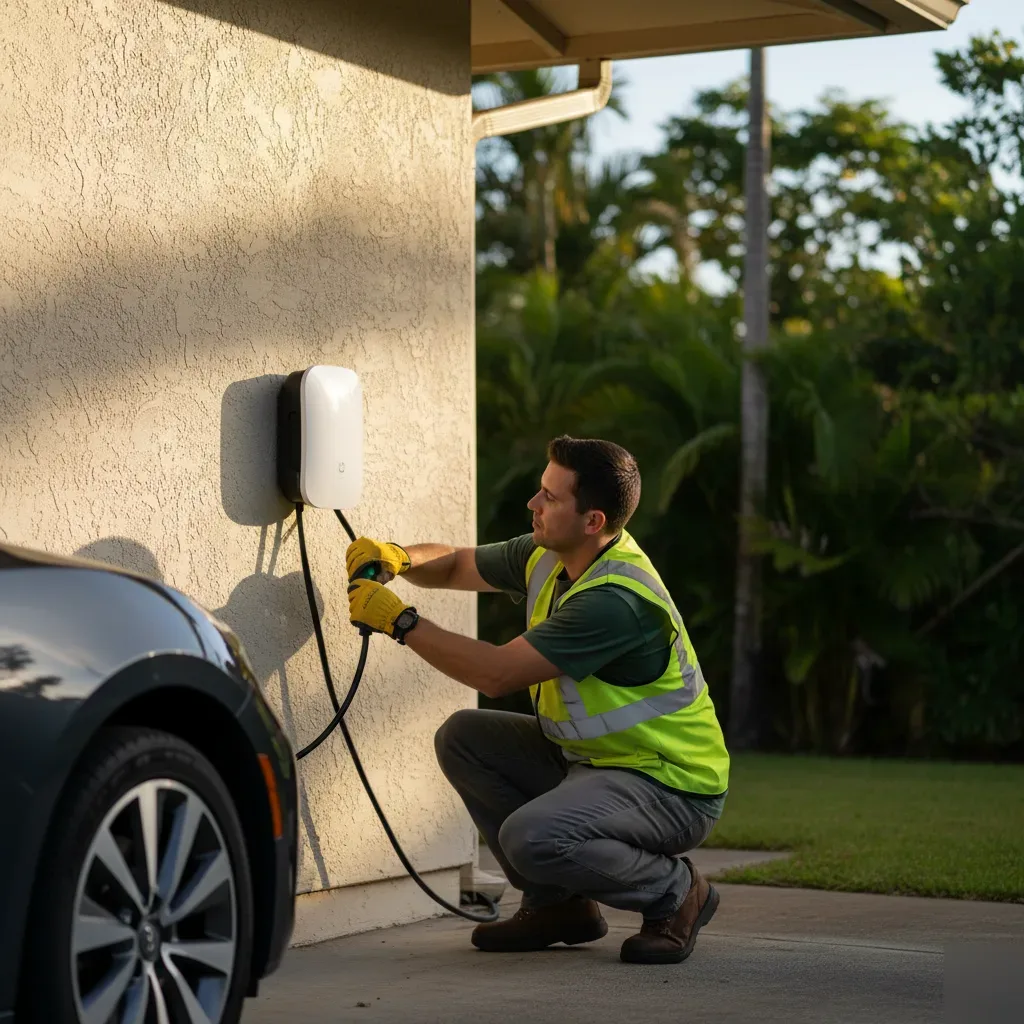
Here’s the thing. Not every house is ready for a Level 2 charger right out of the box. Most homes here were built decades before EVs existed, and the electrical panels reflect that. We see this every single week. A homeowner calls excited about their new EV, and we find a 100-amp panel that’s already working hard just to keep the AC and water heater running. Adding a 40-amp or 50-amp circuit on top of that? It won’t work without an upgrade first.
So before anything gets installed, you need a proper electrical assessment. Our team looks at your panel capacity, the distance from the panel to your garage or carport, and the condition of your existing wiring. Older homes in neighborhoods like Kailua or Manoa often have aluminum wiring or outdated breaker boxes that need attention before we can safely add a dedicated EV circuit.
Permits matter too. Honolulu’s Department of Planning and Permitting requires electrical permits for EV charger installations. Skipping that step isn’t just risky. It can create real problems if you ever sell your home or file an insurance claim. We handle the permit process so you don’t have to chase paperwork.
One thing people don’t always consider is where the charger goes. Got a detached garage? That’s a longer wire run, which affects the project scope. Parking under a carport instead of inside a garage? We’ll need a NEMA-rated outdoor enclosure to handle Oahu’s salt air and humidity. According to the U.S. Department of Energy, a Level 2 home charger can fully recharge most EVs overnight, giving you a full battery every morning without any public station hassle.
The bottom line is simple. A little planning up front saves you from headaches later. And as licensed electricians who do this work across Oahu every day, we’ll tell you exactly what your home needs before a single wire gets touched.
How True Power Electrical Services Handles Home EV Charging Installation in Oahu
Every home on Oahu is different. That’s not a slogan. It’s the first thing we think about when you call us. our EV charger installation services on Oahu our EV charger installation services on Oahu
We start with a thorough electrical assessment at your property. Our licensed electricians check your existing panel capacity, the distance from the panel to your preferred charging location, and the condition of your current wiring. A lot of homes in Kailua and Hawaii Kai were built decades ago. Their panels weren’t designed for the load an EV charger demands. So we figure that out before anything else. Nine times out of ten, that initial assessment saves homeowners from surprises down the road.
Once what your electrical system can handle, we map out the best route for your dedicated circuit. This means a 240-volt line run from your panel to your garage, carport, or driveway area. Some homes need a panel upgrade first. Others are ready to go. We’ll tell you exactly where you stand and walk you through every step before we pick up a single tool.
Then comes the actual install. Our team handles all the wiring, mounts the charging unit where you want it, and makes sure every connection meets Hawaii’s electrical code requirements. We pull the necessary permits through Honolulu’s Department of Planning and Permitting. You don’t have to chase paperwork or wonder if something was done right. We see homeowners every week who tried a handyman approach first and ended up with tripped breakers or undersized wiring. That’s exactly what we’re here to prevent.
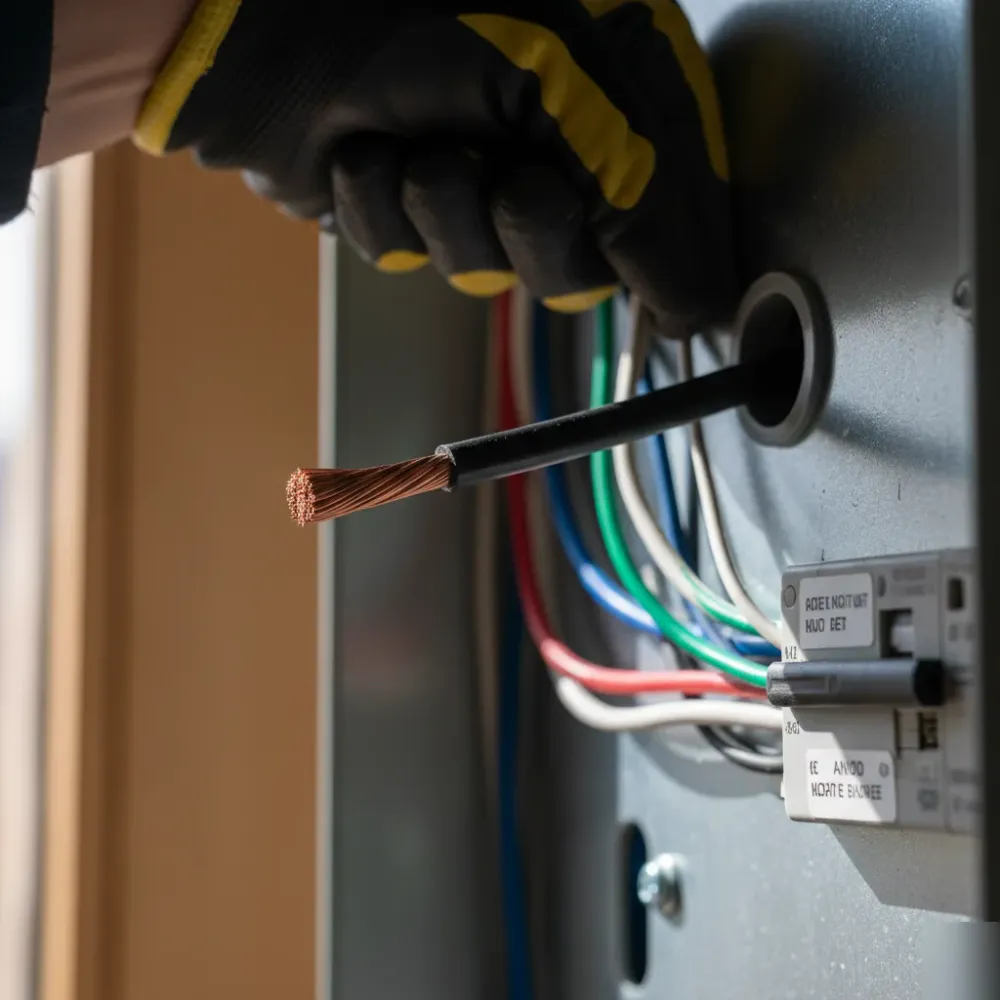
After everything’s connected, we test the full circuit under load. We verify the charger communicates properly with your vehicle. And we walk you through how to use it, because a good install means nothing if you’re not comfortable with the equipment. You can also visit our EV charger installation services on Oahu to see the full scope of what we offer.
Want to skip the guesswork? Give us a call and we’ll get your assessment scheduled.
Choosing the Right Charger Setup for Your Oahu Home
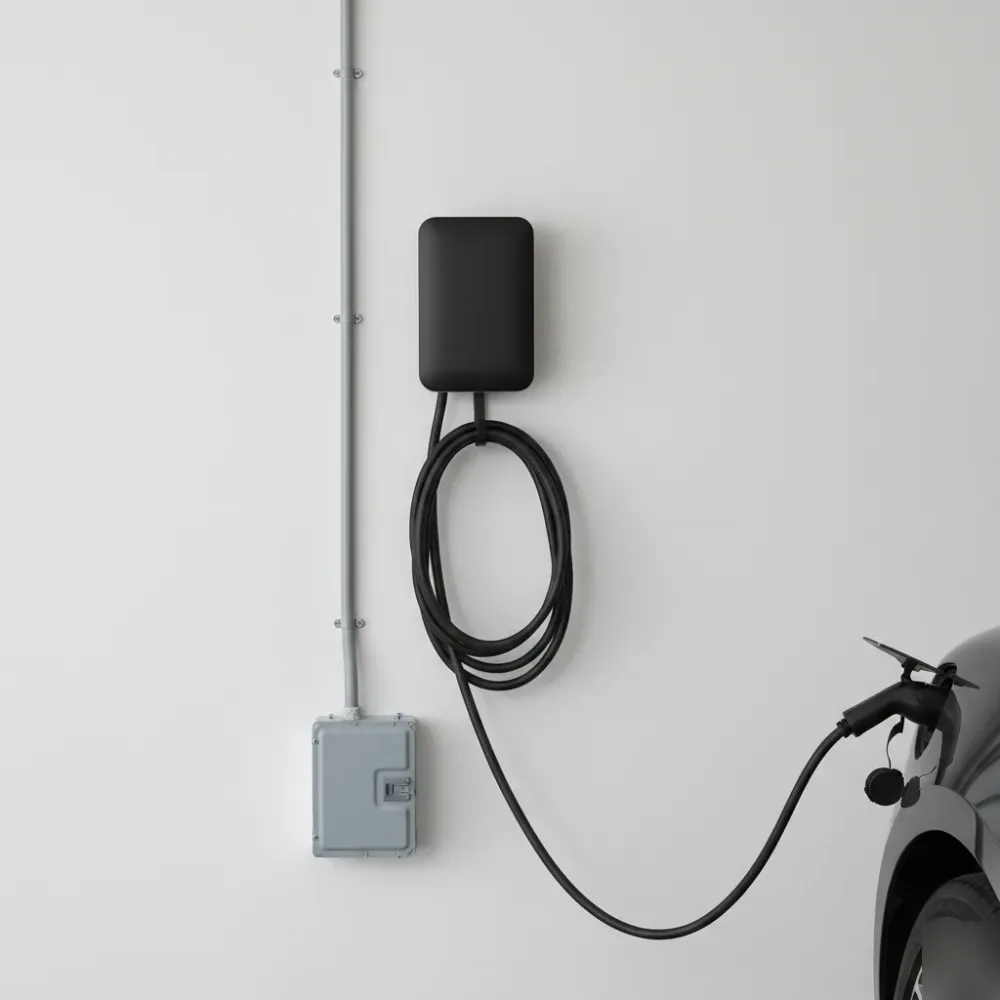
Most folks who call us already know they want a Level 2 charger. Smart move. The standard cord that comes with your EV plugs into a regular outlet, and it’ll barely add 4 miles of range per hour. That’s fine if you drive five minutes to the store and back. But if you’re commuting from Kailua to downtown Honolulu every day, you need something faster.
A Level 2 setup runs on a 240-volt circuit. Same type of power your dryer or stove uses. It can add 25 to 40 miles of range per hour, depending on the unit and your vehicle. For most Oahu homeowners, that means a full charge overnight. You wake up, your car’s ready. No planning around public charging stations.
Here’s where it gets specific to your situation. We need to figure out where the charger goes, how far that spot is from your electrical panel, and whether your panel can handle the extra load. Nine times out of ten, the garage is the obvious choice. But plenty of homes here don’t have enclosed garages. Carports, covered parking pads, even driveway-adjacent walls can work. We install weatherproof units rated for outdoor use all the time.
The amperage matters too. A 32-amp charger on a 40-amp breaker covers most daily drivers. If you’ve got a larger battery or two EVs in the household, we might recommend a 48-amp unit on a 60-amp circuit. Your driving habits and vehicle specs guide that decision, not guesswork.
One thing we always check is your existing panel capacity. Older homes on Oahu, especially in neighborhoods like Manoa and Kaimuki, sometimes have 100-amp panels that are already close to maxed out. Adding an EV charger without verifying available capacity is a safety risk. According to the National Fire Protection Association, overloaded electrical panels are a leading cause of residential electrical fires. We’ll assess your panel first and let you know exactly where you stand before any work begins.
Got questions about what setup fits your home? Give us a call. We’ll walk through it with you.
Need help with home ev charging installation?
Schedule Electrical Service. True Power Electrical Services is ready to help.
Electrical Panel Requirements for EV Charger Installation in Oahu
Here’s the thing most people don’t think about until we’re already at their house. Your electrical panel has to support the charger. Sounds obvious, right? But we see homeowners in Kailua and Hawaii Kai order a Level 2 charger online, mount it on the garage wall, and then realize they can’t actually power it. The panel is full. Or it’s too old. Or it just doesn’t have enough capacity.
A Level 2 EV charger typically needs a dedicated 240-volt circuit. That circuit pulls 40 to 50 amps depending on the unit. So your panel needs that amperage available. Not “kind of available.” Actually available, with a proper dedicated breaker and no shared loads.
Most older homes on Oahu run 100-amp panels. That was plenty for decades. But add central air, a water heater, a kitchen full of modern appliances, and now an EV charger? You’re pushing past what that panel can safely handle. Nine times out of ten, when we do an assessment and the home was built before 2000, we’re talking about a panel upgrade to 200 amps. It’s not a scare tactic. It’s math.
And it’s not just about capacity. The panel itself has to be in good condition. Corroded bus bars, outdated breakers, missing knockouts. We find all of it. According to the National Fire Protection Association, electrical failures are a leading cause of home fires. We take that seriously, especially when we’re adding a high-draw circuit to an aging system.
There’s also the permit side. Oahu requires electrical permits for this kind of work. Our team handles that paperwork so you don’t have to chase down forms or wonder if your install meets Hawaii’s electrical code. We pull the permit, schedule the inspection, and make sure everything passes the first time.
Not sure what shape your panel is in? That’s actually pretty common. Most homeowners haven’t opened that gray box in years. We’ll evaluate your panel’s age, condition, and available amperage before any charger goes up. No guessing. No surprises halfway through the job.
Permits and Inspections Required for EV Charger Installation in Oahu
Skip the permit and you’re asking for trouble. We’ve seen homeowners in Kailua try to install a Level 2 charger themselves, then get flagged during a home sale inspection months later. That’s a costly fix that could’ve been avoided from the start.
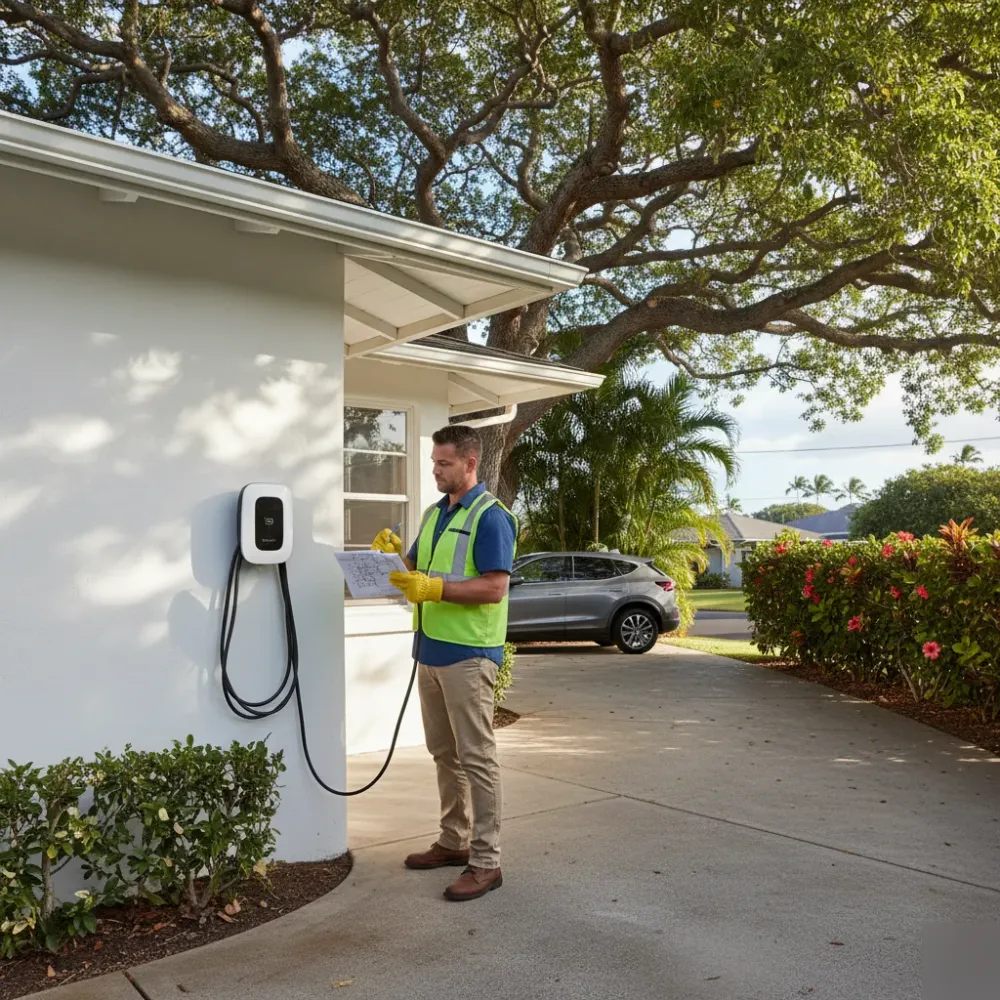
Every home EV charger installation on Oahu requires an electrical permit through Honolulu’s Department of Planning and Permitting. This isn’t optional. It’s the law. The permit tells the city that a licensed electrician is doing the work and that your home’s electrical system can safely handle the added load. According to the Hawaii State Energy Office, residential electrical permits help all upgrades meet the National Electrical Code standards adopted locally.
Here’s what the process actually looks like. We pull the permit before any work begins. The application includes details about your existing panel capacity, the charger’s amperage requirements, and the circuit layout we’re planning. Most residential permits for a straightforward 240-volt circuit get approved pretty quickly. Homes that need a panel upgrade or new sub-panel take a bit longer because there’s more to review.
After the installation is complete, a city inspector visits your property. They check the wiring, the breaker sizing, the grounding, and the charger placement. Nine times out of ten, our jobs pass on the first visit. That’s because we do it right the first time and don’t cut corners on conduit runs or wire gauge.
Some older homes in neighborhoods like Manoa or Hawaii Kai have panels from the 1970s or 1980s. Those panels often can’t support a 40- or 50-amp EV circuit without an upgrade. We flag that during our initial assessment so there aren’t surprises on inspection day. And if your home has aluminum wiring or a Federal Pacific panel, we’ll talk about that too because those are safety concerns that go beyond just the charger.
The permit and inspection protect you. They make sure your charger won’t overload your system, start a fire, or void your homeowner’s insurance. We handle the paperwork and scheduling so you don’t have to sit on hold with the city. You get a safe, code-compliant installation with documentation you can keep on file.
Frequently Asked Questions
Common questions about home ev charging installation services in Oahu
Do I need a permit to install a home EV charger on Oahu?
Yes, Honolulu’s Department of Planning and Permitting requires an electrical permit for home EV charger installations. Skipping the permit can cause real problems when you sell your home or file an insurance claim. We handle the permit process for you. You won’t need to chase paperwork or figure out the system yourself. It’s one less thing to worry about, and it means the job is done correctly and legally from the start.
Will my current electrical panel support a Level 2 EV charger?
Not always — and that’s the first thing we check before any work begins. Many older Oahu homes run on 100-amp panels that are already working hard to power the AC and water heater. Adding a 40-amp or 50-amp EV circuit on top of that can overload the system. We assess your panel capacity before recommending anything. Some homes are ready to go. Others need a panel upgrade first. Either way, you’ll know exactly where you stand.
Can I install an EV charger if I have a carport instead of a garage?
Yes, a carport works fine for a home EV charger on Oahu. We install weatherproof units with NEMA-rated outdoor enclosures designed to handle salt air and humidity. This is something we do regularly across Oahu. The charger gets mounted in a spot that’s protected and convenient for you. The setup is just as reliable as an indoor garage install. You don’t need an enclosed garage to charge at home.
How long does a home EV charger installation take?
Most home EV charger installations on Oahu are completed in one day. The timeline depends on how far the panel is from your charging location and whether a panel upgrade is needed first. We do a full assessment before scheduling the install so there are no surprises on the day of the job. Once everything is wired and connected, we test the full circuit under load and walk you through how to use your new setup.
What’s the difference between a Level 1 and Level 2 home EV charger?
A Level 1 charger plugs into a standard outlet and adds about 4 miles of range per hour — too slow for most daily drivers. A Level 2 charger runs on a 240-volt circuit and adds 25 to 40 miles of range per hour. For Oahu homeowners commuting from Kailua or Hawaii Kai into Honolulu, Level 2 means a full charge overnight. You wake up with a full battery every morning without planning around public charging stations.
Do older Oahu homes need extra work before an EV charger can be installed?
Often, yes. Homes in neighborhoods like Manoa, Kailua, and Kaimuki were built long before EVs existed. Many have aluminum wiring, outdated breaker boxes, or 100-amp panels that are already close to capacity. We check all of this during your initial electrical assessment. If your home needs upgrades before the charger goes in, we’ll tell you upfront. Getting that right the first time protects your home and your new EV investment.
Ready to Get Started?
Schedule Electrical Service Call (808) 427-7200 today.
