
Whole-Home Surge Protection in Oahu
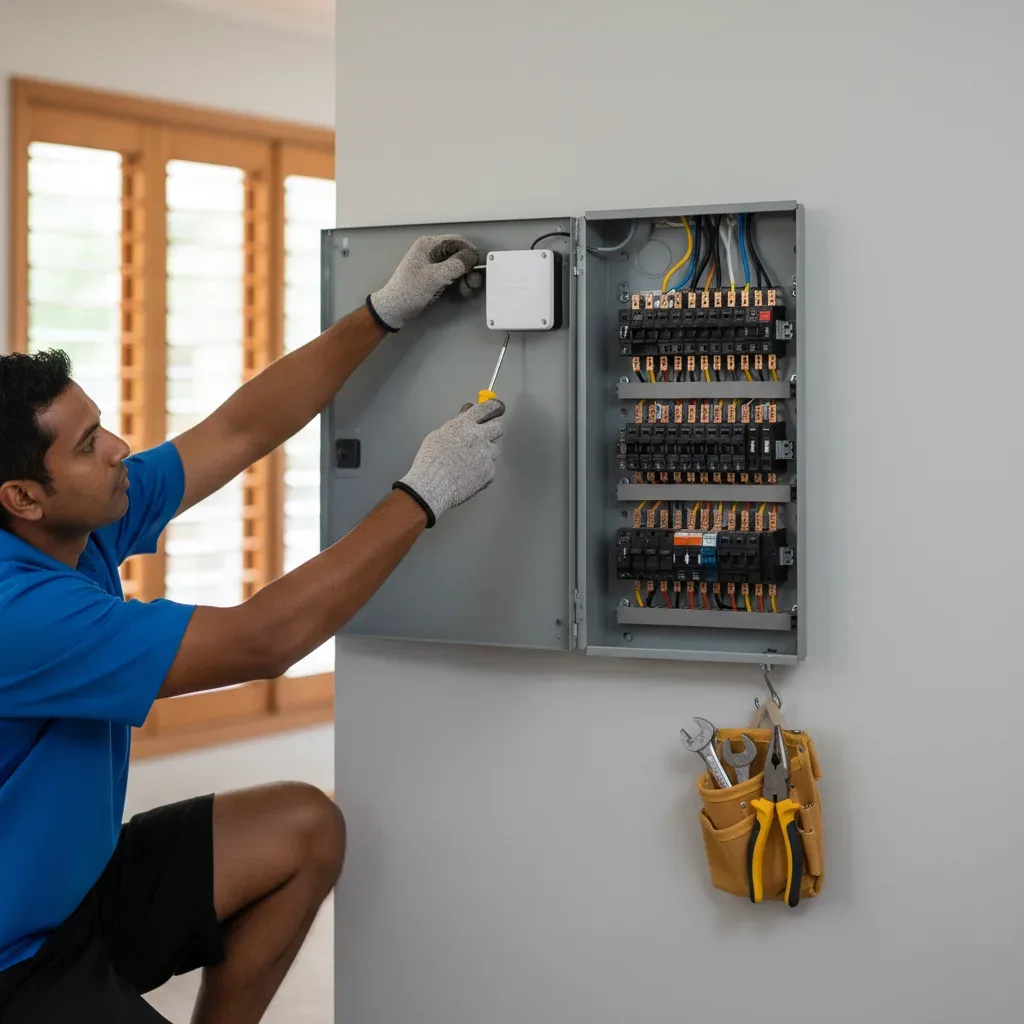
Quick Summary:
Whole-Home Surge Protection in Oahu: Keep Every Circuit Safe
What’s Covered on This Page
- Why Oahu Homes Need Whole-Home Surge Protection
- How a Whole-Home Surge Protector Works at the Panel Level
- What the Installation Process Looks Like in Oahu Homes
- Signs Your Oahu Home Is Vulnerable to Power Surges
- Does whole-home surge protection really help on Oahu, or is it just for lightning storms?
- What does a whole-home surge protector actually protect that a power strip doesn’t?
- How long does the installation take, and what should I expect when the technician arrives?
- Are homes in Mililani or Ewa Beach at higher risk for electrical surges?
- Will a whole-home surge protector work with my solar system or EV charger?
- How do I know if my current panel can support a whole-home surge protector?
Need whole-home surge protection?
Schedule Electrical Service. Call True Power Electrical Services now.
Why Oahu Homes Need Whole-Home Surge Protection
Most people think surges only come from lightning strikes. That’s a small part of the picture. The truth is, your home’s electrical system takes hits all day long from sources you’d never suspect.
Your AC unit cycling on and off. Your refrigerator compressor kicking in. A power tool in the garage. Every single one of those creates a small voltage spike inside your own wiring. The National Electrical Manufacturers Association reports that internal surges account for roughly 80 percent of all surge events in a typical home. They’re tiny. But they add up fast, slowly cooking the circuits inside your appliances, your smart TV, your Wi-Fi router, even your garage door opener.
Now layer on what Oahu throws at us from the outside.
We get frequent trade wind storms that knock branches into power lines from Kailua to the North Shore. Hawaiian Electric’s grid handles constant load shifts across the island, and every time there’s a momentary outage or a transformer hiccup, a surge can ride right into your panel. Homes in Mililani and Ewa Beach that sit at the end of long distribution runs tend to see this more than most. We’ve pulled fried circuit boards out of mini-split systems in those neighborhoods more times than we can count.
Here’s what makes it worse. Oahu homes are packed with sensitive electronics now. Think about what you’ve added in the last five years alone. Smart thermostats, security cameras, EV chargers, solar inverters, induction cooktops. Every one of those devices runs on delicate microprocessors that weren’t built to handle even a small voltage spike. A surge that wouldn’t have bothered a light bulb in 1990 can destroy a modern control board in a fraction of a second.
And those plug-in power strips people buy at the hardware store? They’re better than nothing. Barely. They only protect what’s plugged into them, they wear out without telling you, and they do absolutely zero for your hardwired systems like your panel, your HVAC, or your water heater. Nine times out of ten when someone calls us about a fried appliance, they’ve got a power strip sitting right there that didn’t stop a thing.
Whole-home surge protection works differently. It installs directly at your electrical panel and intercepts surges before they ever reach a single outlet or circuit in your house. Everything downstream gets covered. Your kitchen appliances, your home office setup, your panel upgrades, all of it. One device protecting the entire system at the source.
That’s why we recommend it to every homeowner on Oahu. Not as an upgrade. As a baseline. Your home’s electrical system deserves the same kind of protection you’d put on any other major investment.
How a Whole-Home Surge Protector Works at the Panel Level
Most folks picture a power strip when they hear “surge protection.” That’s not what we’re talking about here. A whole-home surge protector installs directly at your main electrical panel. It sits between the utility feed and every circuit in your house. So before a voltage spike ever reaches your kitchen, your bedroom, or your home office, it gets stopped right at the source. panel upgrade or other electrical service panel upgrade or other electrical service
Here’s the simple version. Your home’s electrical system runs on a steady 120 or 240 volts. A surge is any spike above that. Could be 300 volts. Could be 1,000. The protector at your panel constantly monitors incoming voltage. The moment it detects a spike, it diverts that excess energy safely to your grounding system. Happens in nanoseconds. Your appliances never feel it.
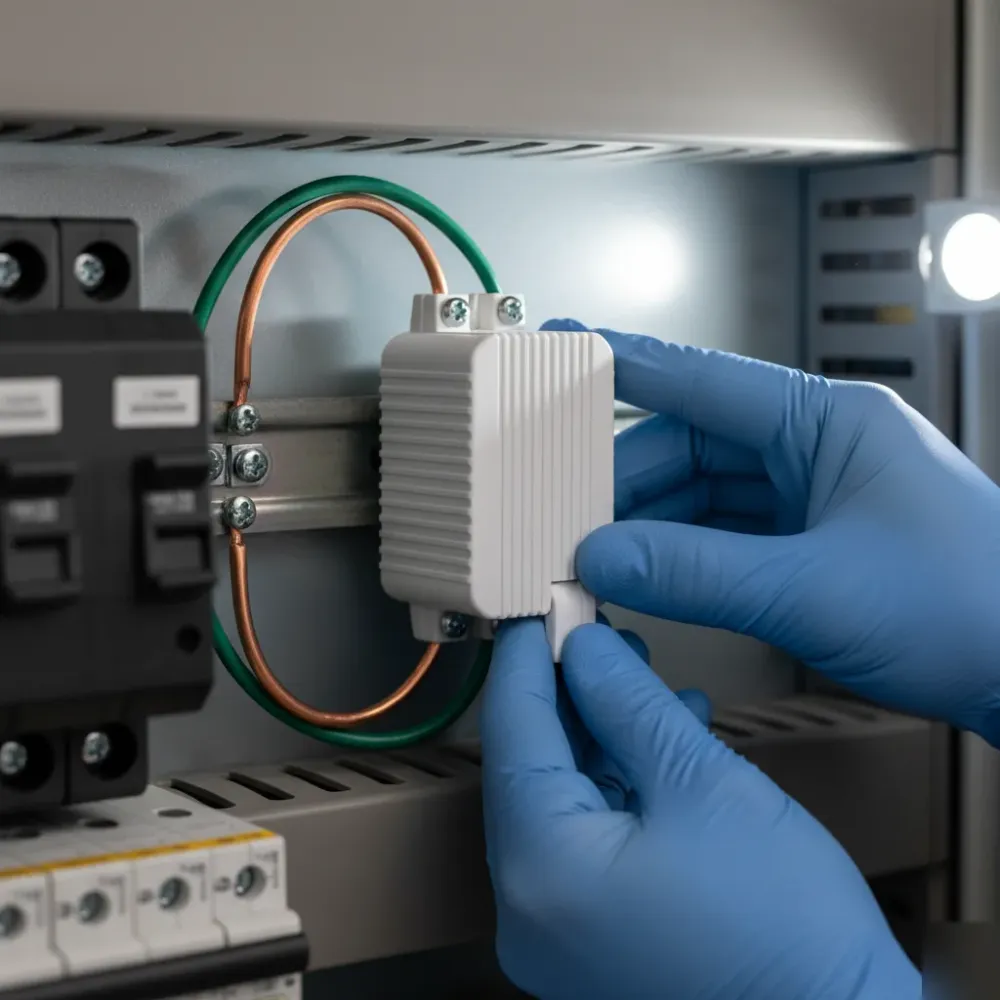
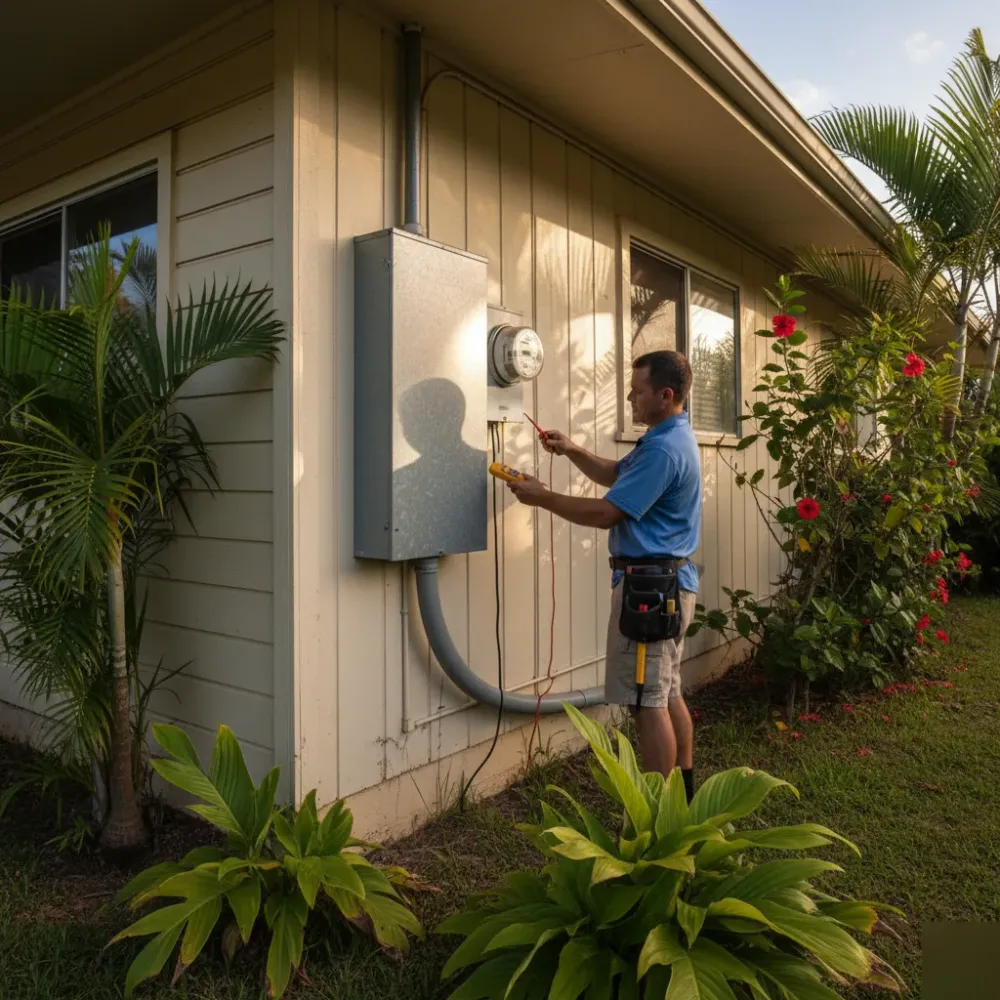
We install these devices inside or directly beside the panel box. On older Oahu homes, especially in neighborhoods like Kailua, we sometimes find panels tucked into tight utility closets or mounted on exterior walls exposed to salt air. Either way, the protector mounts close and connects to a dedicated double-pole breaker. Two wires in, ground wire out. Clean and compact.
Nine times out of ten, homeowners don’t even notice the device after installation. It’s about the size of a small lunch box. No lights blinking, no sounds. It just works quietly in the background, absorbing surges before they travel down your circuits to your TV, your refrigerator, your AC unit, or that new EV charger in the garage.
One thing people don’t realize is how many surges come from inside the home. Industry data puts that number at up to 80 percent of all electrical surges originating internally. Your AC compressor cycling on, your dryer kicking in, even your garage door opener. These small, repeated surges wear down sensitive electronics over time. A panel-level protector catches those too, not just the big lightning events.
And here’s something we see constantly on Oahu. Homes with older panels that haven’t been upgraded in decades. The protector itself is straightforward to install, but the panel needs to support it safely. If your breaker box is maxed out or outdated, we’ll flag that during the assessment. Sometimes a panel upgrade or other electrical service makes sense before adding protection. We’d rather do it right the first time than come back later to fix a shortcut.
The grounding connection matters more than most people think. That’s where the diverted energy actually goes. If your home’s grounding system isn’t solid, the protector can’t do its job. Our team checks grounding integrity on every single install. It’s part of making sure the whole system works together, not just bolting a box to the wall and calling it done.
What the Installation Process Looks Like in Oahu Homes
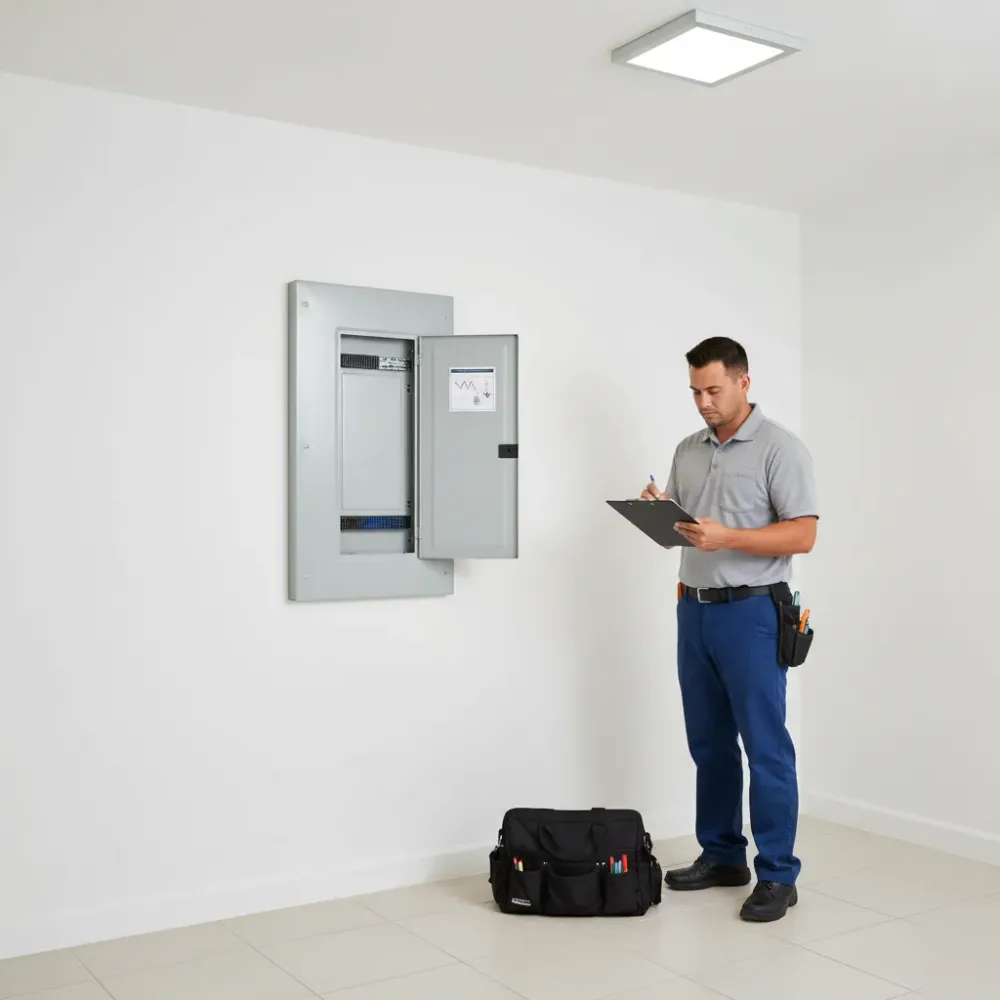
Most folks expect a big, complicated project. It’s not. A typical whole-home surge protector install takes our crew a few hours, start to finish. But those hours matter, because every step has to be done right.
Here’s how it goes. We start at your electrical panel. That’s where the surge protection device gets mounted, either inside the panel or right next to it on the wall. Before we touch anything, we inspect your panel’s condition, its capacity, and how it’s wired. We see older panels all the time in Kailua and Kaneohe homes built in the ’70s and ’80s. Some need minor updates before we can safely install the device. We’ll tell you upfront if that’s the case.
Once the panel checks out, we shut off the main breaker. The device connects to a dedicated two-pole breaker inside your panel. We run short, heavy-gauge wires from the breaker to the surge protector’s terminals. Shorter wires mean better protection. That’s not a shortcut. It’s actually how the device performs at its best. Every connection gets torqued to spec, because a loose connection creates heat, and heat causes problems you don’t want inside a panel.
Nine times out of ten, the install itself is straightforward. The part that takes real skill is knowing what to look for around it. Are your grounding and bonding up to current code? Is your ground rod system solid, or has salt air corroded the connections? On Oahu, corrosion is a constant battle. We check every ground path because a surge protector without proper grounding is like a seatbelt that’s not buckled. It’s there, but it won’t do its job.
After everything’s connected, we restore power and test the device. A small indicator light confirms it’s active and ready. We also test your outlets to make sure grounding is correct throughout the house. You’d be surprised how many homes in Mililani and Pearl City have outlets with missing or broken ground wires hiding behind the cover plates.
We clean up, walk you through what we installed, and show you what that indicator light means. Green means you’re protected. If it ever turns red or goes dark, that’s your signal to call us. The device may have absorbed a major surge and done exactly what it was designed to do.
The whole process fits into a single visit. No holes in your walls. No rewiring your house. Just solid, code-compliant protection added right where your power comes in. Our licensed electricians handle these installs across Oahu every week, so there’s nothing we haven’t seen.
Want to get yours scheduled? Give us a call and we’ll walk you through what to expect for your specific home.
Need help with whole-home surge protection?
Schedule Electrical Service. True Power Electrical Services is ready to help.
Signs Your Oahu Home Is Vulnerable to Power Surges
Your appliances are trying to tell you something. That flickering light in the kitchen. The TV that resets itself for no reason. The smart thermostat that loses its settings every couple of weeks. These aren’t random glitches. They’re warning signs.
We see this every single week on Oahu. A homeowner calls because their microwave died out of nowhere, or their garage door opener just stopped working. They replace the device and move on. Then it happens again three months later with something else. That pattern means surges are getting into your home’s wiring, and nothing is stopping them.
Here’s what to watch for. Clocks that reset without a power outage. USB chargers that get unusually hot. A burning smell near outlets with nothing visibly wrong. Circuit breakers that trip when no circuit is actually overloaded. Any of these can point to voltage spikes traveling through your system. And most people don’t connect the dots until something expensive fails.
Older homes in neighborhoods like Kailua and Manoa are especially at risk. Many were built with electrical panels that don’t meet current code. If your panel still uses fuses or hasn’t been upgraded in 20 years, your home has almost zero defense against surges. Even newer construction can be vulnerable if the builder didn’t install surge protection at the panel level.
Salt air plays a role too. Oahu’s coastal environment corrodes grounding connections over time. A weak ground means surge energy has nowhere safe to go. It travels through your wiring instead, slowly degrading everything plugged in. Research from the National Electrical Manufacturers Association puts up to 80 percent of power surges as originating inside the home itself, from things like your AC compressor cycling on and off or your dryer motor kicking in.
Not sure if your home fits this picture? That’s actually pretty common. Most surge damage is invisible until something fails completely.
Think about what’s plugged into your walls right now. Laptops, TVs, refrigerators, security cameras, Wi-Fi routers, maybe an EV charger in the garage. The average Oahu household has more sensitive electronics than ever before. Every single one of them is at risk if your home doesn’t have protection installed at the main panel. Power strips help with small spikes, but they can’t handle the kind of surge that comes through your utility line during a storm or a grid switching event.
If any of this sounds familiar, your home is telling you it’s time to act.
Frequently Asked Questions
Common questions about whole-home surge protection services in Oahu
Does whole-home surge protection really help on Oahu, or is it just for lightning storms?
It helps far more than most people realize, and lightning is actually the smaller threat. About 80 percent of surges on Oahu come from inside your own home — your AC compressor cycling, your dryer starting up, your garage door opener. On top of that, Hawaiian Electric’s grid handles constant load shifts across the island. Every transformer hiccup or momentary outage can send a surge straight into your panel. A whole-home protector catches all of it, not just the big weather events.
What does a whole-home surge protector actually protect that a power strip doesn’t?
A whole-home surge protector covers every circuit in your house, including hardwired systems a power strip can never touch. Your HVAC, water heater, EV charger, and solar inverter get zero protection from a plug-in strip. The panel-level device intercepts surges before they reach any outlet or circuit. Power strips also wear out silently without warning you. When we get calls about fried appliances on Oahu, there’s almost always a power strip sitting right there that did nothing.
How long does the installation take, and what should I expect when the technician arrives?
Most installs wrap up in a few hours from start to finish. When our technician arrives, they head straight to your electrical panel to assess the setup. We check your grounding system first, because that’s where diverted surge energy actually goes. If your panel is older or maxed out — something we see often in Kailua and other neighborhoods with aging homes — we’ll flag that before touching anything. Once everything checks out, the device mounts directly at the panel and connects to a dedicated breaker. Clean, compact, and quiet after that.
Are homes in Mililani or Ewa Beach at higher risk for electrical surges?
Yes, homes at the end of long utility distribution runs tend to see more grid-related surges. Mililani and Ewa Beach are good examples of this on Oahu. The farther your home sits from a substation, the more voltage variation it can experience during load shifts or brief outages. We’ve pulled fried circuit boards out of mini-split systems in those neighborhoods more times than we can count. If you live in an area like that, whole-home surge protection isn’t optional — it’s just smart.
Will a whole-home surge protector work with my solar system or EV charger?
Yes, and those are two of the best reasons to install one. Solar inverters and EV chargers run on sensitive microprocessors that can be destroyed by even a small voltage spike. Because the protector installs at your main panel, everything downstream is covered — including your solar setup and garage charger. Oahu homes have added a lot of these systems in recent years, and the electronics inside them are far more delicate than older appliances. Protecting them at the panel level is the only way to cover them fully.
How do I know if my current panel can support a whole-home surge protector?
The protector needs a dedicated double-pole breaker and a solid grounding connection to work properly. If your panel is older or already full, it may need attention before we install anything. We check both of those things during every assessment on Oahu. If your grounding system isn’t solid, the device can’t divert surge energy safely. We’d rather tell you upfront what your panel needs than cut corners and have the protection fail when it matters most.
Ready to Get Started?
Schedule Electrical Service Call (808) 427-7200 today.
