
Smoke Detector Installation in Oahu
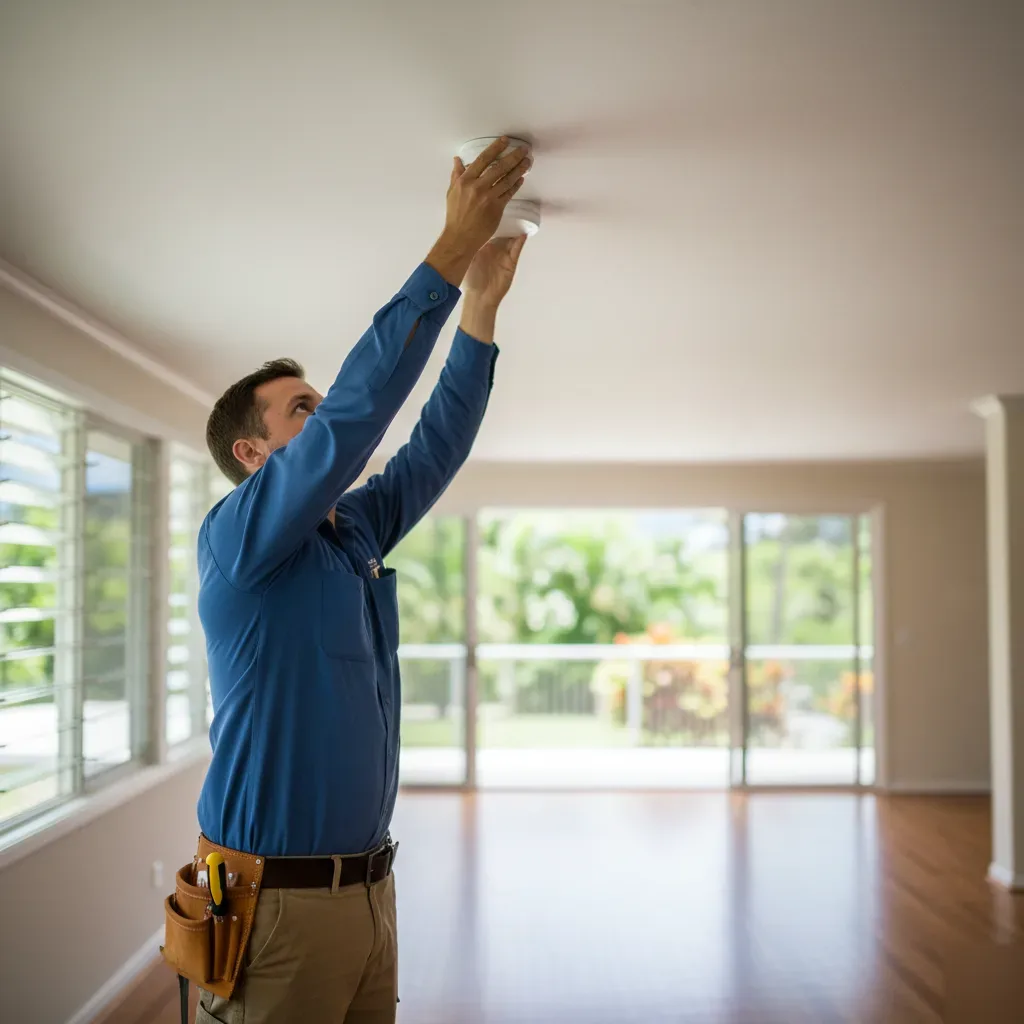
Quick Summary:
Smoke Detector Installation in Oahu: Keep Your Home and Family Safe
What’s Covered on This Page
- Why Smoke Detector Placement Matters in Oahu Homes
- Hardwired vs. Battery-Operated Detectors: What Oahu Homeowners Need to Know
- What to Expect During a Smoke Detector Installation in Oahu
- How Oahu’s Climate and Building Styles Affect Smoke Detector Performance
- Keeping Your Smoke Detectors Working After Installation in Oahu
- How do Oahu’s climate and home styles affect where smoke detectors should be placed?
- Does Hawaii require interconnected smoke detectors in residential homes?
- What is the difference between hardwired and battery-operated smoke detectors?
- What happens during a smoke detector installation appointment in Oahu?
- How do I know if my current smoke detectors are placed correctly?
- How soon can I get smoke detectors installed at my Oahu home?
Need smoke detector installation?
Schedule Electrical Service. Call True Power Electrical Services now.
Why Smoke Detector Placement Matters in Oahu Homes
You could have the best smoke detector on the market. Put it in the wrong spot, and it won’t save anyone.
Homes in Kailua and Mililani call us regularly because their detector keeps chirping, or worse, it never went off during a small kitchen fire. Nine times out of ten, the problem isn’t the device itself. It’s where someone mounted it. Placement changes everything. A detector installed too close to a bathroom door picks up shower steam and false alarms constantly. One tucked into a corner where air doesn’t circulate? It might not sense smoke until it’s too late.
Oahu homes have layouts you won’t find on the mainland. Think about it. Many of our older homes in neighborhoods like Kaimuki have open jalousie windows that create constant cross breezes. That airflow pushes smoke away from poorly placed detectors before they can trigger. Newer builds in Kapolei and Ewa Beach often feature vaulted ceilings and open floor plans, which means smoke rises and spreads differently than in a standard eight-foot-ceiling room. You can’t just follow a generic instruction sheet and expect real protection.
Hawaii’s building code follows the National Fire Protection Association’s NFPA 72 standard, which spells out exactly where detectors need to go. Every bedroom. Outside each sleeping area. On every level of the home. But code is the minimum. Our team goes further because of how Oahu homes actually breathe. We account for your ceiling height, your ventilation patterns, and where your family spends the most time.
Here’s something most people don’t realize. A detector on a wall needs to sit between four and twelve inches from the ceiling. Mount it any higher and you’re in the dead air space where smoke doesn’t reach quickly. Mount it too low and you’ve defeated its purpose entirely. Small details like this are the difference between an alarm that wakes your family at 2 a.m. and one that stays silent.
So if your detectors are wherever the last homeowner stuck them, or wherever seemed convenient during a weekend project, that’s worth a closer look. Proper placement isn’t guesswork. It’s something a licensed electrician measures, plans, and installs with your home’s specific layout in mind.
Hardwired vs. Battery-Operated Detectors: What Oahu Homeowners Need to Know
This is the question we get more than any other. And the honest answer? It depends on your home. our full range of electrical services our full range of electrical services
Battery-operated detectors work as standalone units. You mount them, pop in a battery, and they’re active. Simple. But here’s the catch. Each one works alone. If a detector in your garage goes off at 2 a.m., the one in your bedroom down the hall stays silent. You’re relying on sound traveling through walls, closed doors, and maybe a window unit humming away. In older homes around Kailua or Kaneohe, where layouts can be spread out and single-story, that gap in coverage is a real problem.
Hardwired detectors connect directly to your home’s electrical system. They talk to each other. When one triggers, every unit in the house sounds off at the same time. That’s a massive difference when seconds matter. They also come with backup batteries, so even during a power outage, you’re still protected. It’s a pattern we notice constantly on Oahu. Homeowners assume their battery units are enough until they realize half of them have dead batteries sitting inside.
Hawaii’s building code requires interconnected smoke detectors in most residential situations. For newer construction, that means hardwired is already the standard. But plenty of older homes across Oahu still run on battery-only setups that were grandfathered in. Upgrading those homes to hardwired detectors isn’t just about meeting code. It’s about making sure your family actually wakes up if something goes wrong.
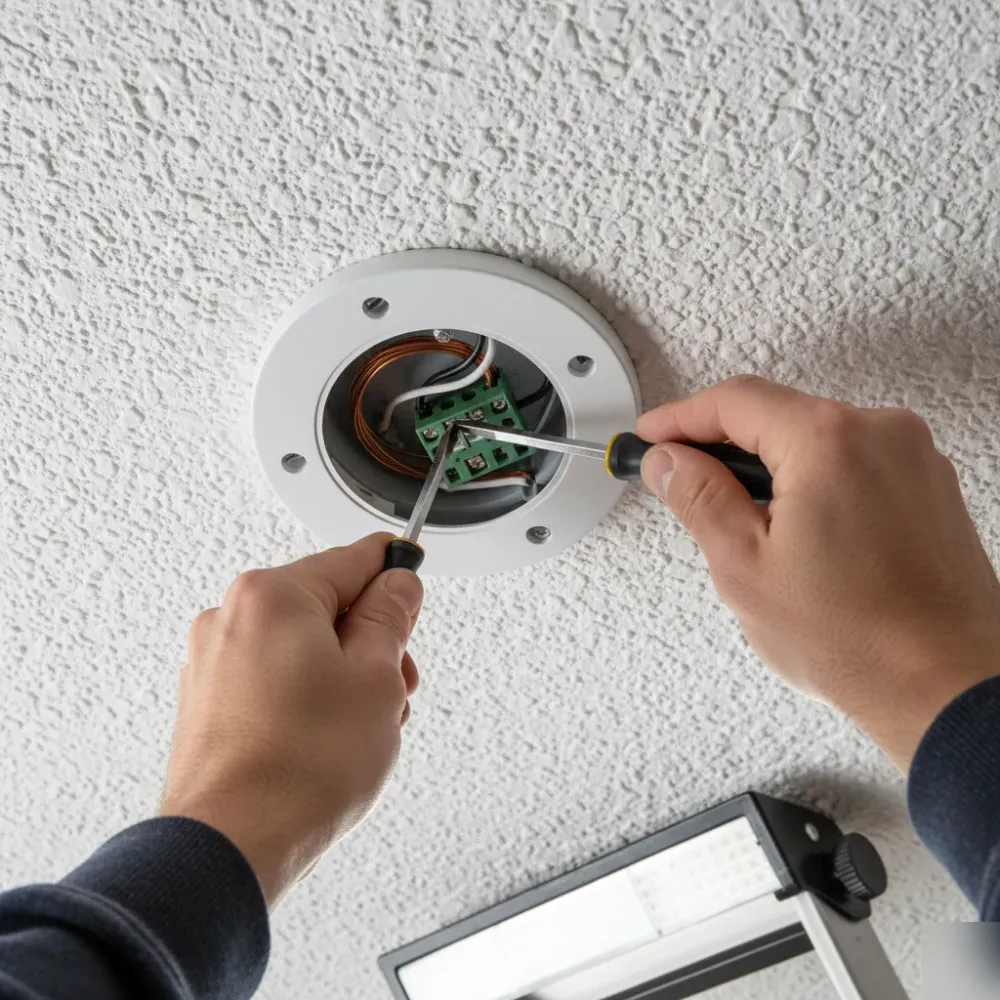
Not sure which setup your home has right now? That’s actually pretty common. A lot of folks in Mililani and Ewa Beach tell us they’ve never checked. Our licensed electricians can assess your current wiring and let you know exactly what’s possible. Some homes need new circuits run to support hardwired units. Others already have the wiring in place and just need the right detectors installed and connected.
The bottom line is straightforward. Battery detectors are better than nothing. But hardwired, interconnected units give you the kind of whole-home protection that actually saves lives. According to the National Fire Protection Association, interconnected alarms cut the risk of dying in a home fire nearly in half. So if you’re investing in your home’s safety, hardwired is where you want to be. Check out our full range of electrical services to see how we can help with this and other upgrades.
What to Expect During a Smoke Detector Installation in Oahu
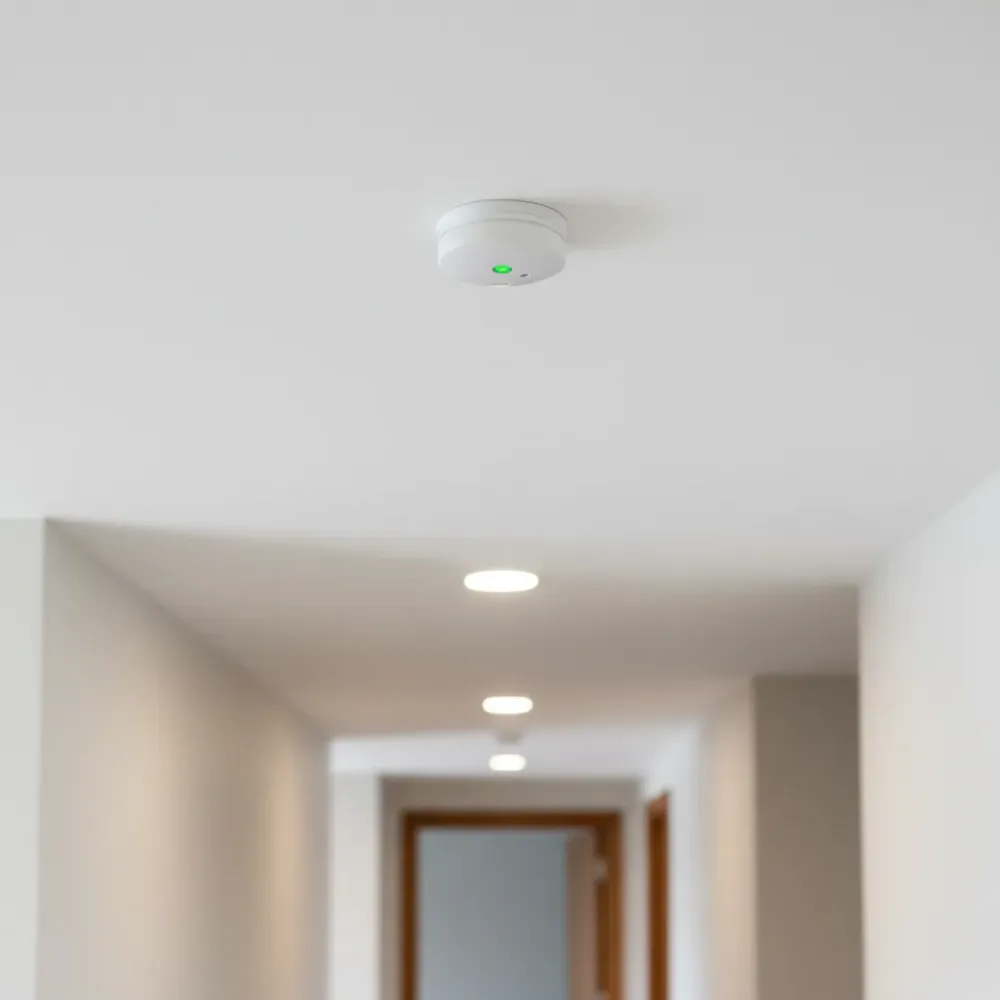
Most folks want to know exactly what happens before they book anything. Fair enough. Here’s how we handle it from start to finish so there aren’t any surprises.
We start with a walkthrough of your home or building. Every room, every hallway, every ceiling height. We’re checking where your existing detectors sit, whether they’re hardwired or battery-only, and if the current placement actually meets Hawaii’s fire code requirements. You’d be amazed how often we find detectors mounted in the wrong spots. Right next to a kitchen vent. Tucked into a dead-air corner where smoke would never reach. It comes up constantly in homes across Oahu, from older places in Kailua to newer builds in Kapolei.
After the walkthrough, we map out the right locations. Bedrooms, hallways outside sleeping areas, each level of the home, and near common areas. The National Fire Protection Association recommends interconnected alarms on every level, and that’s the standard we follow. Interconnected means if one detector goes off in your garage, every alarm in the house sounds. That kind of setup can be the difference between getting out safely and not.
Then comes the actual install. For hardwired units, we run dedicated wiring back to your electrical panel. We cut clean openings in the ceiling, mount the base plates, and connect everything so the detectors talk to each other. Battery backup gets tested on every single unit. The whole process for a typical three-bedroom home takes a few hours. Larger properties or commercial spaces take longer, but we’ll tell you upfront.
Not sure if your current detectors need replacing or just repositioning? That’s actually pretty common. We test every existing unit during the walkthrough so you know exactly what’s working and what isn’t.
Once everything’s mounted and wired, we run a full system test with you standing right there. You’ll hear each alarm trigger. You’ll see the interconnect work in real time. We don’t leave until you’re confident the system does what it’s supposed to do. Our licensed electricians document everything for your records, which also helps if you ever need it for a home inspection or insurance purposes.
Need help with smoke detector installation?
Schedule Electrical Service. True Power Electrical Services is ready to help.
How Oahu’s Climate and Building Styles Affect Smoke Detector Performance
Humidity kills smoke detectors faster than most people realize. We see it constantly in homes across Oahu. A detector that should last eight to ten years starts chirping or throwing false alarms after just three or four. That’s not a defective unit. That’s salt air and moisture doing what they do best.
Oahu sits in the middle of the Pacific, and the tradewinds carry salt-laden moisture right through your windows, your vents, and into every room. According to the National Fire Protection Association, environmental factors like humidity and airborne particles are leading causes of smoke detector malfunction. On this island, those factors are part of daily life. The sensing chamber inside a detector collects tiny particles to identify smoke. But when salt crystals and moisture build up in that chamber, the unit can’t tell the difference between actual smoke and damp air. That’s why so many homeowners in Kailua and Kaneohe tell us they just pulled the batteries out after too many false alarms at 2 a.m.
Don’t do that. A disconnected detector protects nobody. For a broader look at how smoke detectors fit into a complete home safety plan, fire safety tips for household preparedness from WebMD offer useful guidance for families with children.
Building styles matter too. Older plantation-style homes on Oahu often have open floor plans with high ceilings and jalousie windows that stay cracked year-round. Great for airflow. Terrible for smoke detection coverage. Smoke rises and disperses quickly in those tall, ventilated spaces, so a single detector in a hallway might never trigger in time. We’ve walked through homes in Manoa where detectors were mounted on vaulted ceilings twelve feet up, caked in dust, and well past their replacement date.
Newer construction brings different challenges. Tight building envelopes with central air can trap cooking smoke and trigger nuisance alarms in kitchens and bathrooms. The fix isn’t removing the detector. It’s choosing the right type and placing it where it actually works for your layout.
So here’s what we do differently. We look at your home’s ventilation, ceiling height, proximity to the coast, and room layout before we install a single unit. A house in Ewa Beach gets a different approach than a condo in downtown Honolulu. Placement, detector type, and maintenance schedule all shift based on where you live and how your home breathes. That’s the kind of detail that separates a proper smoke detector installation from someone just screwing a unit into drywall and walking away.
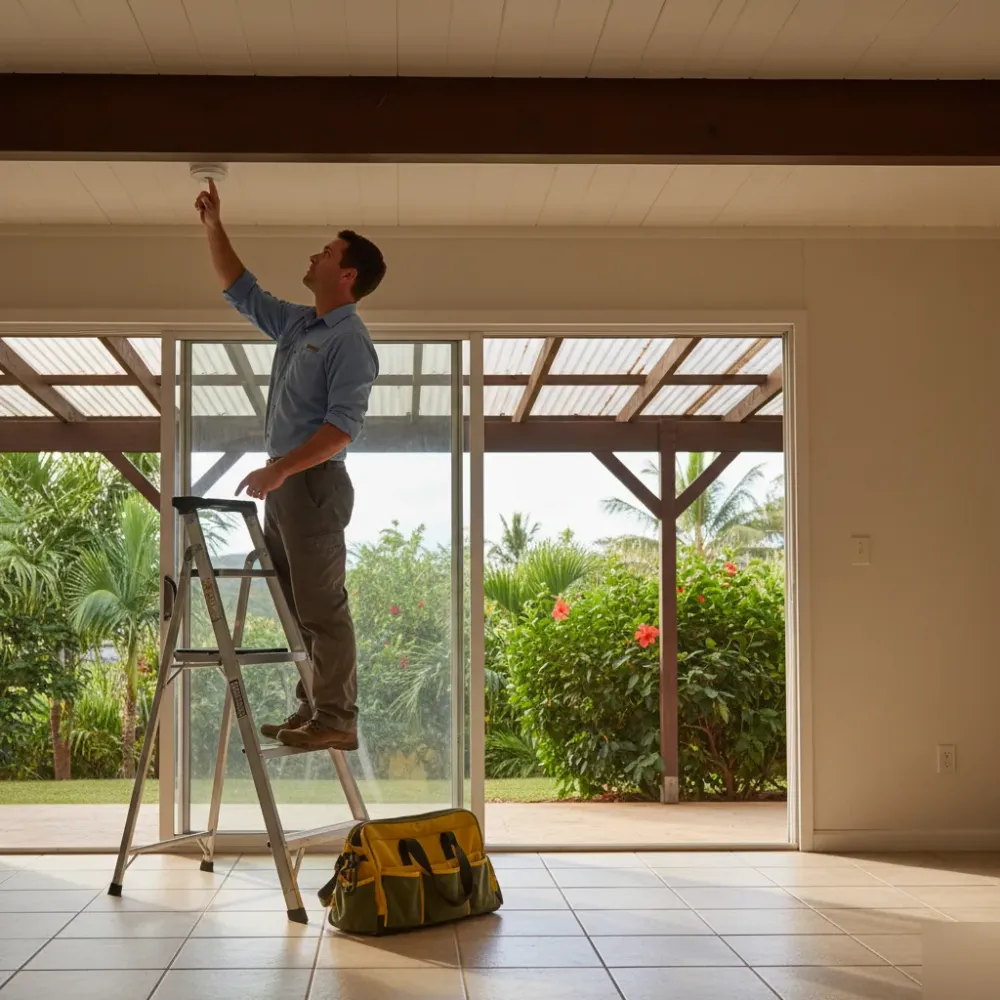
Keeping Your Smoke Detectors Working After Installation in Oahu
Installation is only half the job. What happens over the next ten years matters just as much. We tell every customer the same thing: test your detectors once a month. It takes thirty seconds. Press the button, hear the beep, move on with your day.
Battery replacement trips people up more than anything else. Even hardwired units have backup batteries inside them. Those backups need swapping out at least once a year. That annoying chirp at 2 a.m.? Nine times out of ten it’s a low backup battery, not a broken unit. Don’t just pull the battery out and forget about it. We see it regularly across homes in Kailua and all over Oahu. A hardwired detector with a dead backup battery won’t help you during a power outage.
Dust is a real problem here. Oahu’s trade winds push fine particles through your home constantly. Dust buildup inside the sensing chamber causes false alarms and, worse, can make a detector less sensitive to actual smoke. Vacuum around the vents of each unit every few months with a soft brush attachment. Quick and easy.
Smoke detectors don’t last forever. Most units need full replacement after ten years. There’s a manufacture date printed on the back of every detector. Pull one off the mount and check. If it’s older than ten years, the sensors have degraded and it’s time for a new one. According to the National Fire Protection Association, three out of five home fire deaths happen in properties with no working smoke alarms or no alarms at all. That stat alone should tell you why maintenance isn’t optional.
Keep a simple schedule. Test monthly. Replace batteries yearly. Vacuum quarterly. Replace the whole unit at the ten-year mark. Write the install date on the base with a marker so you don’t have to guess later.
And if something seems off, a detector that won’t stop chirping after a fresh battery, one that triggers for no reason, or a unit that stays silent during testing, give us a call. Our licensed team can troubleshoot the issue fast and get your system back to full protection. That peace of mind is worth it for your family and your Oahu home.
Frequently Asked Questions
Common questions about smoke detector installation services in Oahu
How do Oahu’s climate and home styles affect where smoke detectors should be placed?
Oahu’s unique homes and weather patterns change everything about smoke detector placement. Older homes in neighborhoods like Kaimuki have jalousie windows that create cross breezes, pushing smoke away from poorly placed detectors. Newer builds in Kapolei and Ewa Beach have vaulted ceilings where smoke spreads differently. We account for your ceiling height, ventilation patterns, and how your home actually breathes before we install anything.
Does Hawaii require interconnected smoke detectors in residential homes?
Yes, Hawaii’s building code requires interconnected smoke detectors in most residential situations. Newer construction already meets this standard with hardwired units. Many older Oahu homes still run on battery-only setups that were grandfathered in. Upgrading to hardwired, interconnected detectors means every alarm in your house sounds at once when one triggers. That whole-home alert is what actually wakes your family up in time.
What is the difference between hardwired and battery-operated smoke detectors?
Hardwired detectors connect to your home’s electrical system and communicate with each other. Battery-operated units work alone. If a battery detector goes off in your garage, the one in your bedroom stays silent. Hardwired units also include backup batteries, so a power outage won’t leave you unprotected. According to the National Fire Protection Association, interconnected alarms cut the risk of dying in a home fire nearly in half.
What happens during a smoke detector installation appointment in Oahu?
We start with a full walkthrough of your home before touching anything. We check every room, ceiling height, and your current detector locations. We look for common problems like detectors mounted near kitchen vents or tucked into dead-air corners. Then we map out the right spots based on Hawaii’s fire code and your home’s layout. After installation, we test every unit to make sure everything works before we leave.
How do I know if my current smoke detectors are placed correctly?
A wall-mounted detector needs to sit between four and twelve inches from the ceiling. Any higher and you’re in dead air space where smoke doesn’t travel quickly. Beyond height, placement near bathroom doors, kitchen vents, or corners with poor airflow causes problems. If your detectors were installed by a previous homeowner or during a quick weekend project, there’s a good chance the placement hasn’t been checked against Oahu’s actual code requirements.
How soon can I get smoke detectors installed at my Oahu home?
We schedule installations across Oahu and can usually get to you quickly depending on your location. When you call, we’ll ask a few questions about your home so we arrive prepared with the right equipment. Same-day or next-day appointments are often available. The installation itself typically moves fast once we’ve done the initial walkthrough and mapped out your detector locations.
Ready to Get Started?
Schedule Electrical Service Call (808) 427-7200 today.
