
Recessed Lighting Installation in Oahu
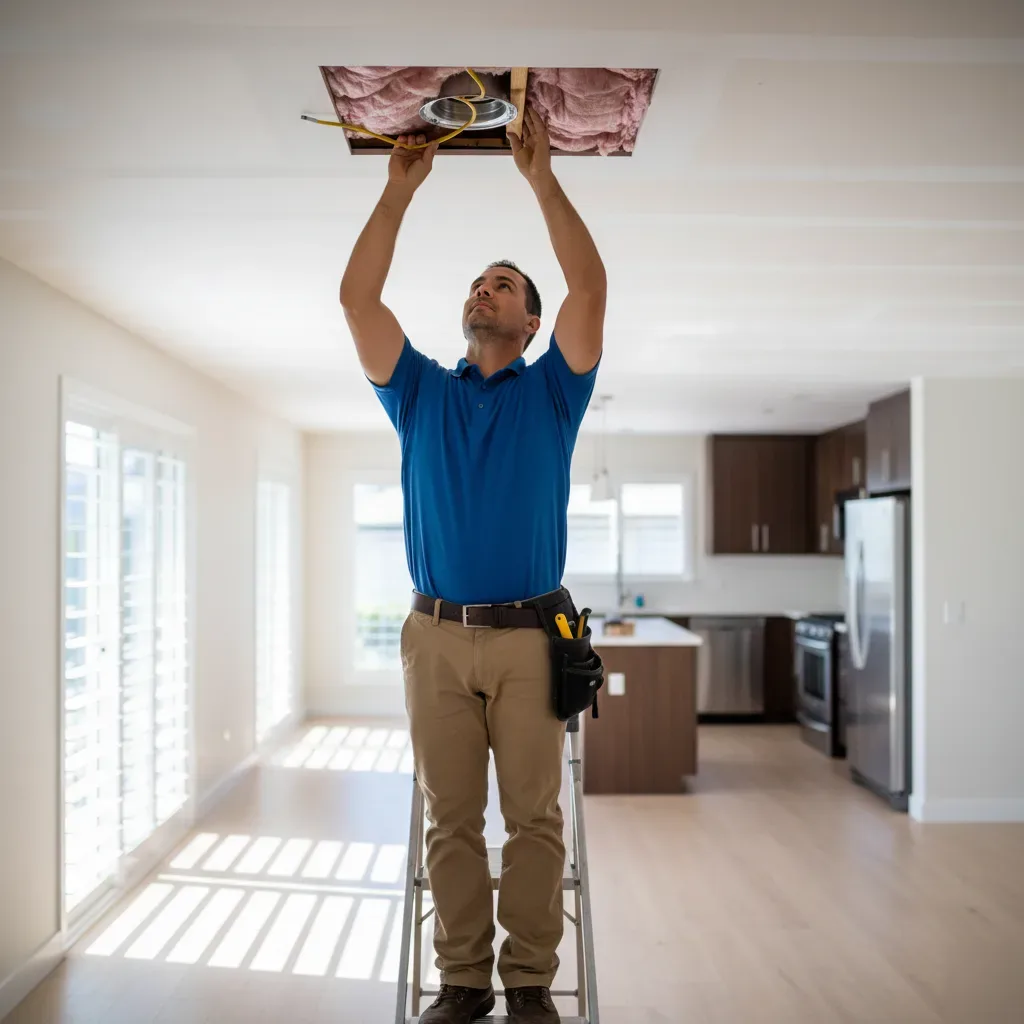
Quick Summary:
Professional Recessed Lighting Installation in Oahu, Brighter Spaces, Done Right
What’s Covered on This Page
- What Recessed Lighting Installation Involves in Oahu Homes
- How to Know Your Oahu Home Is Ready for Recessed Lighting
- Choosing the Right Recessed Lighting Setup for Your Oahu Space
- What to Expect When True Power Electrical Services Arrives in Oahu
- Keeping Your Recessed Lighting Working Well in Oahu’s Climate
- Do Oahu homes need special recessed light fixtures because of the local building code?
- How do I know if my ceiling can support recessed lighting?
- How many recessed lights do I actually need for my room?
- What should I do to prepare before the installation day?
- Can recessed lighting be installed in a home with a concrete slab ceiling?
- Will recessed lighting work with my existing dimmer switches?
Need recessed lighting installation?
Schedule Electrical Service. Call True Power Electrical Services now.
What Recessed Lighting Installation Involves in Oahu Homes
Most people picture a simple hole in the ceiling with a light behind it. That’s the end result, sure. But getting there takes real planning, especially in Oahu homes where ceiling structures, insulation types, and existing wiring vary so much from one neighborhood to the next.
Here’s what actually happens. We start by checking your ceiling cavity. Is there attic access above, or is it a concrete slab with a finished layer underneath? Homes in Kailua often have open attic space that makes routing new wire straightforward. Older homes closer to downtown Honolulu might have plaster ceilings or limited clearance that change the approach entirely. We figure all of this out before anyone picks up a saw.
Next comes layout. Where you place recessed lights matters more than how many you install. We map out spacing based on your ceiling height, room size, and what you actually use the space for. A kitchen needs task lighting over counters and islands. A living room needs softer, evenly spaced light. We see homeowners try to guess this part on their own every single week, and the results are almost always uneven pools of light with dark spots in between.
Then there’s the electrical side. We check your panel capacity, confirm the circuit can handle the added load, and run new wiring where needed. Every connection has to meet current electrical code. On Oahu, that means following both the National Electrical Code and Hawaii’s local amendments. According to the U.S. Department of Energy, recessed fixtures rated for insulation contact are required whenever insulation touches the housing. Skipping that detail creates a fire risk. Not a maybe. A real one.
The actual cutting and mounting goes fast once the prep work is done right. We use the correct housing type for your ceiling, whether it’s new construction or a retrofit into an existing space. Trim rings, LED modules, and dimmer compatibility all get sorted before installation day so there aren’t surprises.
So what does it really involve? Planning, electrical evaluation, precise cutting, safe wiring, and a final check to make sure every light sits flush and operates on the right circuit. That’s recessed lighting installation done the way it should be.
How to Know Your Oahu Home Is Ready for Recessed Lighting
Not every ceiling is a good candidate. That’s the honest truth. Before we touch your ceiling, we need to figure out what’s hiding above your drywall. And on Oahu, the answer varies a lot depending on when your home was built and where it sits on the island. our full range of electrical services our full range of electrical services
The first thing we look at is ceiling space. Recessed lights need clearance above the ceiling surface. Most cans require at least six inches. Homes in Kailua and Kaneohe built in the 1970s and 1980s often have enough room. But older plantation-style homes sometimes don’t. We check for joists, HVAC ducts, plumbing lines, and anything else that could block a safe installation. Nine times out of ten, there’s a workable solution. It just takes a trained eye to find it.
Insulation matters too. Hawaii’s building code requires specific insulation-contact rated fixtures when insulation sits against the housing. We see a lot of homes near Hawaii Kai where blown-in insulation was added after the original build. Using the wrong fixture type in that situation creates a fire risk. So we always verify insulation conditions before choosing hardware.
Your electrical panel is the other big question. Can it handle the added load? Most modern Oahu homes have 100 to 200 amp panels, which is usually plenty for a set of LED recessed lights. But if your panel is already maxed out from an AC unit, water heater, and kitchen appliances, we may need to address capacity first. Our licensed electricians evaluate your panel as part of every assessment. You can also explore our full range of electrical services if your panel needs an upgrade before we start.
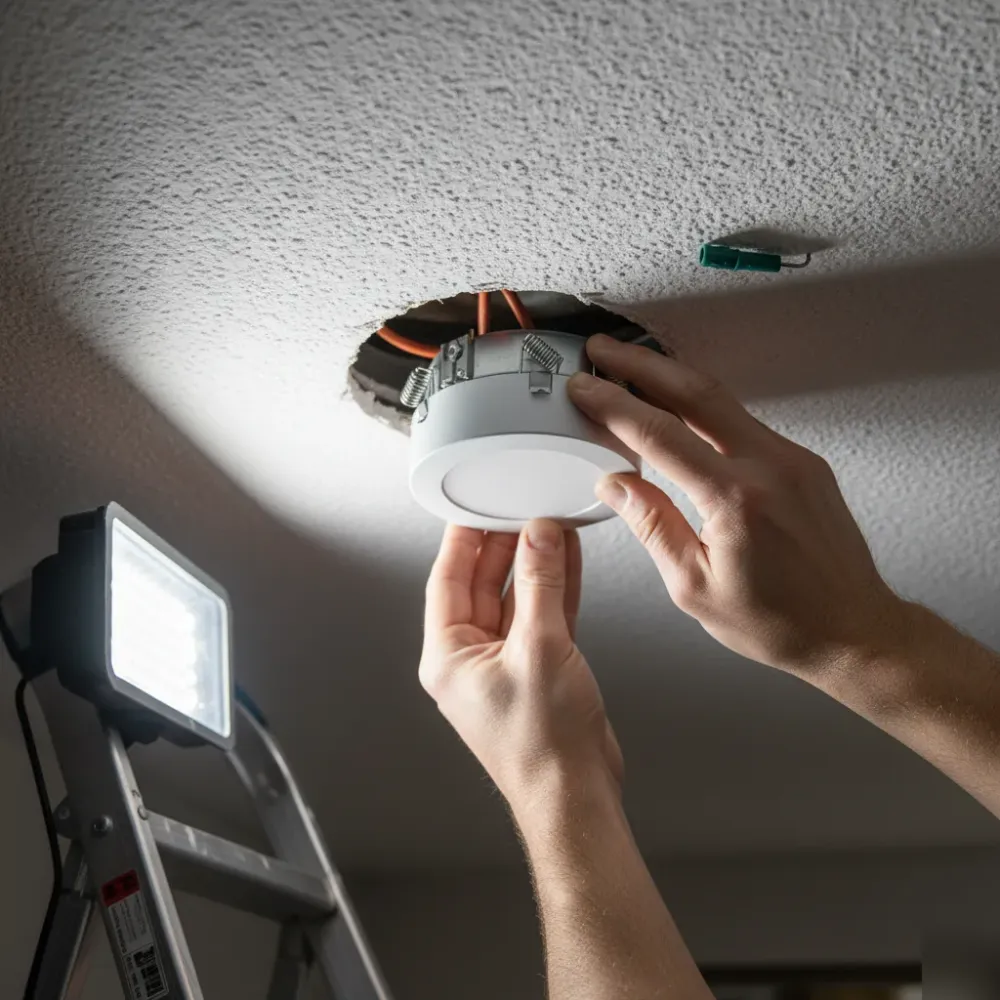
Here’s what usually prompts the call. You’re standing in your living room and the overhead light casts shadows everywhere. Or your kitchen feels dim no matter how many lamps you add. Maybe you just finished a remodel and the old fixture looks out of place. These are signs your home is ready.
We’ll walk through your space, check the structure, inspect wiring, and give you a straight answer. No guessing. If your Oahu home can support recessed lighting safely and to code, we’ll tell you exactly how. And if something needs attention first, we’ll tell you that too.
Choosing the Right Recessed Lighting Setup for Your Oahu Space
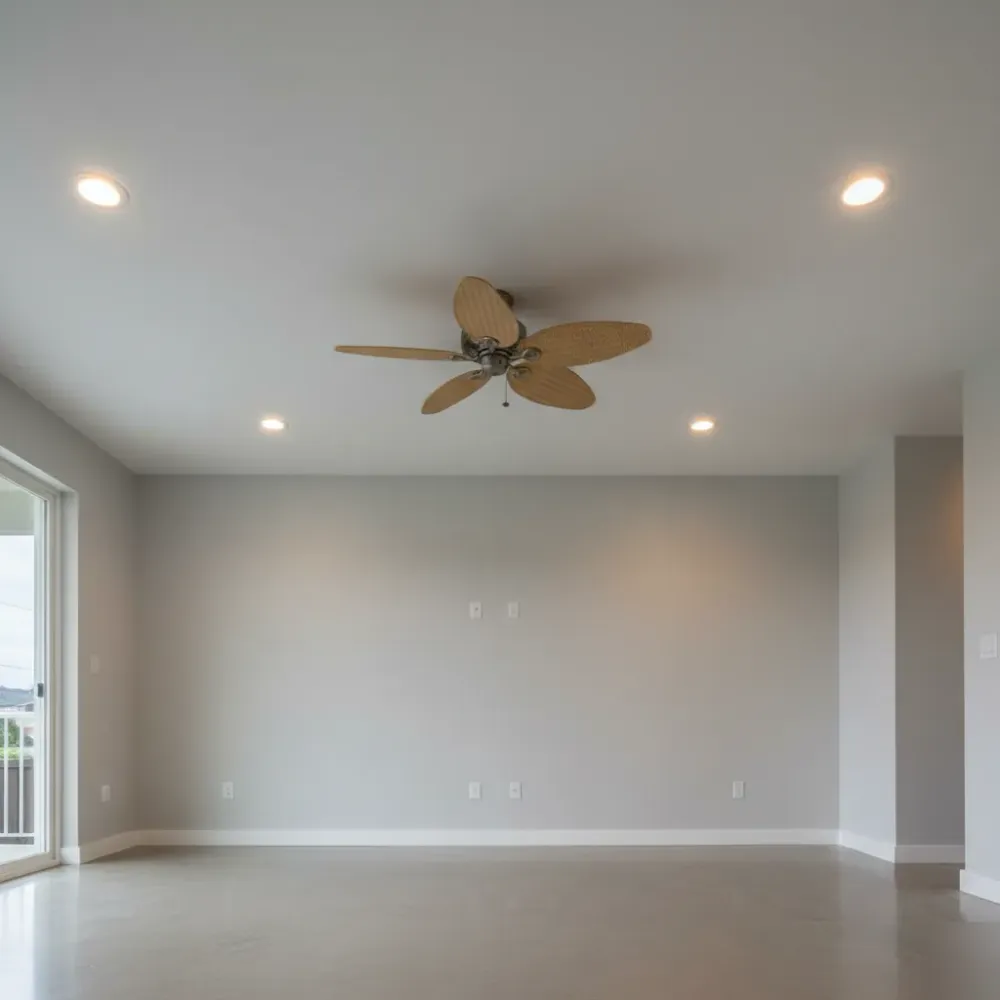
Not every room needs the same lights. That sounds obvious, but we see homeowners make this mistake constantly. They pick one size, one trim style, and one layout for the whole house. Then half the rooms feel too bright and the other half feel like caves.
Here’s what actually matters when you’re planning your setup.
Room size comes first. A small bathroom in a Kailua condo doesn’t need six-inch cans. Four-inch fixtures work perfectly there and keep the ceiling from looking cluttered. But your living room? That’s where six-inch housings earn their place, especially in homes with open floor plans where you need light to carry across a bigger area. We help you figure out the right count and spacing so nothing feels off.
Ceiling height changes everything too. Lots of Oahu homes have standard eight-foot ceilings, but some of the newer builds in Kapolei run nine or ten feet. Higher ceilings mean your light has to travel farther before it hits the surfaces you actually use. That usually means tighter spacing or a wider beam angle. Skip this step and you’ll end up with dim spots right where you don’t want them.
Then there’s trim type. Baffle trims cut down on glare, which matters in a kitchen where you’re working at the counter. Smooth trims throw a cleaner wash of light across a wall. Gimbal trims let you aim the beam, perfect for highlighting artwork or an accent wall. Nine times out of ten, a mix of trim styles across different rooms gives you the best result.
Color temperature is the piece most people forget. A warm 2700K tone feels right in bedrooms and living areas. Kitchens and bathrooms usually do better around 3000K to 3500K. Going too cool makes a space feel sterile. Going too warm in a workspace makes it hard to see detail.
Here’s the thing. Every choice connects to the next one. The fixture size affects the trim options. The ceiling height affects the layout. Your panel capacity affects how many circuits we can run. Thoughtful lighting placement is also a recognized component of sustainable design — the Design & Construction guidelines from UC Berkeley’s EcoBlock highlight how interior lighting decisions integrate with broader energy-efficient building strategies. Our team walks through all of this with you before we make a single cut. That way you get a setup built around how you actually live in your home on Oahu, not a cookie-cutter grid that ignores the room.
Need help with recessed lighting installation?
Schedule Electrical Service. True Power Electrical Services is ready to help.
What to Expect When True Power Electrical Services Arrives in Oahu
We show up on time. That sounds simple, but it matters. When you’ve cleared your schedule and moved furniture away from the walls, the last thing you need is a no-show.
Our crew arrives with everything needed to get your recessed lighting installed right the first time. We bring a stud finder, a voltage tester, the correct housing units for your ceiling type, and all the wiring supplies. No extra trips to the hardware store. No guesswork. We’ve done hundreds of these installs across Oahu, from single-story homes in Kailua to two-story townhomes near Pearl City, so we know exactly what to pack in the truck.
First thing we do is walk through the space with you. We want to see where you’re thinking about placing each light. Nine times out of ten, homeowners have a good sense of what they want but aren’t sure about spacing or how many fixtures the room actually needs. That’s what we’re here for. We’ll look at your ceiling height, check for joists and obstacles above the drywall, and confirm there’s safe access for wiring. If your attic space is tight or your ceiling has concrete above it, we’ll let you know before any cuts are made.
Then we map out the layout. We mark each fixture location with pencil so you can see the pattern before we commit to anything. Want to shift one six inches to the left? Easy. This is the time to make changes. Once we’re cutting into drywall, adjustments get harder.
After you approve the layout, we handle the electrical work. That means running new circuits if needed, connecting to your existing wiring safely, and making sure everything meets current electrical code. We’re licensed electricians, not handymen with a YouTube tutorial. Every connection gets tested before we close anything up.
The whole process is cleaner than most people expect. We lay down drop cloths, contain the drywall dust, and clean up before we leave. You shouldn’t have to vacuum your entire house after an electrical job. That’s just how we operate on every project across Oahu.
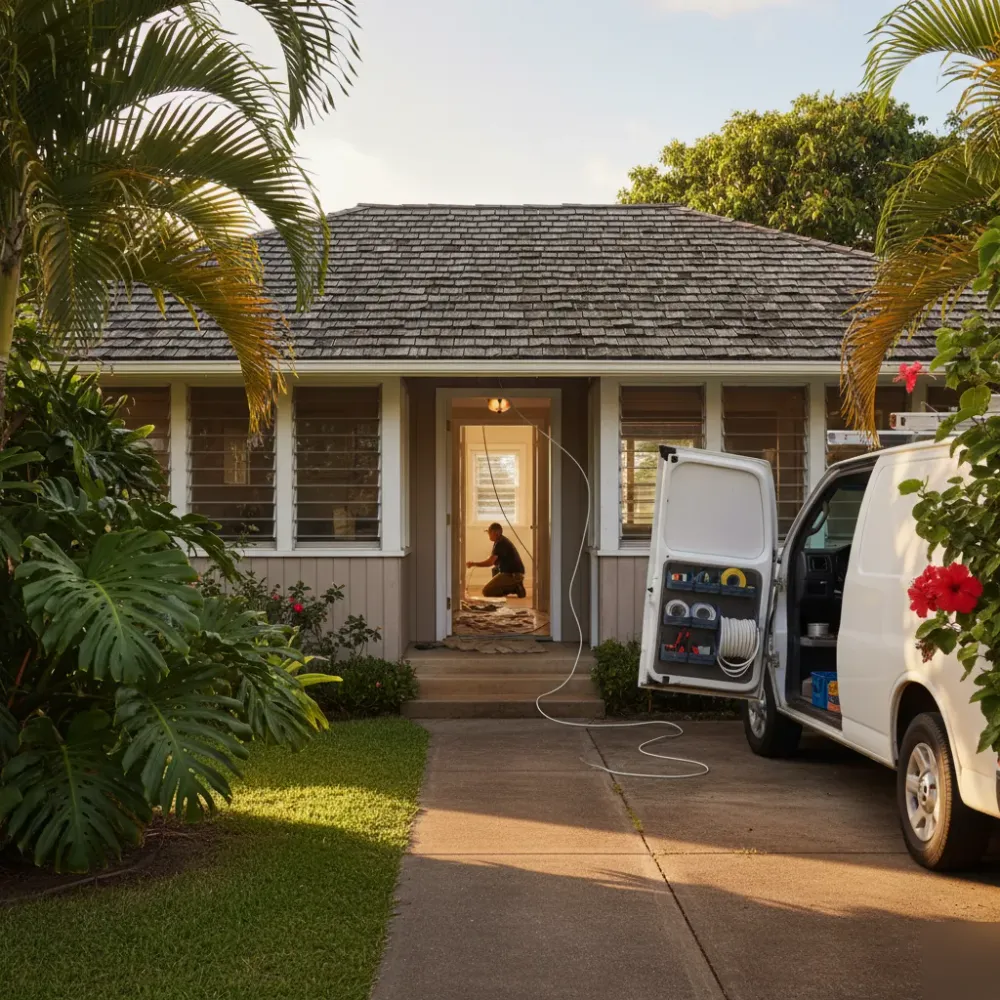
Keeping Your Recessed Lighting Working Well in Oahu’s Climate
Salt air, humidity, and trade winds. That’s what every electrical fixture on this island deals with daily. Your recessed lights aren’t immune to any of it.
We pull out corroded trim rings and rusted housing cans all the time in homes near Kailua Beach and along the North Shore. Nine times out of ten, the homeowner had no idea anything was wrong until a light started flickering or just quit working. The salt-laden moisture that rolls in off the ocean gets into everything. It creeps behind drywall, settles on wiring connections, and slowly eats away at metal components. Homes closer to the coast see this faster, but even properties up in Mililani or Pearl City aren’t completely safe from Oahu’s tropical humidity.
So what can you do about it? A few things actually matter.
First, make sure your recessed cans are rated IC and AT. That stands for Insulation Contact and Air Tight. These ratings aren’t just about fire safety. They keep moisture from migrating through the ceiling cavity and settling inside the fixture. According to the U.S. Department of Energy, air-tight recessed fixtures reduce moisture transfer between conditioned and unconditioned spaces. That’s a big deal in a climate like ours where humidity sits above 70% most of the year.
LED bulbs and integrated LED trims help too. They run cooler than halogens, which means less condensation cycling inside the housing. Less condensation means less corrosion over time. We’ve seen older halogen setups on Oahu develop green oxidation on the socket contacts within just a couple of years.
Have your recessed lights inspected every few years. We check connections, look for discoloration on wiring, and make sure the housing hasn’t shifted or developed gaps. Small problems caught early stay small. Left alone, they turn into rewiring jobs.
One more thing people overlook. Bathroom and outdoor soffit recessed lights need wet-rated or damp-rated trim and housings. Not all fixtures carry these ratings. If yours were installed without the right rating for the location, you’re asking for trouble. We replace misrated fixtures in Oahu homes more often than you’d think.
Your lights should last for years without issues. But Oahu’s climate demands the right materials and occasional attention to make that happen.
Frequently Asked Questions
Common questions about recessed lighting installation services in Oahu
Do Oahu homes need special recessed light fixtures because of the local building code?
Yes, Hawaii follows the National Electrical Code plus local amendments that affect which fixtures you can use. If insulation touches the housing, you need an insulation-contact rated fixture. Many Oahu homes have blown-in insulation added after the original build. Using the wrong fixture in that situation creates a real fire risk. We always check insulation conditions and verify code requirements before choosing any hardware for your ceiling.
How do I know if my ceiling can support recessed lighting?
Most ceilings can support recessed lighting, but we need to check what’s above your drywall first. We look for ceiling clearance, joists, HVAC ducts, and plumbing lines that could block a safe installation. Older plantation-style homes sometimes have tighter clearance than newer builds. We also check your electrical panel to confirm it can handle the added load. Nine times out of ten, there’s a workable solution once a trained eye looks at it.
How many recessed lights do I actually need for my room?
The right number depends on your room size, ceiling height, and how you use the space. A small bathroom needs far fewer fixtures than an open living room. Homes in Kapolei with nine or ten-foot ceilings need tighter spacing because light has to travel farther before it reaches your surfaces. We map out spacing based on your specific room so you get even light without dark spots or areas that feel too bright.
What should I do to prepare before the installation day?
Clear the area below where we’ll be working so we have safe access to the ceiling. If furniture is in the way, move it or let us know and we can work around it. We handle all the electrical evaluation, layout planning, and hardware selection before we arrive. By installation day, the prep work is already done. That’s what keeps the actual cutting and mounting fast and clean with no surprises.
Can recessed lighting be installed in a home with a concrete slab ceiling?
Yes, but the approach is different from a home with open attic access. Concrete slab ceilings require a different wiring strategy since there’s no cavity to route wire through easily. We see this in many older homes closer to downtown Honolulu. It takes more planning, but it’s absolutely doable. We figure out the right method for your specific ceiling type before anyone picks up a saw or drill.
Will recessed lighting work with my existing dimmer switches?
Not always, and this is something we sort out before installation day. Older dimmer switches are often not compatible with LED fixtures, which are standard now. Using the wrong dimmer causes flickering or buzzing that gets annoying fast. We check your current switches and confirm compatibility as part of the planning process. If your dimmers need to be swapped out, we handle that at the same time so everything works correctly from day one.
Ready to Get Started?
Schedule Electrical Service Call (808) 427-7200 today.
