
Grounding Installation in Oahu
Quick Summary:
Grounding Installation in Oahu: Protect Your Home the Right Way
What’s Covered on This Page
- What Grounding Installation Actually Does for Your Oahu Home
- Signs Your Oahu Property Needs a Grounding Installation
- How True Power Electrical Services Performs Grounding Installation Across Oahu
- Oahu Building Code Requirements for Electrical Grounding
- How to Prepare Your Home Before a Grounding Installation Appointment
- How does Oahu’s salt air affect my grounding system over time?
- What are the signs that my Oahu home needs a grounding installation?
- Do older homes in Oahu need a new grounding installation?
- What happens during a grounding installation appointment?
- Do I need grounding work before installing an EV charger or upgrading my panel?
- How does rocky or volcanic soil in Oahu affect the grounding installation process?
Need grounding installation?
Schedule Electrical Service. Call True Power Electrical Services now.
What Grounding Installation Actually Does for Your Oahu Home
Think of your grounding system as your home’s safety valve. Every wire in your walls carries electricity to where it needs to go. But what happens when something goes wrong? A short circuit, a lightning strike, a faulty appliance. That electricity needs somewhere safe to travel. That’s exactly what a grounding system provides.
Grounding gives excess electrical current a direct path into the earth. Without it, that current looks for another way out. Through your appliances. Through metal pipes. Through you. We see this problem more than you’d think in older homes across Kailua and Kaneohe, where original wiring never included a proper ground.
Here’s what a solid ground connection actually does for your household. It protects your family from electrical shock every time you touch a light switch, plug in a charger, or use a kitchen appliance. It shields your electronics from power surges that can fry circuit boards in seconds. And it gives your breaker panel the ability to trip when it’s supposed to, shutting off dangerous circuits before they overheat. Electrical failures are a leading cause of home structure fires. A properly installed grounding system is one of the simplest ways to reduce that risk.
Nine times out of ten, homeowners on Oahu don’t think about grounding until something weird happens. Maybe you feel a tiny buzz when you touch your kitchen faucet. Maybe your GFCI outlets keep tripping for no clear reason. Those are signs your grounding system isn’t doing its job.
Our island environment makes this even more critical. Salt air corrodes connections faster than most mainland climates. Moisture works its way into junction boxes. The copper grounding conductors and rods that protect your home take a beating year after year. So a grounding system that tested fine five years ago might not be reliable today.
Good grounding also matters if you’re planning any upgrades. Installing an EV charger, adding a sub-panel for a workshop, or upgrading to a 200-amp service all require a grounding system that meets current National Electrical Code standards. Skip this step and you’re building on a shaky foundation. We won’t let that happen.
Signs Your Oahu Property Needs a Grounding Installation
Flickering lights when you turn on the microwave. A small shock when you touch a metal faucet. That faint buzzing sound coming from an outlet you’ve never noticed before. These aren’t minor annoyances. They’re your home telling you something’s wrong with the grounding. our full range of electrical services our full range of electrical services
We see this every single week across Oahu. A homeowner in Kailua calls because their GFCI outlets keep tripping for no clear reason. Or a property manager in Honolulu notices that surge protectors burn out way faster than they should. Nine times out of ten, the root cause traces back to a missing or failing ground connection.
Here’s what to watch for. Two-prong outlets anywhere in your home mean there’s no equipment ground on those circuits. If your panel box feels warm to the touch, that’s a red flag. Static on your phone lines, inconsistent dimming across your lights, or breakers that trip under normal loads all point to grounding problems. And if you’ve had any appliance damage after a storm, your system likely didn’t route that surge energy safely into the earth.
Older homes are the biggest concern. Many properties built before the 1970s on Oahu weren’t required to have the grounding systems we use today. The National Electrical Code has changed since then, and what passed inspection decades ago doesn’t meet current safety standards. So if your home still has its original wiring, there’s a real chance the grounding is either outdated or nonexistent.
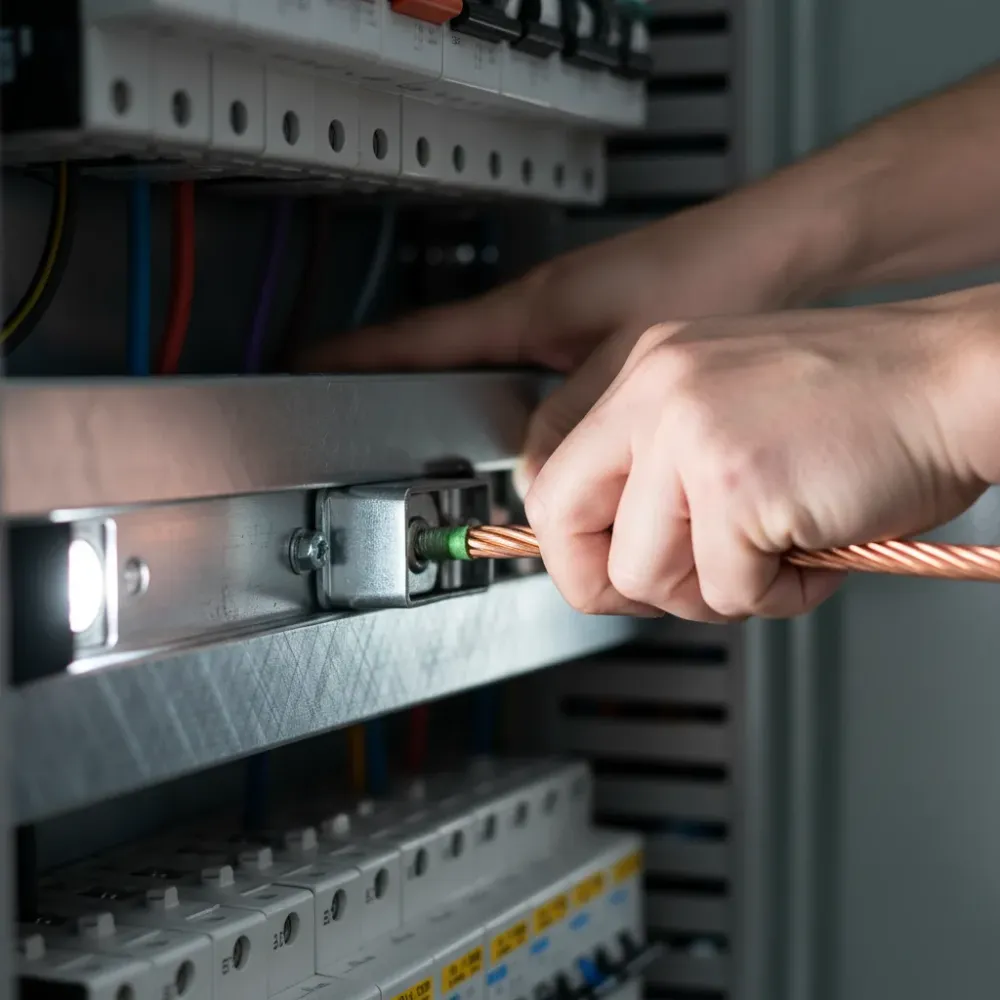
But it’s not just old homes. We’ve inspected newer builds where corrosion from Oahu’s salt air degraded ground rods and bonding connections. The tropical climate here accelerates wear on copper and steel components that mainland systems don’t face as quickly. A ground rod that looked fine five years ago can lose effectiveness without any visible warning.
Not sure if any of this applies to you? That’s actually pretty common. Most grounding issues don’t announce themselves with a dramatic failure. They show up quietly, over time, creating risks you can’t see. If anything on this list sounds familiar, it’s worth having a licensed electrician test your system. You can also explore our full range of electrical services to see how grounding connects to panel upgrades, outlet work, and whole-home safety.
How True Power Electrical Services Performs Grounding Installation Across Oahu
Every job starts the same way. We show up, look at what’s actually going on with your electrical system, and build a plan from there. No guessing. No cookie-cutter approach.
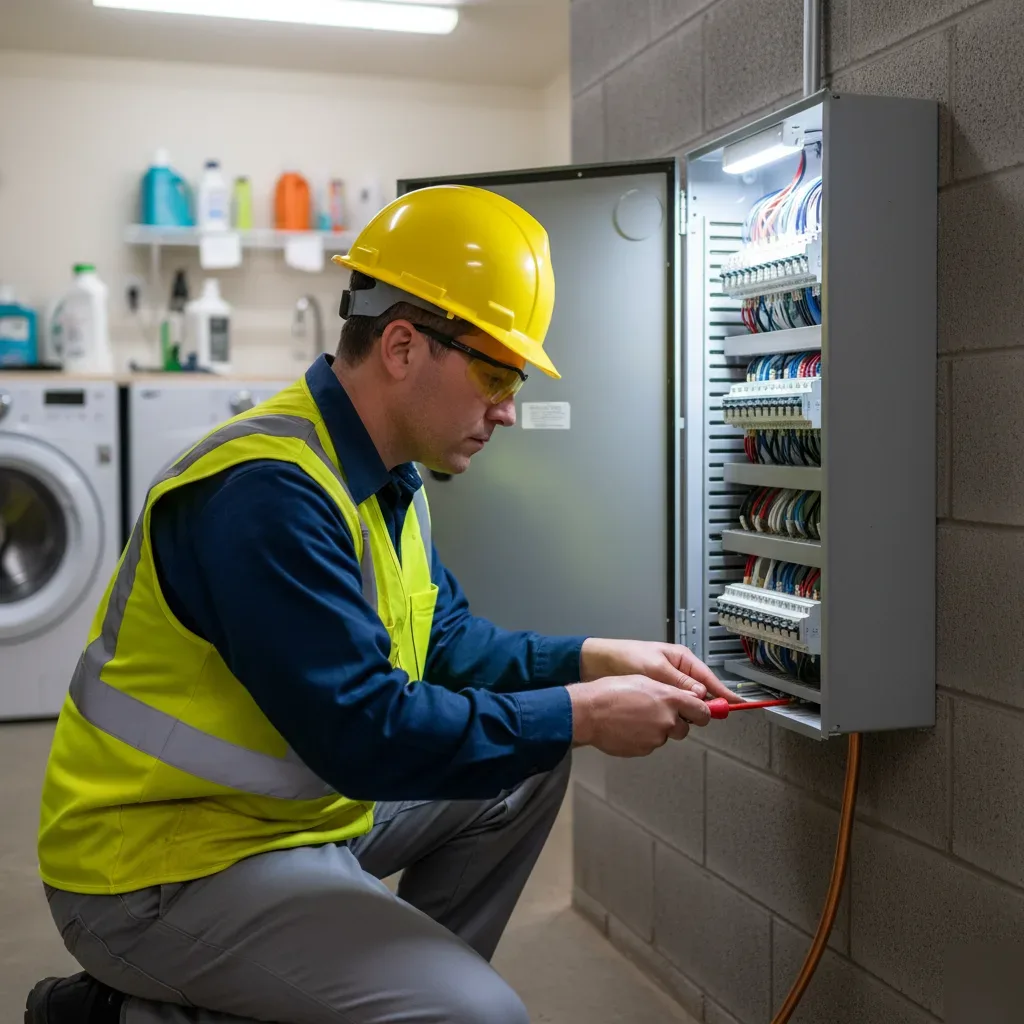
First, our licensed electricians inspect your existing panel, wiring, and any grounding that’s already in place. Older homes in Kailua and Kaneohe sometimes have original copper ground rods that have corroded over decades in Oahu’s salt air. We test resistance levels with specialized meters to see if your current ground path meets code. If it doesn’t, exactly what needs to change.
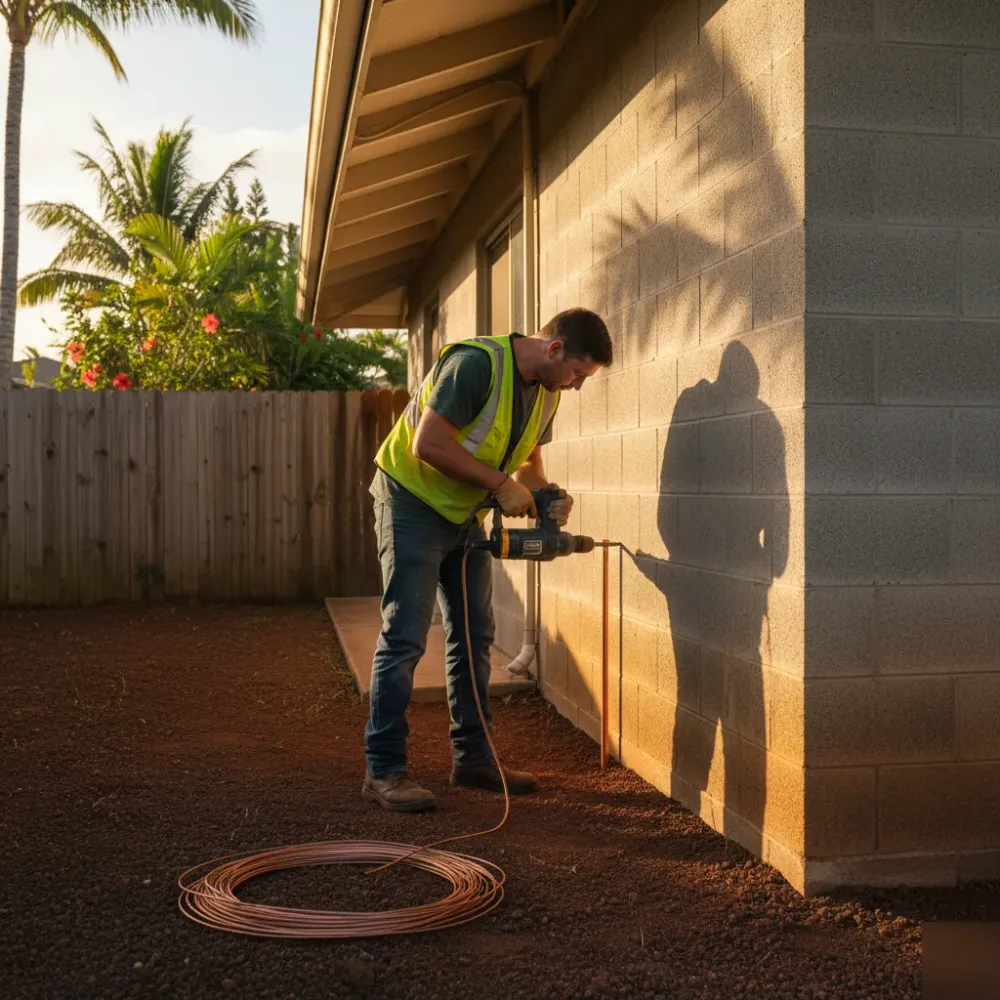
Then we get to work. For most residential jobs, that means driving copper-clad ground rods into the earth near your electrical panel. Oahu’s volcanic soil can be tough. Rocky ground in some areas means we occasionally need to install supplemental grounding electrodes or use a concrete-encased electrode method. We’ve done this hundreds of times across the island, so what the soil conditions look like before we even pull out the tools.
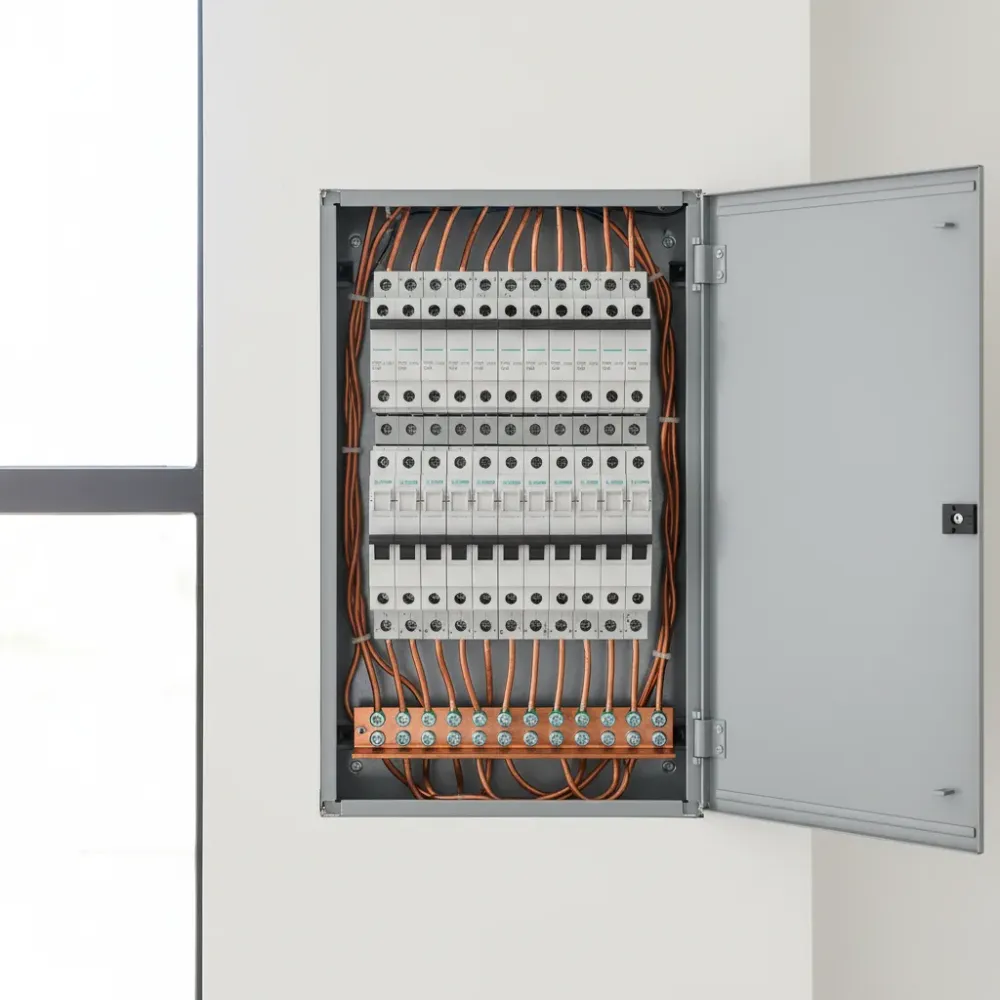
We run the grounding conductor from the rod back to your panel using properly sized copper wire. Every connection gets bonded tight. Loose connections are one of the biggest problems we find on re-inspections of other people’s work. Nine times out of ten when someone calls us to fix a grounding issue, it traces back to a sloppy bond somewhere in the system.
Once everything’s connected, we test the entire ground path again. We’re looking for resistance readings that fall well within National Electrical Code requirements. Federal regulations governing wiring design and grounding protection standards establish the baseline safety requirements our work is built around. We take that seriously.
For light commercial properties, the process scales up but the principles stay the same. Clean connections, verified resistance, full code compliance. We document everything and make sure your system passes inspection the first time. Our team handles the permit process too, so you don’t have to chase paperwork around Oahu on your own.
And before we leave, we walk you through what we did and why. You’ll know exactly how your grounding system protects your home, your appliances, and your family.
Need help with grounding installation?
Schedule Electrical Service. True Power Electrical Services is ready to help.
Oahu Building Code Requirements for Electrical Grounding
Here’s what most homeowners don’t realize. Oahu follows the National Electrical Code, but the City and County of Honolulu adds its own amendments on top. So what passes inspection on the mainland might not fly here. We deal with this every single week.
The NEC requires every residential electrical system to have a grounding electrode system. That means your home needs a physical connection between its wiring and the earth. On Oahu, inspectors look for specific details. Your grounding electrode conductor has to be the right size for your electrical service. A 200-amp panel needs a minimum 4 AWG copper conductor. Get that wrong and you’ll fail inspection before anyone even looks at the rest of your work.
Concrete-encased electrodes are common in newer Oahu construction. The NEC recognizes these “Ufer grounds” as one of the most effective grounding methods available. Homes built on slabs in places like Kapolei and Ewa Beach often use rebar embedded in the foundation. Older homes in Kailua or Manoa might rely on driven ground rods instead. Both can work. But they have to meet current code requirements, not the code from when the house was built.
And that’s where things get tricky. If you’re upgrading your electrical panel, adding an EV charger, or doing any permitted electrical work, the inspector will check your grounding system against today’s standards. Not yesterday’s. A ground rod has to be at least 8 feet long and driven fully into the earth. If a single rod doesn’t test at 25 ohms or less resistance, you’ll need a second one spaced at least 6 feet apart.
Bonding matters too. Your water pipes, gas lines, and metal structural components all need proper bonding back to the grounding system. We see older Oahu homes where someone replaced copper water pipes with PVC and never updated the grounding. That’s a real safety hazard, not just a code violation.
Permits are required for grounding work tied to panel upgrades or new circuits. Our team handles the permit process and coordinates directly with Honolulu inspectors so nothing gets missed. Exactly what they look for because we see them regularly. No surprises. No failed inspections. Just clean, code-compliant work that keeps your family safe.
How to Prepare Your Home Before a Grounding Installation Appointment
A little prep goes a long way. Before our team arrives at your Oahu home, there are a few simple things you can do to help everything run smooth and fast.
First, clear a path to your electrical panel. We see panels tucked behind storage boxes, surfboards, and holiday decorations all the time. Especially in older Kailua homes with panels in the garage. Move anything within three feet of the panel so we can open it fully and work safely. If your panel is outside, trim back any plants or vines growing near it. We need clear access from the start.
Next, know where your main water line enters the house. Grounding systems often connect to metal water pipes, and we’ll need to inspect that connection point. You don’t have to do anything to the pipe itself. Just make sure the area around it isn’t blocked by stored items or cabinets we can’t move.
Think about your schedule for the day. We’ll need to shut off power to parts of your home during the work. Sometimes the whole panel goes dark for a short stretch. So charge your phone ahead of time. Save any work on your computer. And if you’ve got a fish tank or medical equipment that needs constant power, let us know before the appointment. We’ll plan around it.
Got pets? We love them, but an open panel and exposed wiring aren’t safe for curious dogs or cats. Keep them in a separate room or outside while we’re working.
One more thing most people forget. If you’ve had any previous electrical work done, especially panel upgrades or outlet additions, pull out those records if you have them. Old permits, inspection reports, anything like that helps us understand what’s already in place. Nine times out of ten, homeowners on Oahu don’t have paperwork handy, and that’s fine. We’ll figure it out during our inspection. But if you do have it, it saves time.
Not sure what else to do? Don’t stress about it. Just give us a call before your appointment and we’ll walk you through exactly what to expect.
Frequently Asked Questions
Common questions about grounding installation services in Oahu
How does Oahu’s salt air affect my grounding system over time?
Salt air corrodes copper ground rods and bonding connections faster than most climates on the mainland. What tested fine five years ago may not be reliable today. Moisture also works into junction boxes and weakens connections you can’t see. If your home is near the coast or in areas like Kailua or Kaneohe, your grounding system needs to be checked more often than a typical mainland home would.
What are the signs that my Oahu home needs a grounding installation?
A small shock when touching a metal faucet, flickering lights, or GFCI outlets that keep tripping are all warning signs. Two-prong outlets anywhere in your home also mean those circuits have no equipment ground. Surge protectors burning out faster than normal is another red flag. Most grounding problems don’t show up all at once. They build quietly over time, so catching them early keeps your family safer.
Do older homes in Oahu need a new grounding installation?
Yes, many homes built before the 1970s in Oahu were never required to have the grounding systems used today. The National Electrical Code has changed a lot since then. What passed inspection decades ago does not meet current safety standards. If your home still has original wiring, there is a real chance the grounding is outdated or missing entirely. A licensed electrician can test your system and tell you exactly where you stand.
What happens during a grounding installation appointment?
A licensed electrician will inspect your panel, existing wiring, and any grounding already in place. Resistance levels get tested with specialized meters to see if your current ground path meets code. From there, copper-clad ground rods are driven into the earth near your panel. Every connection gets bonded tight before the job is done. You will know exactly what was found and what was fixed before the crew leaves your property.
Do I need grounding work before installing an EV charger or upgrading my panel?
Yes, adding an EV charger, a sub-panel, or upgrading to 200-amp service all require a grounding system that meets current code. Skipping this step means you are building new electrical capacity on a foundation that may not be safe. Getting grounding right first protects your investment and keeps the rest of the upgrade on solid ground. A quick inspection before any major electrical project can save you from costly problems later.
How does rocky or volcanic soil in Oahu affect the grounding installation process?
Oahu’s volcanic soil can make it harder to drive ground rods to the depth required by code. In rocky areas, supplemental grounding electrodes or a concrete-encased electrode method may be needed instead. This is common across the island, and an experienced electrician will know what approach fits your property. The goal is always the same: a solid, low-resistance path into the earth that protects your home and meets current standards.
Ready to Get Started?
Schedule Electrical Service Call (808) 427-7200 today.
