
Electrical Panel Upgrade in Oahu
 Schedule Electrical Service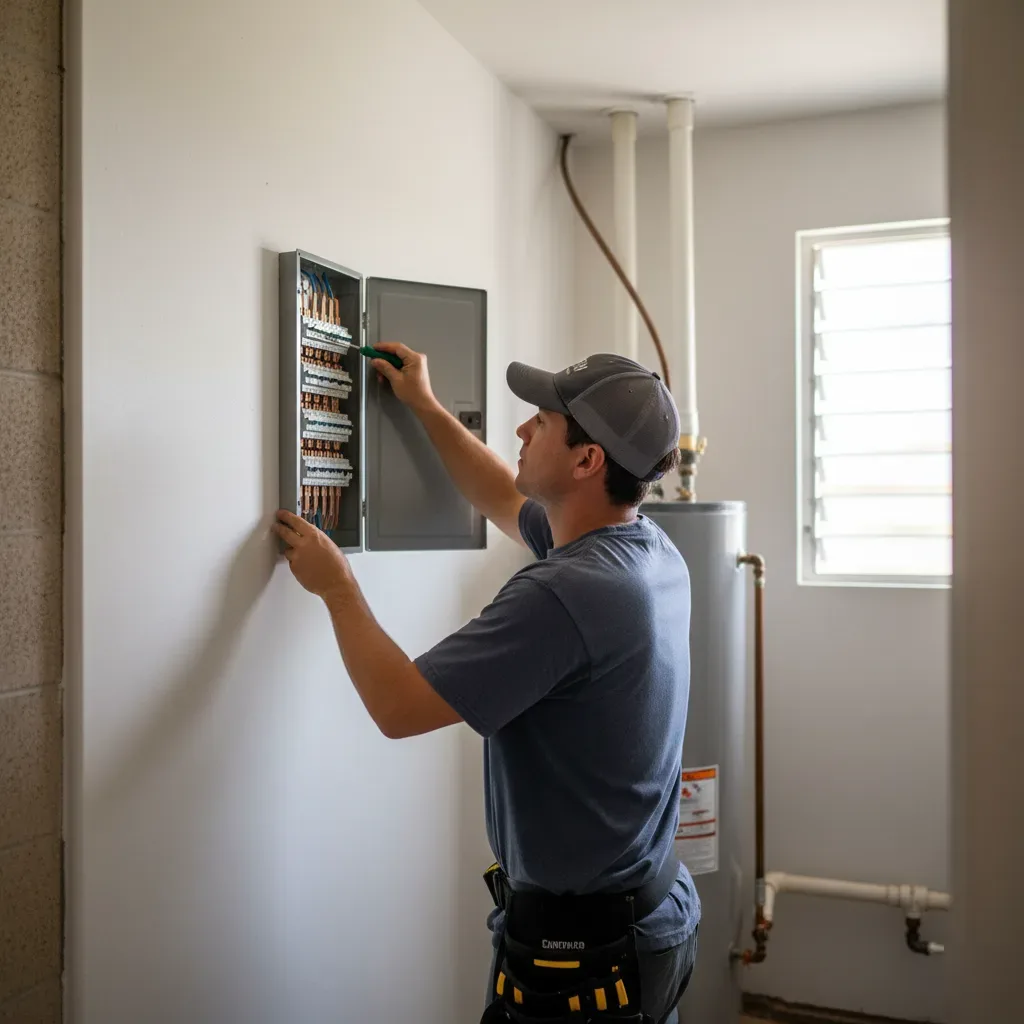
Quick Summary:
Electrical Panel Upgrade in Oahu: Know When It’s Time and What to Expect
What’s Covered on This Page
- Signs Your Oahu Home Needs an Electrical Panel Upgrade
- What an Electrical Panel Upgrade Involves in Oahu Homes
- Choosing the Right Panel Size for Your Oahu Property
- Permits and Inspections Required for Panel Upgrades in Oahu
- How to Prepare Your Home Before the Upgrade Day
- How do I know if my Oahu home actually needs a panel upgrade?
- What size panel does my Oahu home need?
- How long does an electrical panel upgrade take?
- Do I need a permit for a panel upgrade in Oahu?
- Does Oahu’s salt air and humidity affect my electrical panel?
- What should I expect when a technician comes to upgrade my panel?
Need electrical panel upgrade?
Schedule Electrical Service. Call True Power Electrical Services now.
Signs Your Oahu Home Needs an Electrical Panel Upgrade
Your panel talks to you before it fails. Most homeowners just don’t know what to listen for. Someone calls because something feels off, and by the time we open the panel, the signs have been sitting there for months. Sometimes years.
Flickering lights are usually the first thing people spot. You run the microwave and the kitchen lights dim. The AC kicks on and the bedroom fan slows down. That’s your panel telling you it can’t keep up. A lot of older homes in Kailua and across Oahu still run 100-amp panels sized for a completely different era. Back then, nobody had central air, multiple TVs, a home office, and an EV charger all pulling power at once.
Breakers that trip over and over are another clear signal. A breaker is a safety device. It trips to protect your wiring from overheating. But if you’re resetting the same one every few days, that’s not a quirk. That’s a warning. And if you ever smell something burning near your panel or spot scorch marks on the breaker face, stop using that circuit and call a licensed electrician right away. Electrical failures are one of the leading causes of home structure fires in the country.
Here’s one that surprises people. A panel that’s warm to the touch. Panels shouldn’t feel warm on the outside. If yours does, there’s likely a loose connection or an overloaded bus bar inside. Both are serious problems.
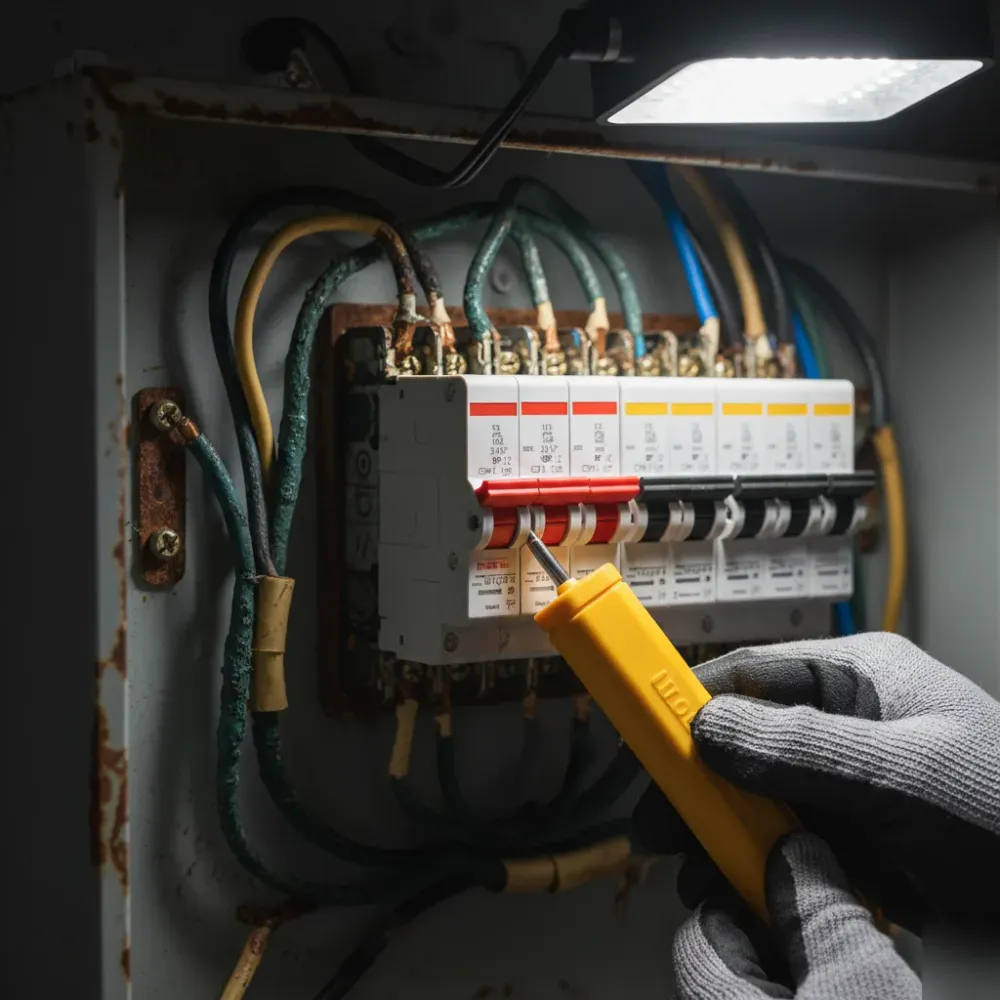
Rust and corrosion matter too. Oahu’s salt air is brutal on metal components. We’ve pulled panel covers in Ewa Beach and found green corrosion eating through bus bars that looked completely fine from the outside. Humidity does real damage over time, especially in panels mounted on exterior walls or in garages without any climate control.
Not sure if what you’re seeing is a real problem? Some signs are subtle. A faint buzzing. Outlets that feel warm. Appliances that don’t run at full power. None of that is normal, and all of it points back to a panel that’s either too old, too small, or both. If your home was built before 1990 and still has its original panel, it’s worth having someone take a look. A quick inspection tells us everything we need to know.
What an Electrical Panel Upgrade Involves in Oahu Homes
It’s not just swapping out a metal box. A proper upgrade touches several parts of your home’s electrical system, and every step matters.
We start by inspecting your existing panel and the wiring feeding into it. Many homes across Oahu still have panels rated at 100 amps or even 60 amps. That was fine decades ago. But today’s homes run central AC, multiple kitchen appliances, EV chargers, and more. We need to see what you’re working with before we touch anything.
Next comes the plan. We map out your current circuits, flag any that are overloaded or improperly wired, and figure out the right amperage for your household. Most residential upgrades on Oahu land at 200 amps. Some larger homes in Hawaii Kai or Kailua need 400-amp service. It depends on your setup and where you’re headed.
The actual work involves disconnecting power from the utility feed, pulling the old panel, and installing the new one. We mount it securely, run new wiring where needed, and connect each circuit to its own dedicated breaker. Every connection gets tested. Every wire gets labeled. No guessing, no shortcuts.
We also coordinate with HECO for the meter and service disconnect. That’s a step a lot of homeowners don’t think about, but it’s required. We handle the scheduling and paperwork so you don’t have to chase it down yourself.
Old panels hide surprises. Double-tapped breakers. Corroded bus bars. Wiring that doesn’t meet current code. We address all of it during the upgrade because there’s no better time to catch it. Once everything’s connected, we run a full load test and verify each circuit is functioning safely. And then we pull your inspection with the county. We don’t cut corners on permits. Ever.
Choosing the Right Panel Size for Your Oahu Property
This is where a lot of homeowners get tripped up. Too small and you’re back to square one in a few years. Too large and you’ve spent more than you needed to. So how do you figure out what’s right?
Most older homes on Oahu still run 100-amp panels. Think about what your home does now. Central AC, multiple refrigerators, an electric dryer, maybe a hot tub out back. Stack all of that up and 100 amps can’t keep pace. For a typical single-family home in Kailua or Kaneohe, we almost always recommend 200 amps. It handles today’s load and leaves room for what comes next.
But if you’re planning to add an EV charger or a full solar battery backup system, 200 amps might still feel tight. We see this a lot with homeowners in Hawaii Kai who’ve gone solar and want battery storage on top of it. In those cases, a 225-amp or even 320-amp panel makes more sense. It’s not about what you need this month. It’s about what you’ll need in three to five years. The U.S. Department of Energy outlines how home upgrades like panel replacements support energy efficiency and long-term savings — worth reviewing if you’re planning major electrical improvements.
Light commercial properties are a different conversation entirely. A small retail space in Honolulu might get by with 200 amps, but a restaurant kitchen or a shop running heavy equipment could need 400 amps or more. We calculate the full load before recommending anything.
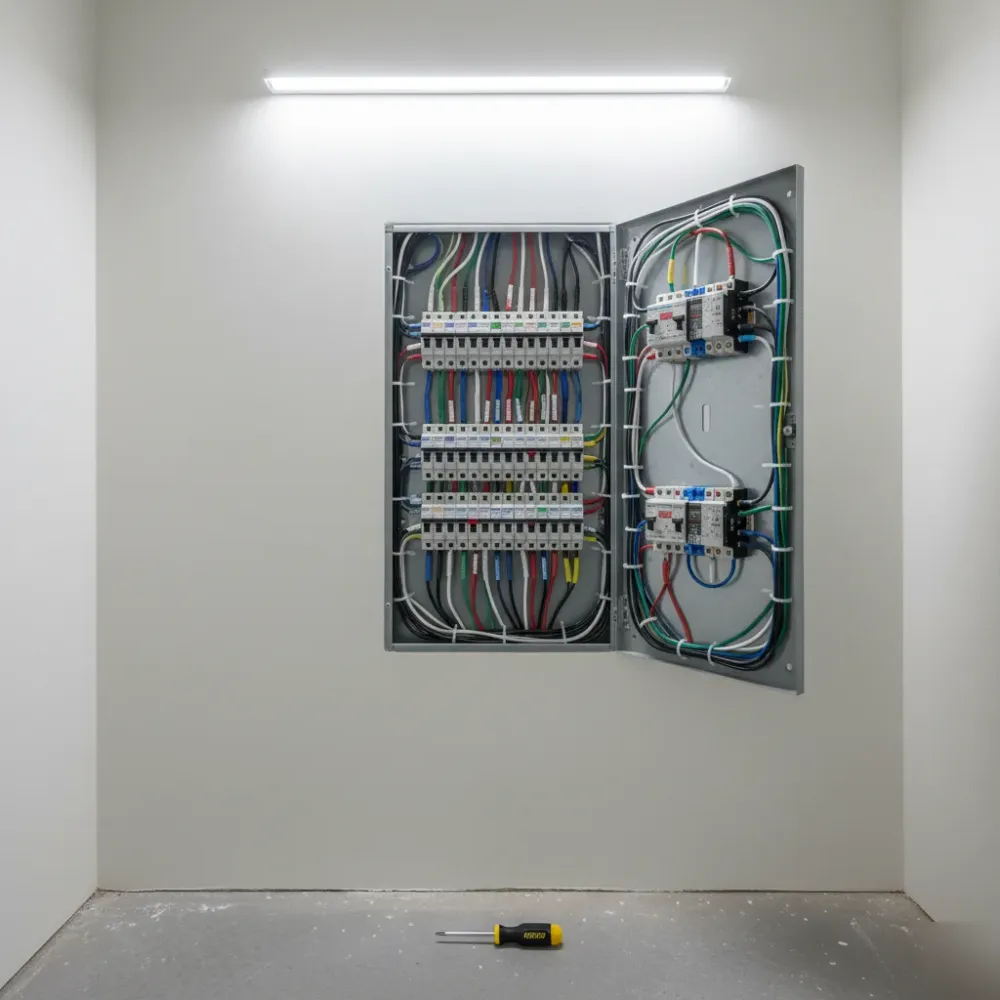
Here’s something most people don’t realize. Panel size also affects how many circuits you can run. A 200-amp panel typically supports 40 to 42 circuit spaces. Every dedicated appliance, every bathroom, every outdoor circuit takes up a slot. We’ve opened panels on Oahu where every single space was used and someone had doubled up circuits just to make things fit. Not safe. Not to code.
We do a full load calculation based on your actual usage, your planned additions, and current code requirements. That way you’re not guessing. Want help figuring out what size panel your property actually needs? Give us a call.
Need help with electrical panel upgrade?
Schedule Electrical Service. True Power Electrical Services is ready to help.
Permits and Inspections Required for Panel Upgrades in Oahu
Skip the permit and you’re asking for trouble. We’ve seen homeowners in Kailua try to sell their house only to find out about an unpermitted panel swap from years back. That one shortcut turned into months of delays and extra costs at closing. Not worth it.
Every electrical panel upgrade on Oahu requires a permit from the City and County of Honolulu’s Department of Planning and Permitting. No exceptions. This applies to homes, condos, and small commercial buildings across the island. The permit process makes sure your new panel meets the current National Electrical Code and Hawaii’s local amendments. Your licensed electrician should handle the application, but you deserve to understand what’s happening behind the scenes.
Here’s how it works. We submit the permit application with a scope of work describing the upgrade. For most residential jobs, this falls under a simple electrical permit. If the utility service entrance needs to be upsized, say from 100 amps to 200 amps, Hawaiian Electric (HECO) gets involved too. They’ll need to approve the new service connection before we can energize anything. We coordinate that timeline so you’re not stuck waiting on anyone.
Once the physical work is done, we schedule a rough and final inspection with a city electrical inspector. They’ll check conductor sizing, grounding and bonding, breaker ratings, panel clearance, and labeling. Proper installation and inspection cuts the risk of electrical fires in homes. That alone should tell you why this step matters.
Nine times out of ten, our jobs pass on the first inspection. That’s because we prep everything to code before the inspector ever shows up. But if something needs correction, we handle it right away and reschedule. You don’t have to chase anyone down.
Permits also protect you legally. If an electrical issue causes damage down the road, your insurance company will check for permits. No permit could mean a denied claim. So yes, the paperwork matters just as much as the wiring itself. Our team takes care of the entire process from start to finish so you can focus on everything else going on in your Oahu home.
How to Prepare Your Home Before the Upgrade Day
A little prep goes a long way. Most homeowners on Oahu don’t realize how much smoother the job goes when a few things are handled the night before.
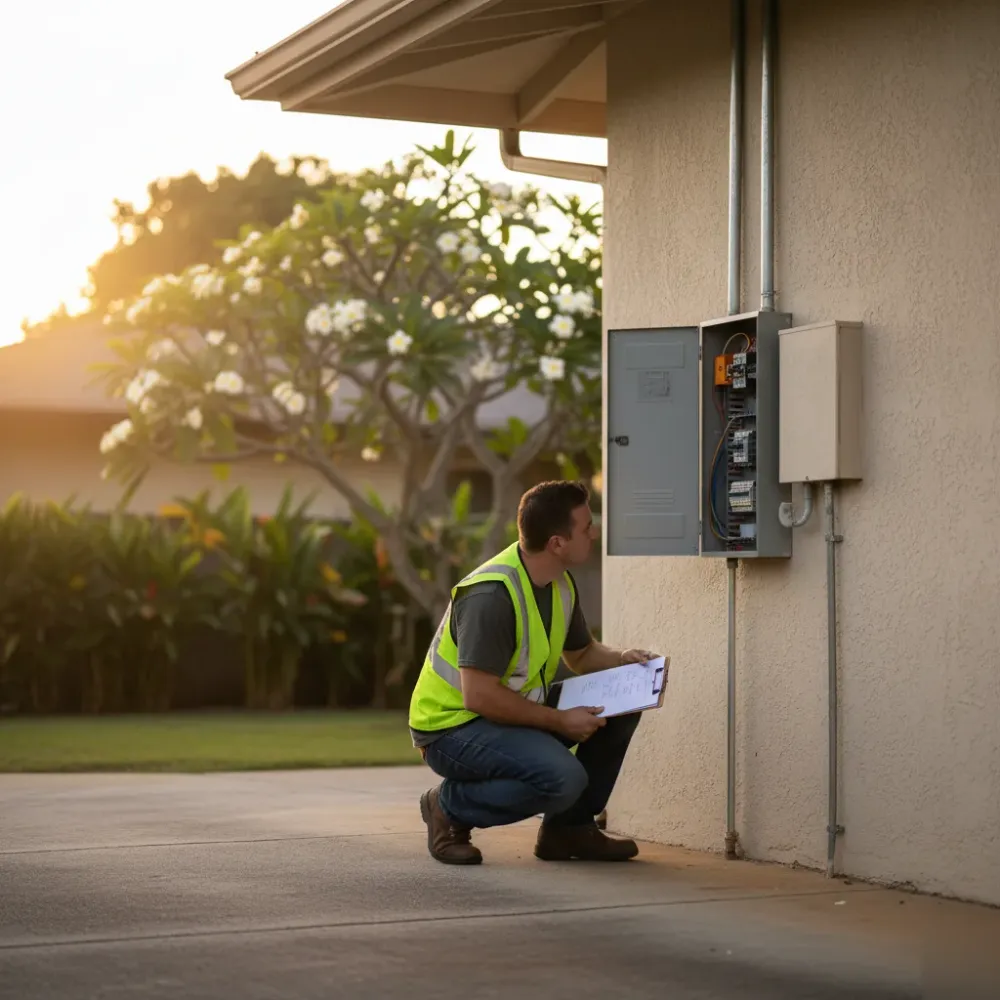
Clear the area around your electrical panel. We need about four feet of open space on all sides. Storage bins, surfboards, shelving units, whatever’s been stacked against the wall, move it. In a lot of Kailua homes, the panel sits in the garage right behind where everyone parks. Pull your vehicles out and keep them in the driveway for the day. We can’t work safely in a tight space.
Your power will be off for several hours. Plan for that. Charge your phones and laptops the night before. If you’ve got medications that need refrigeration, grab a small cooler with ice. Unplug sensitive electronics like computers, gaming systems, and home office equipment. Power surges during the switchover are rare, but there’s no reason to take the chance.
Got pets? Keep them in a separate room or with a neighbor for the day. We’re going in and out of the house constantly, and an open door plus a nervous dog is a bad combination.
If your panel is inside the house, lay down old towels or drop cloths from the entry to the panel location. Our crew brings protective coverings, but your floors will thank you for the extra layer. Older homes in Manoa and Hawaii Kai sometimes have narrow hallways leading to the panel, so clearing that walkway really does make a difference.
Make sure someone 18 or older is home during the upgrade. We’ll need to walk you through the finished panel, test circuits with you, and confirm everything’s working in each room. That’s also when we answer your questions about what changed and why. The walkthrough is part of how True Power Electrical Services does things. You shouldn’t have to guess whether the job was done right.
Not sure what else to ask before your appointment? Give us a call. We’ll walk you through it.
Frequently Asked Questions
Common questions about electrical panel upgrade services in Oahu
How do I know if my Oahu home actually needs a panel upgrade?
Your panel needs an upgrade if you have flickering lights, breakers that trip often, or a panel that feels warm to the touch. These are not quirks — they are warnings. Oahu homes built before 1990 often still have 100-amp panels that were never designed for today’s appliances. Salt air and humidity also speed up corrosion inside older panels. If you notice scorch marks or a burning smell near your panel, stop using that circuit and call a licensed electrician right away.
What size panel does my Oahu home need?
Most single-family homes on Oahu do well with a 200-amp panel upgrade. That covers central AC, kitchen appliances, an electric dryer, and everyday use. If you are adding an EV charger or solar battery storage, you may need 225 amps or more. Homes in Hawaii Kai going solar with battery backup often need a larger service. We run a full load calculation based on your actual usage before recommending any panel size.
How long does an electrical panel upgrade take?
Most panel upgrades on Oahu take one full day to complete. The work involves disconnecting the utility feed, removing the old panel, installing the new one, and testing every circuit. We also coordinate with HECO for the meter and service disconnect, which adds some scheduling time. After the work is done, we pull the required county inspection. You should plan for your power to be off for several hours during the job.
Do I need a permit for a panel upgrade in Oahu?
Yes, a permit is required for every electrical panel upgrade in Oahu. This is not optional — it is part of the code. We handle the permit paperwork and schedule the county inspection so you do not have to figure it out yourself. Skipping the permit creates real problems when you sell your home or file an insurance claim. A permitted upgrade protects you and keeps your home up to current electrical code.
Does Oahu’s salt air and humidity affect my electrical panel?
Yes, Oahu’s coastal climate is hard on electrical panels. Salt air causes corrosion on metal bus bars and connections inside the panel. We have opened panels in Ewa Beach that looked fine from the outside but had serious corrosion eating through the components. Panels mounted on exterior walls or in garages without climate control are especially vulnerable. If your panel is older and near the coast, an inspection can catch damage before it becomes a safety hazard.
What should I expect when a technician comes to upgrade my panel?
When we arrive, we start by inspecting your existing panel and the wiring connected to it. Then we walk you through what we found and explain the plan before any work begins. Your power will be off for several hours during the upgrade. We label every circuit, test every connection, and do a full load check before we leave. You will not be left guessing about what was done or why.
Ready to Get Started?
Schedule Electrical Service Call (808) 427-3144 today.
