
Electrical Panel Replacement in Oahu
 Schedule Electrical Service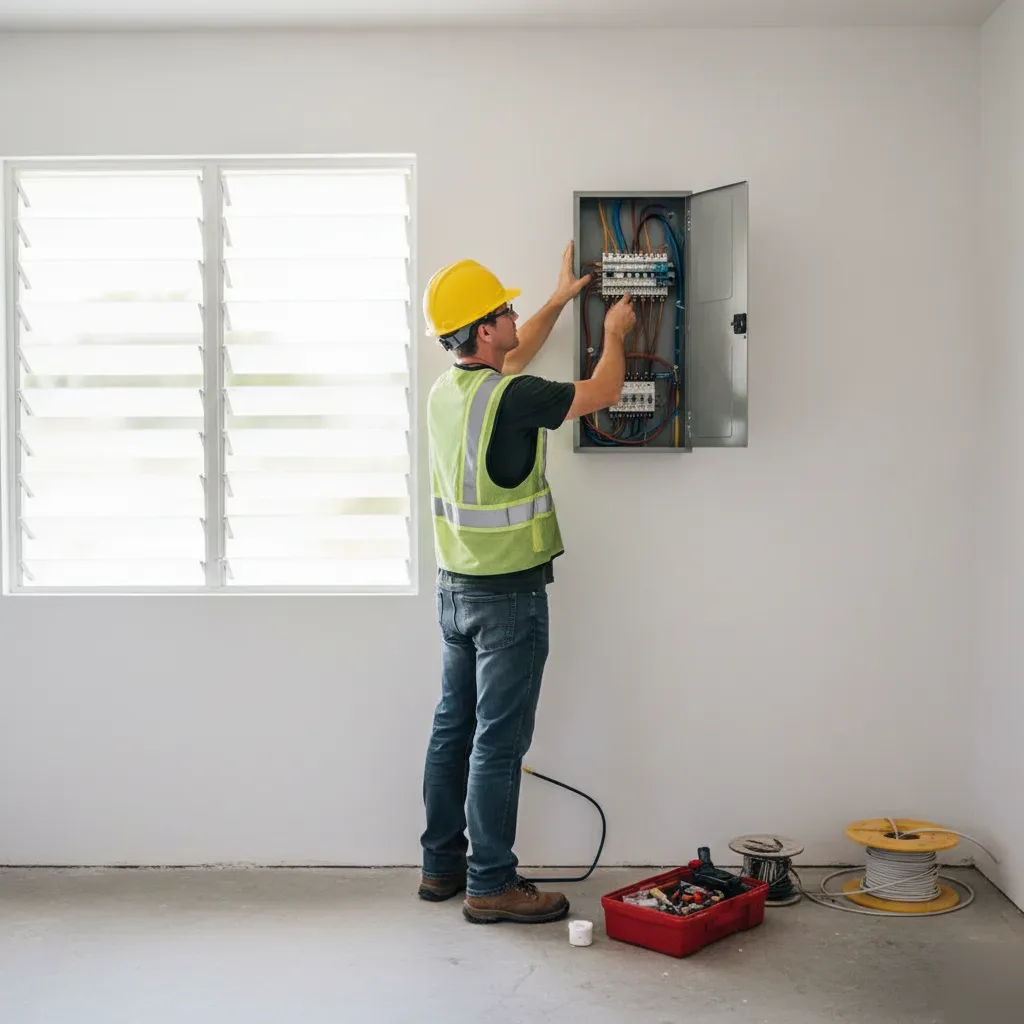
Quick Summary:
Electrical Panel Replacement in Oahu: Get Your Home Powered Safely
What’s Covered on This Page
- Signs Your Oahu Home Needs an Electrical Panel Replacement
- What Happens During an Electrical Panel Replacement in Oahu
- Choosing the Right Panel Size for Your Oahu Property
- How to Prepare Your Home Before the Panel Replacement Crew Arrives
- Oahu Electrical Codes and Permits for Panel Replacement
- How long does an electrical panel replacement take in Oahu?
- Do I need a permit for an electrical panel replacement in Oahu?
- Why do panels in Oahu seem to wear out faster than on the mainland?
- What size panel does my Oahu home actually need?
- What are the warning signs that my panel needs to be replaced soon?
- What should I do to prepare for my panel replacement appointment?
Need electrical panel replacement?
Schedule Electrical Service. Call True Power Electrical Services now.
Signs Your Oahu Home Needs an Electrical Panel Replacement
Your panel talks to you before it fails. Most homeowners just don’t know what to listen for. We see it every single week. Someone calls about a tripped breaker, and when we open the panel, the real story is way bigger than they expected.
Flickering lights are usually what people spot first. You run the microwave and the kitchen lights dim. The AC kicks on and something flickers down the hall. That’s your panel struggling to keep up. A lot of homes in Kailua and across Oahu were built with 100-amp panels, and back then that was fine. Now you’ve got central air, multiple TVs, a home office, maybe an EV charger in the garage. That old panel wasn’t built for any of it.
Breakers that trip over and over are a big red flag. A breaker trips once? That’s it doing its job. But if you’re resetting the same breaker every few days, something’s wrong at the panel level. And here’s the part that worries us more than a breaker that trips too often. A breaker that never trips. It could be stuck, or it could be failing to respond to an overload at all. That’s a fire risk sitting quietly in your wall.
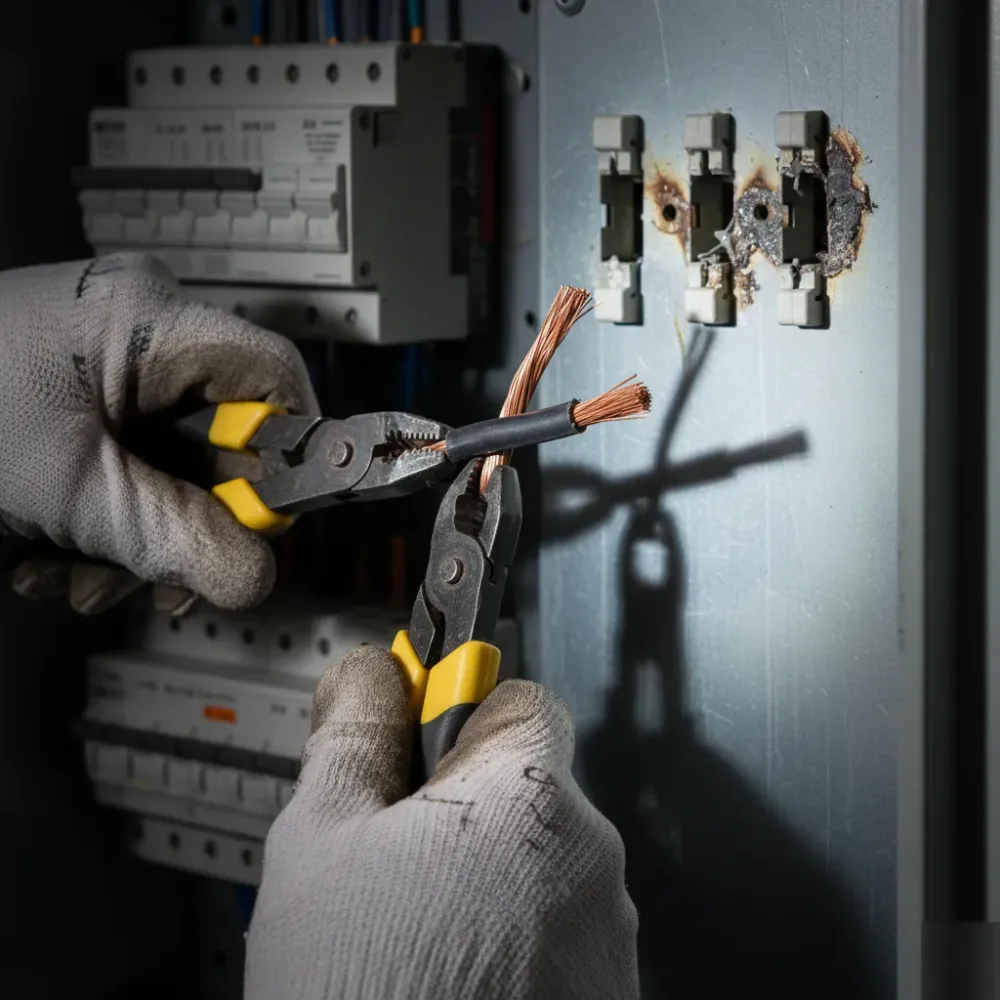
Burn marks or a warm panel cover should get your attention right now. If you touch the panel door and it feels hot, call a licensed electrician today. Not next week. Scorch marks around breakers mean wiring has already overheated. Electrical failures are a leading cause of home structure fires, and most of those fires started with warning signs that got ignored.
A few other things we find during inspections on Oahu. Corrosion inside the panel, which our salt air and humidity absolutely speed up. A burning smell near the box. Double-tapped breakers where two wires share one slot. Rust on the bus bar. Any of these can mean your panel is past its safe service life.
Not sure if what you’re seeing is serious? That’s pretty common. Most people can’t tell a minor nuisance from a genuine hazard. A quick inspection gives you a straight answer so you’re not left guessing about your family’s safety.
What Happens During an Electrical Panel Replacement in Oahu
Most folks want to know exactly what’s going to happen before they commit. Fair enough. Here’s the honest rundown from start to finish.
First, we kill the power. Your home will be without electricity for several hours, sometimes most of the day depending on the job. We coordinate with HECO to disconnect service at the meter before we touch a single wire. Once the meter is pulled, we remove the old panel cover and start documenting every circuit. Each wire gets labeled. Every connection gets mapped. We’ve done this in older Kailua homes where the original labels were completely faded, and skipping that step leads to chaos later.
Then the old panel comes out. We disconnect each circuit wire, pull the box off the wall, and look at what’s behind it. Nine times out of ten we find something back there that needs attention. Corroded connectors, undersized grounding conductors, wires that got spliced decades ago and forgotten. We deal with all of it before the new panel goes in.
The new panel gets mounted, leveled, and locked to the wall. We route each circuit into its designated breaker, torque every connection to spec, and install a grounding system that meets current Oahu building codes. If your home needs a larger conduit or updated service entrance cable, we handle that too. For a detailed look at what a full meter and panel upgrade involves, This Old House covers upgrading an electric meter and panel to 200-amp service step by step.
After all connections are made, we run our own full inspection before calling for the county permit inspection. Every circuit gets tested. Lights, outlets, kitchen appliances, the AC. We’ve seen other crews button up a panel and leave without checking, then the homeowner finds out their dryer circuit is dead at 9 PM. That doesn’t happen on our jobs.
Once the inspector signs off, HECO reconnects your meter and you’re back up. A standard residential panel on Oahu typically takes one full day. Bigger homes or jobs that need a service upgrade might stretch into a second day, but we’ll tell you that upfront so you can plan around it.
Choosing the Right Panel Size for Your Oahu Property
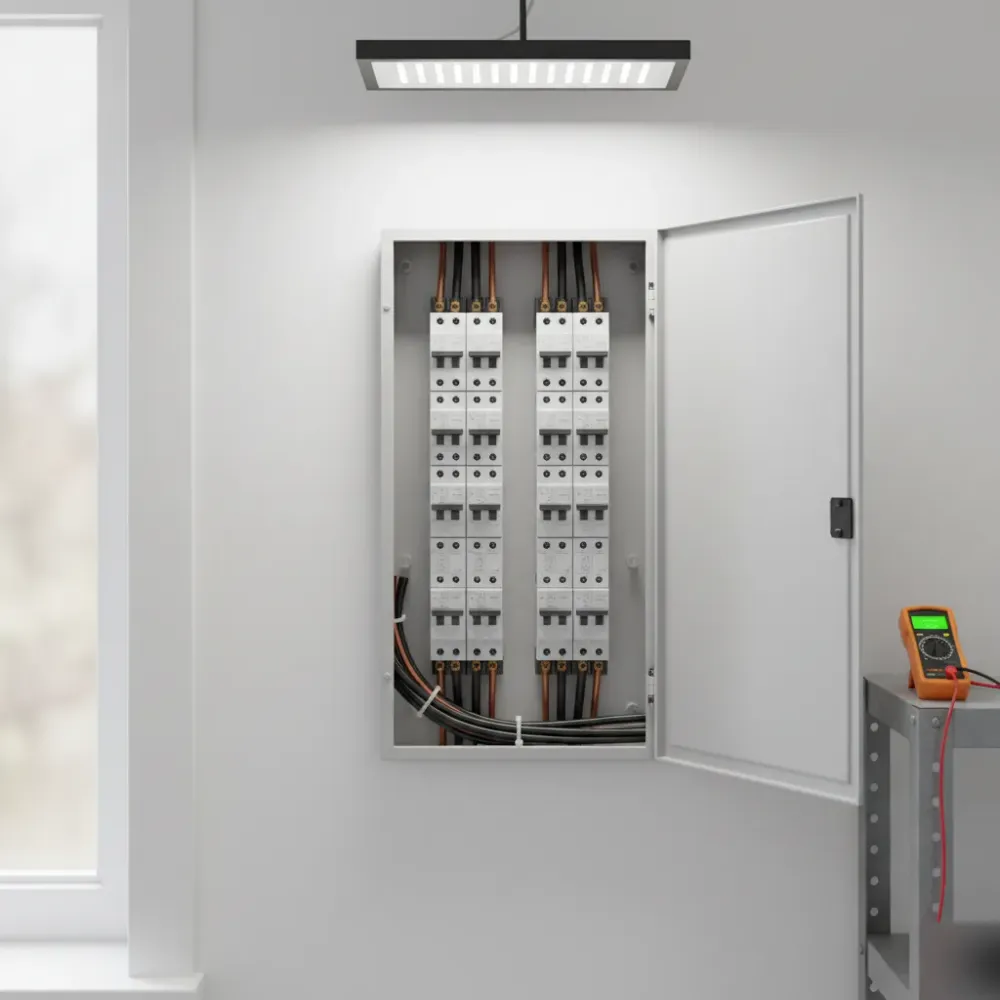
This is where a lot of homeowners get tripped up. You know your old panel can’t keep up, but how do you figure out what size you actually need?
Panel size is measured in amps. Most older homes on Oahu still have 100-amp panels. Some places in Kailua and Hawaii Kai even have 60-amp panels that were standard decades ago. For a typical modern household, 200 amps handles central air, a full kitchen, multiple bathrooms, and everyday electronics without breaking a sweat. But “typical” doesn’t describe every home.
Think about what you’re running right now, then think about what you want to add in the next five to ten years. An EV charger alone can pull 40 to 50 amps. A hot tub on the lanai? Another 40 to 50. Solar battery backup, a home office with heavy equipment, lighting upgrades throughout the house. It adds up fast, and the last thing you want is to size your panel for today and be back in this same conversation in three years.
So how do we figure it out? We do a load calculation. That’s a detailed look at every circuit in your home, what’s drawing power now, and what you’ll need down the road. The National Electrical Code requires this calculation to determine the minimum panel size for safe operation. We don’t guess. We measure, we add it up, and we plan ahead.
For light commercial properties on Oahu, the math shifts even more. A small retail shop in Honolulu might need 400 amps depending on refrigeration, signage, and HVAC demands. Businesses that try to squeeze by with undersized panels always hit a wall eventually. Usually at the worst possible time.
Our licensed team can run the numbers during an inspection and give you a straight answer. No pressure. Just the facts so you can make a smart call for your property and your budget.
Need help with electrical panel replacement?
Schedule Electrical Service. True Power Electrical Services is ready to help.
How to Prepare Your Home Before the Panel Replacement Crew Arrives
A little prep goes a long way. Most of the work falls on us, but a few things you do the morning before we show up can make everything faster and smoother.
Clear the area around your electrical panel. We need about three to four feet of open space on all sides. That means moving storage bins, surfboards, shelving units, whatever’s stacked up against it. In a lot of Oahu homes, especially older places in Kailua and Kaneohe, the panel sits in a tight garage or utility closet that’s become a catch-all over the years. We see it constantly. Just give us room to work and we’ll handle the rest.
Plan for a full power shutoff. Your electricity will be off for several hours during the swap. Unplug sensitive electronics like computers, TVs, and fish tank heaters. Got a chest freezer? Don’t open it and everything inside should stay cold. Charge your phone the night before. And if anyone in the household relies on medical equipment that needs power, let us know ahead of time so we can coordinate the timing around that.
Keep pets in a separate room or with a neighbor. Our crew will be moving in and out through doors, and nobody wants a dog bolting toward the street or a nervous cat getting underfoot near open wiring.
One thing people forget. Let your neighbors know. Our work sometimes involves the utility company briefly disconnecting service at the meter, and there can be noise from drilling or mounting new equipment. A quick heads-up keeps the peace.
Should you shut off your breakers yourself before we arrive? No need. Our licensed electricians follow a specific de-energization sequence to keep everything safe and code-compliant. We’ll walk you through what’s happening and when, so nothing catches you off guard.
Clear the space, protect your electronics, secure your pets, and leave the technical side to us. Most homeowners say the prep took ten minutes. The peace of mind lasts a lot longer than that.
Oahu Electrical Codes and Permits for Panel Replacement
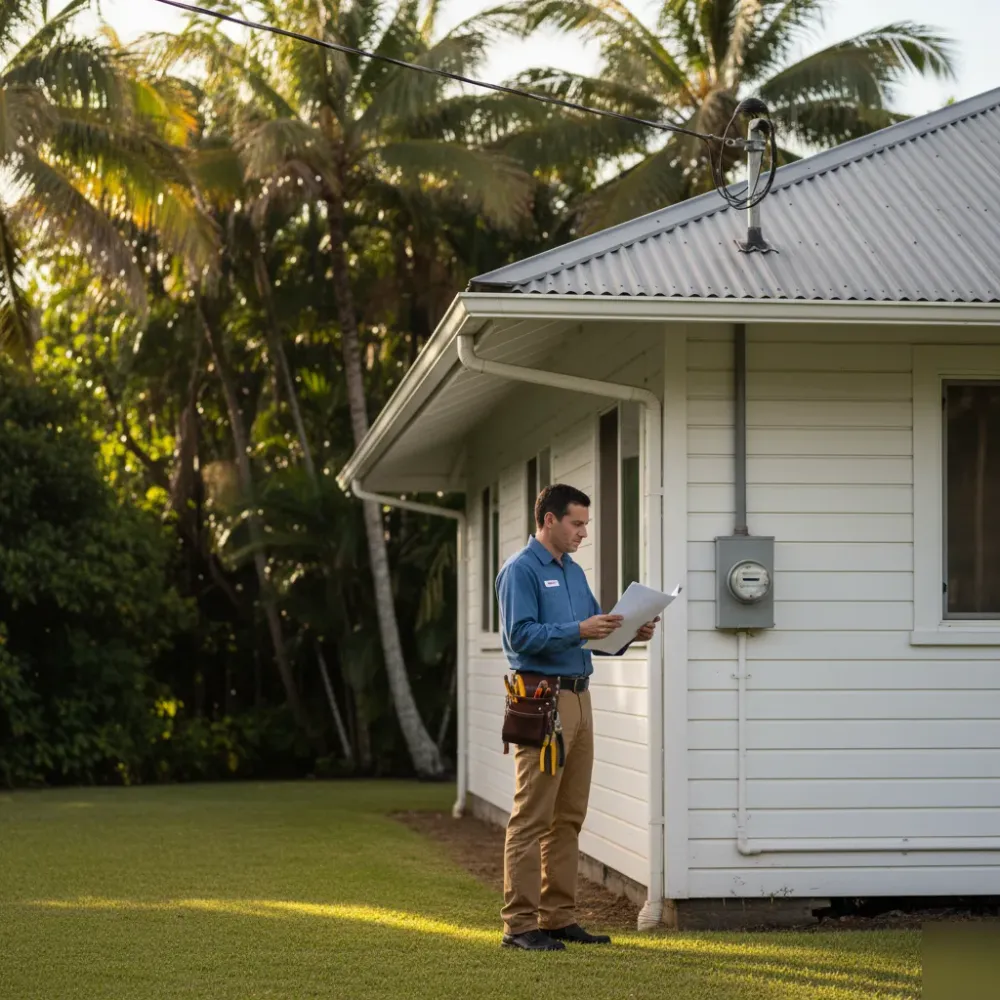
Every electrical panel replacement on Oahu requires a permit. No exceptions. This isn’t just red tape. It’s how the City and County of Honolulu makes sure your home’s electrical system is safe and up to current standards.
Here’s what catches people off guard. The National Electrical Code gets updated every few years, and Hawaii adopts its own version with local amendments. So the rules that applied when your house was built in Kailua or Mililani might be completely different from what’s required today. When we pull a permit for your panel replacement, the new installation has to meet current code. Proper grounding, correct breaker sizing, adequate clearance, compliant wiring methods. Electrical failures are one of the leading causes of home fires in this country, and that’s exactly why these codes exist.
We handle the permit process for you. We submit the application to the Department of Planning and Permitting, schedule the inspection, and make sure everything passes the first time. Most homeowners don’t have to think about it at all.
But here’s something worth knowing. If someone offers to swap your panel without pulling a permit, walk away. Unpermitted electrical work can void your homeowner’s insurance. And when you go to sell your property, Oahu home inspectors flag unpermitted panels constantly. It becomes your problem to fix, usually at the worst possible moment.
The inspection itself is straightforward. A city inspector comes out after we finish. They check that the panel is properly mounted, all connections are torqued to specification, grounding and bonding meet code, and the labeling is correct. Our team preps every job knowing exactly what the inspector wants to see, so there are no surprises.
One thing specific to Oahu. Salt air and humidity affect how certain materials hold up over time, and code-compliant installations account for corrosion-resistant hardware and proper weatherproofing, particularly for panels on exterior walls. We see corroded enclosures all the time in homes near the coast, from Ewa Beach to Hawaii Kai. A licensed electrician who works on this island every day knows those local conditions matter just as much as anything in the code book.
Getting permits right protects you now and years down the road. It’s one of those things you’ll never regret doing correctly.
Frequently Asked Questions
Common questions about electrical panel replacement services in Oahu
How long does an electrical panel replacement take in Oahu?
Most residential panel replacements in Oahu take one full day from start to finish. We coordinate with HECO to disconnect your meter, remove the old panel, install the new one, test every circuit, and pass the county permit inspection before your power comes back on. Larger homes or jobs that need a service entrance upgrade may run into a second day. We always tell you the timeline upfront so you can plan around it.
Do I need a permit for an electrical panel replacement in Oahu?
Yes, a permit is required for every electrical panel replacement in Oahu. The county requires a licensed electrician to pull the permit and pass an inspection before HECO reconnects your meter. This protects you as the homeowner. If someone offers to skip the permit to save time or money, walk away. Unpermitted electrical work can create problems when you sell your home or file an insurance claim.
Why do panels in Oahu seem to wear out faster than on the mainland?
Oahu’s salt air and high humidity speed up corrosion inside electrical panels much faster than dry climates. We regularly open panels here and find rust on the bus bar, corroded connectors, and moisture damage that would take decades to develop somewhere like Arizona. Homes near the coast, including areas like Kailua and Hawaii Kai, tend to see this faster. Regular inspections catch corrosion early before it becomes a safety hazard.
What size panel does my Oahu home actually need?
Most modern Oahu homes need at least a 200-amp panel to handle central air, a full kitchen, and everyday electronics comfortably. If you plan to add an EV charger, solar battery backup, or a hot tub on the lanai, you may need to plan for more capacity. We run a load calculation during every inspection so you get a real number based on your home, not a guess. Sizing right today saves you from doing this again in a few years.
What are the warning signs that my panel needs to be replaced soon?
The clearest signs are breakers that trip repeatedly, flickering lights when appliances kick on, a warm or hot panel cover, and burn marks around the breakers. A burning smell near the electrical box is serious and needs attention right away. Older homes in Kailua and across Oahu that still have 100-amp or 60-amp panels are often simply undersized for how people live today. Any of these signs are worth a professional inspection to get a straight answer.
What should I do to prepare for my panel replacement appointment?
Plan to be without power for most of the day and make arrangements for anything that depends on electricity, like refrigerated medication or working from home. Clear the area around your electrical panel so we have full access. Charge your phone the night before. If you have a generator, have it ready for anything time-sensitive. We handle everything else, including coordinating with HECO and scheduling the county inspection, so you do not have to manage those steps yourself.
Ready to Get Started?
Schedule Electrical Service Call (808) 427-3144 today.
