
Electrical Meter Upgrade in Oahu
 Schedule Electrical Service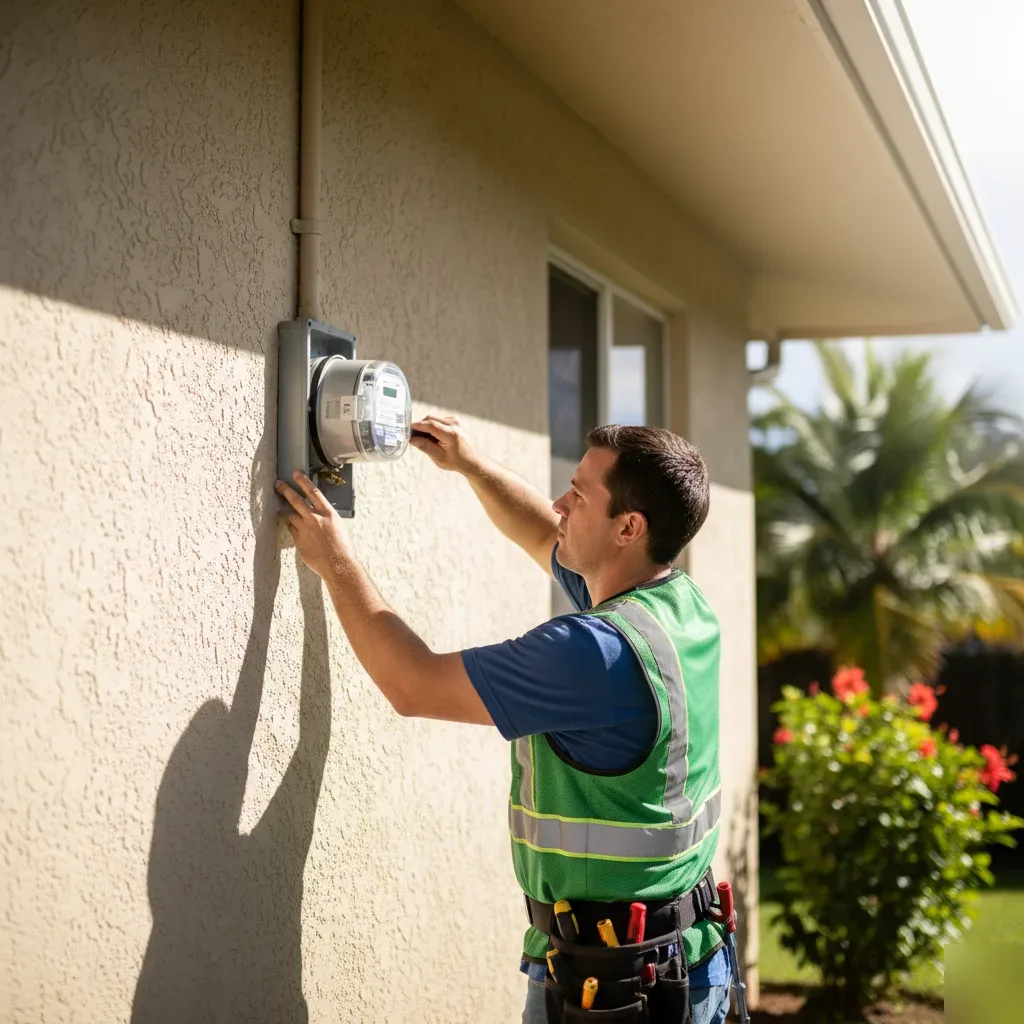
Quick Summary:
Electrical Meter Upgrade in Oahu: Get Your Home Ready for More Power
What’s Covered on This Page
- Signs Your Oahu Home Needs an Electrical Meter Upgrade
- Why Oahu Homeowners Upgrade to a 200-Amp Meter Service
- What to Expect During an Electrical Meter Upgrade in Oahu
- Permits and HECO Approval for Meter Upgrades on Oahu
- How True Power Verifies Your Upgraded Meter Is Working Correctly
- How long does an electrical meter upgrade take in Oahu?
- Do I need a permit to upgrade my electrical meter in Oahu?
- Does Oahu’s salt air and humidity affect my meter or electrical service?
- Can I add an EV charger without upgrading my meter first?
- What are the signs that my Oahu home needs a meter upgrade?
- What happens after the meter upgrade is complete?
Need electrical meter upgrade?
Schedule Electrical Service. Call True Power Electrical Services now.
Signs Your Oahu Home Needs an Electrical Meter Upgrade
Your meter is trying to tell you something. Most homeowners don’t think about it until something goes wrong, and by then the problem’s been sitting there for months. But there are clear warning signs, and our guys spot them every single week across Oahu.
The most obvious one? Lights that flicker or dim the second you kick on a large appliance. The AC starts up and the kitchen lights dip for a second. That’s your electrical system straining under a load it was never built to carry. A lot of older homes in Kailua and Kaneohe still have meters rated for 100 amps or less. That was fine decades ago. It’s not fine now, not with everything a modern household runs.
Breakers that trip constantly are another big one. Not once in a while. Regularly. You reset it, things seem okay, then two days later it trips again. That’s not a bad breaker. That’s your system telling you it can’t keep up. Ignoring it doesn’t make the problem smaller, it just gives it more time to get worse.
Warm spots or discoloration around your meter base are serious. Scorch marks. A faint burning smell near the meter. If you’re seeing or smelling any of that, stop waiting. Electrical failures are a leading cause of home fires, and a meter that can’t handle your load creates exactly that kind of risk.
Think about everything you’ve added over the years. Mini-split AC units. A home office. Maybe an EV charger in the garage. Each one pulls power your original meter wasn’t designed for. Homes built in the 1970s and 1980s in neighborhoods like Pearl City and Mililani often need upgrades just to safely run what a typical family uses on a Tuesday afternoon.
Not sure if any of this sounds like your situation? That’s actually pretty common. Most people can’t tell the difference between a nuisance flicker and a real problem. Our licensed electricians can inspect your meter, test the load, and tell you exactly where you stand. No guessing.
Why Oahu Homeowners Upgrade to a 200-Amp Meter Service
Most homes built on Oahu before the 1990s came with 100-amp meter service. That was plenty back then. But your home isn’t running the same way it did thirty years ago.
Think about what you’ve added since moving in. A central AC unit. Maybe a second fridge in the garage. A home office with multiple screens and a printer running all day. An electric dryer. Now multiply that across every room. Your electrical demand has quietly doubled, and that old 100-amp meter can’t keep up. We see it constantly in neighborhoods like Kailua and Mililani, where older homes are getting modern upgrades but still running on outdated electrical service.
EV charger installation is a big driver right now. A Level 2 charger pulls 40 amps or more on its own. If your meter service tops out at 100 amps, there’s simply no room. You can’t safely add a high-draw circuit to a system that’s already near capacity. Level 2 home charging stations require a dedicated 240-volt circuit, which means upgrading your meter service is a practical first step before the charger even goes on the wall.
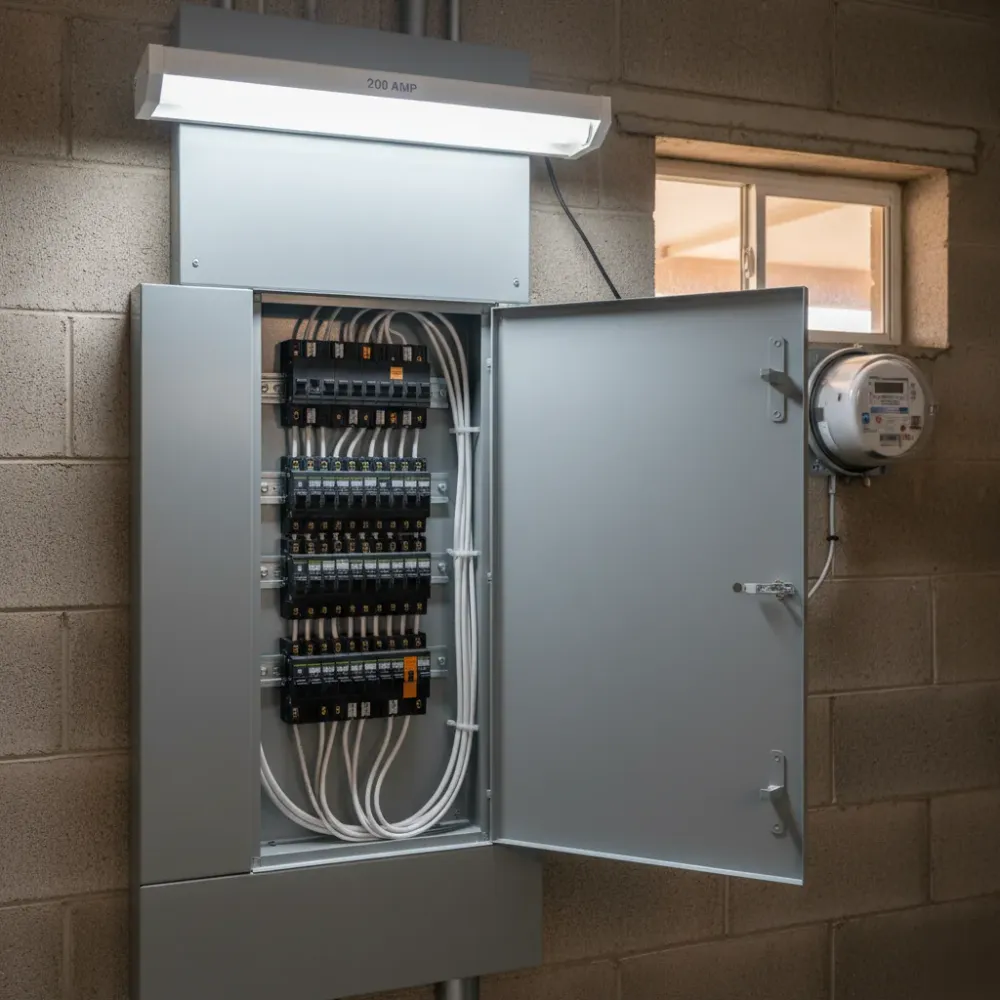
Panel upgrades push people to make the call too. You might want a new 200-amp panel, but your meter base and service entrance cable have to match. The meter is the starting point for everything downstream. If it’s undersized, a new panel alone won’t fix anything.
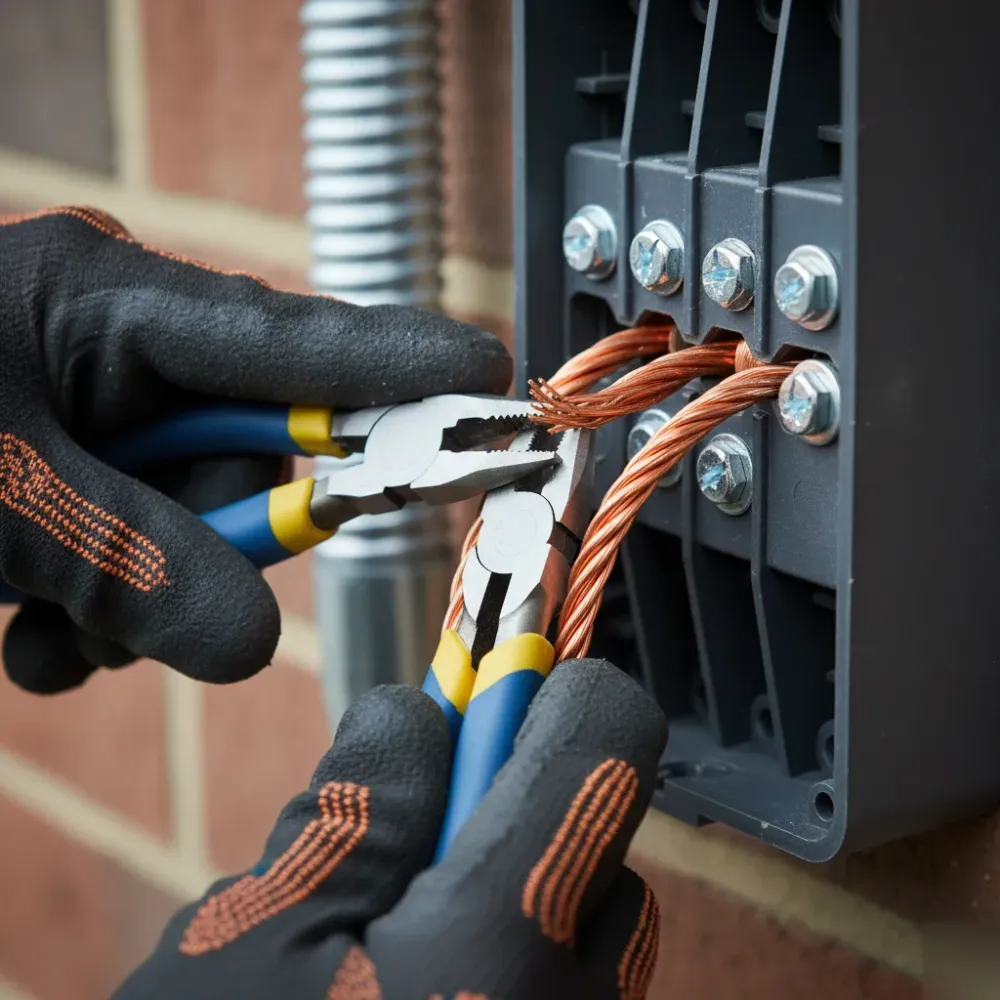
Then there’s what we actually find when we pull meter covers off. Homes in Ewa Beach. Older properties in Mililani. Scorched wiring the homeowner had no idea about. Oahu’s salt air and humidity eat at connections faster than most people realize, and an overloaded meter base runs hot on top of that. It’s not a good combination.
Upgrading to 200-amp meter service gives your home the electrical headroom it needs today and for the next twenty years. It supports modern appliances, keeps your system code-compliant, and removes the bottleneck that causes flickering lights, tripped breakers, and potential fire hazards. It’s not about using more power for the sake of it. It’s about making sure your home can handle what you’re already asking it to do.
What to Expect During an Electrical Meter Upgrade in Oahu
Most folks get a little nervous about this part. Fair enough. Nobody wants surprises when it comes to their electrical system. So here’s exactly how we handle it.
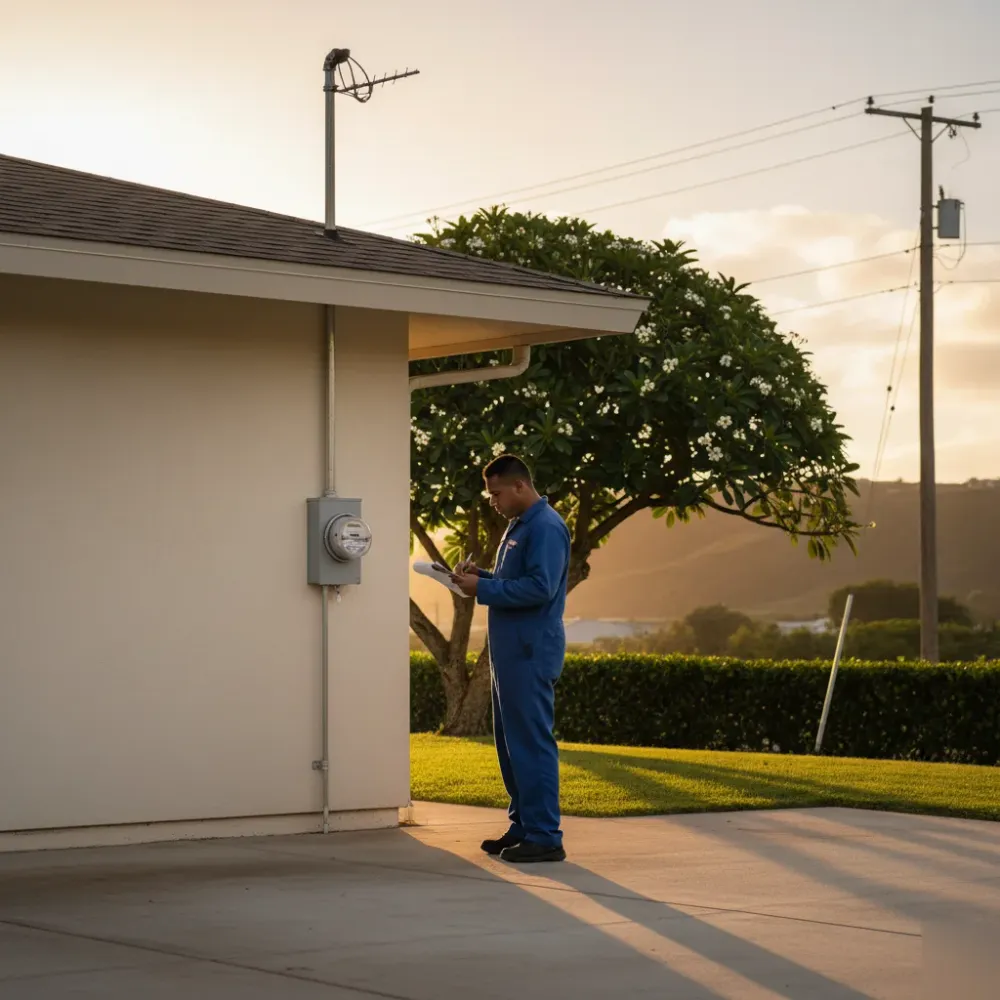
First, we schedule a site visit. Our licensed electrician walks your property and inspects the existing meter base, the weatherhead, and the service entrance cables. We’re looking at the condition of everything, not just the meter itself. Corrosion is common in Oahu’s salt air, especially for homes closer to the coast in places like Kailua or along the North Shore. Damaged conduit, worn connectors, signs that your current setup can’t safely handle the load you need. We check all of it.
Once what we’re working with, we handle the permit and coordination with Hawaiian Electric. This is the step that trips up a lot of people. You can’t just swap a meter. HECO has specific requirements for the meter socket, the disconnect, and the panel rating. We file the paperwork, schedule the disconnection, and make sure everything lines up so you’re not sitting in the dark longer than necessary. Nine times out of ten, the power’s off for just a few hours.
On install day, we remove the old meter base and replace it with one rated for your new service capacity. We upgrade the service entrance cables if needed and install a new weatherproof meter socket that meets current code. Then we reconnect everything, verify the grounding, and run a full load test before HECO comes out to set the new meter and restore service.
Your panel might need attention too. If you’re jumping from 100-amp to 200-amp service, the panel has to match. We’ll tell you upfront if that’s the case so there aren’t any surprises on the day of the job.
After HECO signs off, we do a final walkthrough with you. We test outlets, check circuits, and make sure everything runs clean. You’ll have documentation of the work and the permit closure for your records. Start to finish, the whole process usually takes about one to two weeks depending on permit turnaround here on Oahu.
Need help with electrical meter upgrade?
Schedule Electrical Service. True Power Electrical Services is ready to help.
Permits and HECO Approval for Meter Upgrades on Oahu
This is where most homeowners get stuck. You can’t just swap out a meter base and call it done. Every electrical meter upgrade on Oahu requires permits from the City and County of Honolulu, plus coordination with Hawaiian Electric. Skip either step and you’re looking at failed inspections, delays, or having your power shut off until it’s resolved.
Here’s how it actually works. We pull the electrical permit through the Department of Planning and Permitting. That permit covers the scope of work, whether it’s upgrading from 100-amp to 200-amp service or replacing a corroded meter base that’s been sitting in Kailua’s salt air for thirty years. The permit application needs to match your panel specs, your load calculations, and your property’s current electrical layout. We handle all of that paperwork. A homeowner who tries it alone usually ends up with a rejected application and a longer wait.
Then comes the HECO side. We submit a service request so they know we’re modifying the meter connection point. They need to disconnect power before we touch the meter base, and they need to inspect the finished work before reconnecting. HECO has their own timeline, and it doesn’t always line up with yours. We’ve learned how to schedule around their availability so your home isn’t sitting without power longer than it has to be.
After our work is complete, a city inspector comes out to verify everything meets the current National Electrical Code. Once that passes, HECO gets the green light to install your new meter and restore service. The whole permit-to-power cycle typically takes a couple of weeks depending on scheduling.
Not sure if your project needs all these steps? It does. There’s no shortcut here on Oahu, and any electrician who tells you otherwise isn’t someone you want on your property. We’re licensed, this process cold, and we coordinate directly with HECO and city inspectors so you don’t have to chase anyone down or wonder what’s happening next.
How True Power Verifies Your Upgraded Meter Is Working Correctly
The install itself is only half the job. What happens after matters just as much.
Once we’ve completed your electrical meter upgrade on Oahu, we run a full verification process before we pack up a single tool. We check every connection point inside the meter base and panel for proper torque. Loose connections cause heat buildup. Heat buildup causes fires. So we use a calibrated torque wrench on every terminal, every single time. Then we pull out the thermal imaging camera and scan the entire assembly. Hot spots show up immediately, and if something doesn’t look right, we fix it on the spot before we move on.
We run a load test on your main circuits to confirm the new meter and panel handle your home’s actual demand. Not just checking if the lights turn on. We’re verifying that your system performs under real conditions, like when the AC kicks on at the same time you’re running the dryer and charging an EV in the garage. That’s the kind of load your home actually sees. And that’s what the test has to reflect.
Homes in Kailua and across Oahu deal with salt air corrosion, so we also inspect the weatherproofing seals around the meter enclosure. Something that looks fine today can let moisture in six months from now if those seals aren’t right.
We coordinate your final inspection with the local authority having jurisdiction. All meter upgrades require a permit and a passing inspection before HECO reconnects permanent service. We handle that scheduling so you’re not chasing paperwork or making phone calls to figure out where things stand.
Before we leave, you get a walkthrough. We show you what changed, where your main disconnect is, and what normal operation looks like on your new setup. You’ll know exactly what you’re looking at if you ever need to check things yourself. And if anything feels off in the days after, our licensed team is one call away.
Frequently Asked Questions
Common questions about electrical meter upgrade services in Oahu
How long does an electrical meter upgrade take in Oahu?
Most meter upgrades in Oahu are completed in one day, with power off for just a few hours. We handle the permit, coordinate with Hawaiian Electric, and schedule the disconnection so the timeline stays tight. If your panel also needs upgrading to match the new 200-amp service, we let you know upfront. No surprises on install day. You’ll have power restored the same day in nearly every job we do.
Do I need a permit to upgrade my electrical meter in Oahu?
Yes, a permit is required for every meter upgrade in Oahu. Hawaiian Electric also has specific requirements for the meter socket, disconnect, and panel rating before they’ll set a new meter. We handle all the paperwork and coordination with HECO for you. Skipping the permit process creates problems when you sell your home or file an insurance claim. Doing it right from the start protects you.
Does Oahu’s salt air and humidity affect my meter or electrical service?
It absolutely does, and it’s one of the biggest things we watch for on every job here. Salt air corrodes connections faster than most homeowners realize. Homes closer to the coast in places like Kailua or along the North Shore tend to show corrosion sooner. When a meter base is already overloaded and running hot, that corrosion gets worse fast. Upgrading gives you a fresh, properly sealed setup built to handle Oahu’s climate.
Can I add an EV charger without upgrading my meter first?
Not safely, if your home is still on 100-amp service. A Level 2 EV charger pulls 40 amps or more on its own. If your meter is already near capacity, there’s no room for a dedicated 240-volt circuit. Upgrading to 200-amp meter service first gives your home the headroom it needs. We see this situation constantly in older neighborhoods like Mililani and Pearl City where families want to charge at home but haven’t upgraded their electrical service yet.
What are the signs that my Oahu home needs a meter upgrade?
Lights that flicker when your AC kicks on, breakers that trip regularly, and warm spots or scorch marks near your meter are the biggest warning signs. A faint burning smell near the meter base is serious and shouldn’t wait. Older homes in areas like Kaneohe or Pearl City that were built before the 1990s often still run on 100-amp service. That’s not enough for what a modern household runs every day.
What happens after the meter upgrade is complete?
After the new meter base is installed and HECO sets the meter, we do a full walkthrough with you. We run a load test, check the grounding, and make sure everything is working before we leave. You’ll know exactly what was done and why. If your panel needed attention during the upgrade, we walk you through that too. The goal is for you to feel completely confident in your electrical system before we pack up.
Ready to Get Started?
Schedule Electrical Service Call (808) 427-3144 today.
