
Ceiling Fan Repair in Oahu
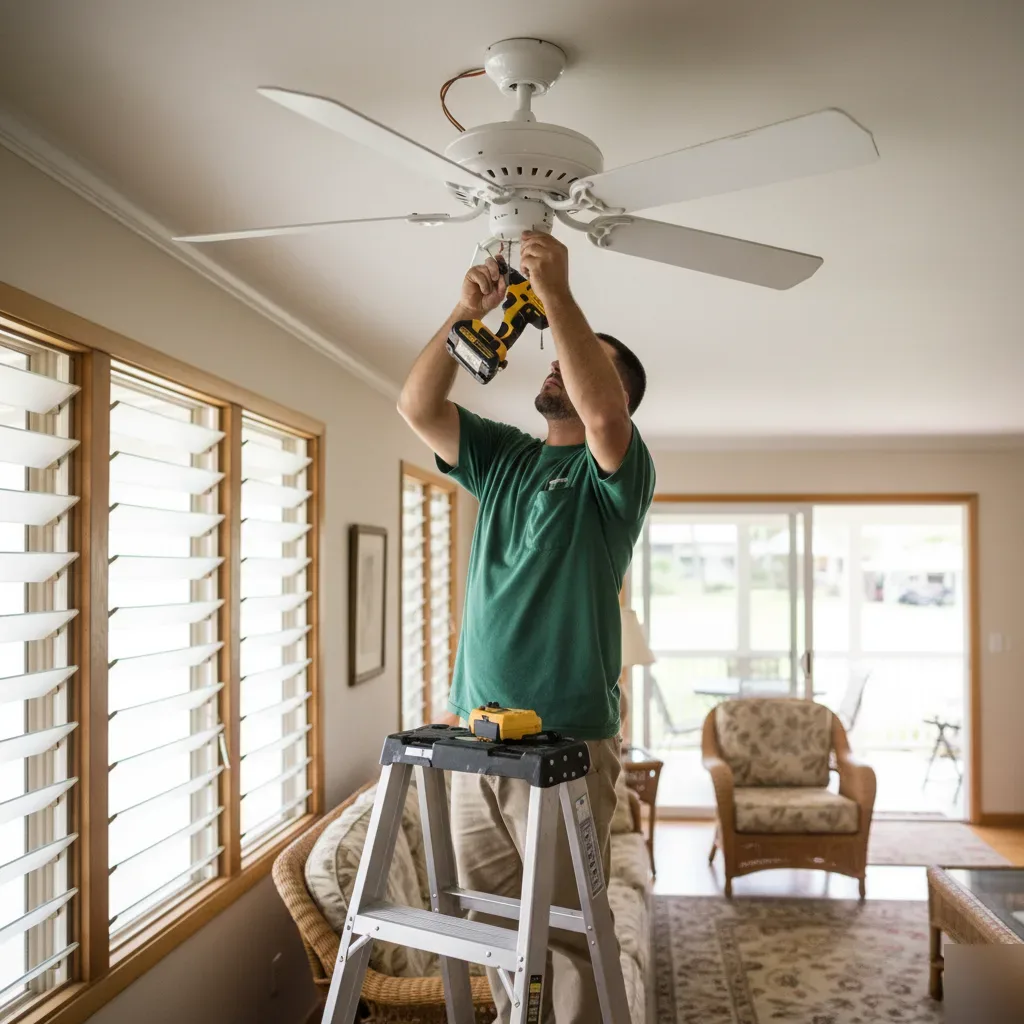
Quick Summary:
Ceiling Fan Repair in Oahu, Fast Fixes From a Local Electrician
What’s Covered on This Page
- Common Ceiling Fan Problems Oahu Homeowners Should Know
- Why Ceiling Fan Repair in Oahu Requires a Licensed Electrician
- What to Expect When a True Power Electrician Arrives at Your Oahu Home
- How to Tell Your Ceiling Fan Was Repaired Correctly
- Simple Steps to Keep Your Ceiling Fan Running Longer in Oahu
- Can a ceiling fan repair in Oahu be done the same day I call?
- Why does my ceiling fan wobble so much in my Oahu home?
- Is it safe to repair a ceiling fan myself instead of calling an electrician?
- Why does Oahu’s salt air affect my ceiling fan more than I expected?
- What happens when the electrician arrives to repair my ceiling fan?
- Can a ceiling fan that stopped working completely be repaired, or does it need to be replaced?
Need ceiling fan repair?
Schedule Electrical Service. Call True Power Electrical Services now.
Common Ceiling Fan Problems Oahu Homeowners Should Know
That wobble you’ve been ignoring for three months? It’s not going away on its own. We get calls about wobbly ceiling fans more than almost anything else, and nine times out of ten it’s the same thing. A loose blade bracket, a warped blade, or mounting hardware that’s worked itself free over time. Oahu’s humid air doesn’t help either. Moisture gets into wooden blades, causes them to swell unevenly, and suddenly your fan sounds like it’s about to launch off the ceiling.
Grinding or clicking noises are another big one. Folks in Kailua tell us they just turn the TV up louder. But that noise usually means bearings are wearing out or something’s come loose inside the motor housing. Ignoring it leads to a burned-out motor. Then you’re looking at a full replacement instead of a simple repair.
Here’s one that surprises people. A fan that won’t turn off, or keeps running on the wrong speed, often has a bad capacitor. Not the switch. Not the remote. The capacitor. It’s a small part, cheap to replace, but most homeowners don’t even know it exists. We see this every single week in older homes across the island.
Lights flickering on a fan fixture point to a different issue. Sometimes it’s a loose wire nut in the canopy. Sometimes the pull chain switch is failing internally. And sometimes the circuit itself has a problem that goes beyond the fan. That’s why a licensed electrician should diagnose it rather than someone just swapping bulbs and hoping for the best.
Then there’s the fan that just stops completely. No hum, no movement, nothing. Could be a tripped breaker, a faulty wall switch, or a dead motor. The salt air we deal with on Oahu corrodes wiring connections faster than you’d expect, especially in homes closer to the coast. The U.S. Consumer Product Safety Commission has identified faulty wiring connections as a leading cause of home electrical fires. So a dead fan isn’t just an inconvenience. It’s worth checking out quickly.
Sound familiar? You’re not alone. These problems show up in homes all over the island, from brand-new builds to places that have been standing for decades.
Why Ceiling Fan Repair in Oahu Requires a Licensed Electrician
A ceiling fan looks simple. A motor, some blades, a few wires. But behind that canopy cover, you’ve got live electrical connections tied directly into your home’s circuit. One wrong move and you’re dealing with a lot more than a wobbly fan. our full range of electrical services our full range of electrical services
We get calls every month from homeowners in Kailua and Kaneohe who tried a DIY fix and made things worse. Reversed wiring. Loose connections sparking inside the junction box. Fans mounted to drywall instead of a rated electrical box. These aren’t small mistakes. They’re fire hazards. The U.S. Consumer Product Safety Commission reports that electrical fires cause hundreds of deaths and thousands of injuries each year across the country. A ceiling fan that’s wired wrong or mounted improperly can absolutely contribute to that risk.
Here’s something most people don’t realize. Hawaii has its own electrical code requirements that go beyond the national standard. The salt air and humidity on Oahu corrode wiring and connections faster than anywhere on the mainland. That green oxidation you see on copper? It increases resistance at connection points. More resistance means more heat. More heat means trouble. A licensed electrician knows to check for this every single time.
Nine times out of ten, the fan itself isn’t the real problem. It’s what’s happening inside the ceiling box or further back in the circuit. Overloaded breakers, outdated aluminum wiring, missing ground wires. These are things you can’t see from the ground. And they require someone who understands Oahu’s building codes and electrical standards to diagnose safely.
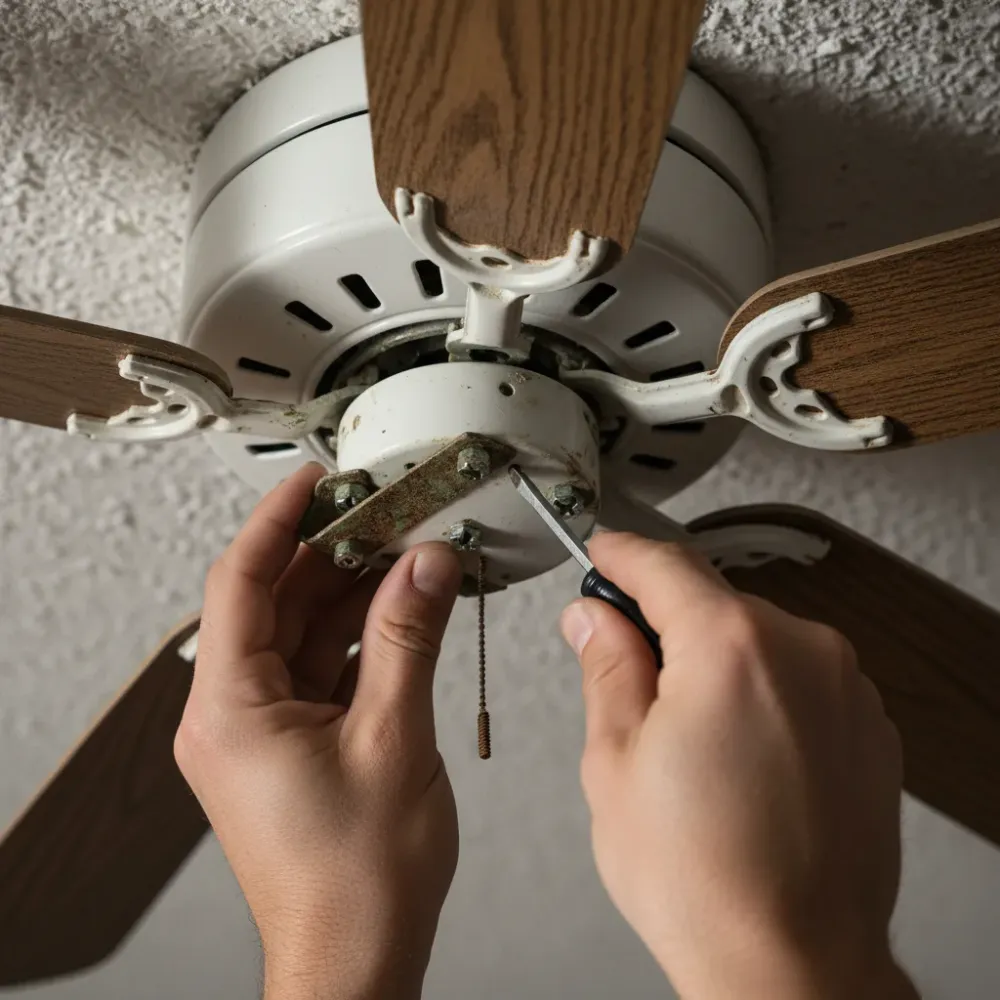
Our team at True Power Electrical Services carries a valid Hawaii state electrical license. That matters because it means every repair we do gets done to code. No guesswork. No shortcuts. You can explore our full range of electrical services to see how ceiling fan repair fits into the bigger picture of keeping your home’s electrical system safe and reliable.
So before you grab a ladder and start pulling wires, ask yourself one question. Is saving a few bucks worth the risk of an electrical fire in your home? We don’t think so either.
What to Expect When a True Power Electrician Arrives at Your Oahu Home
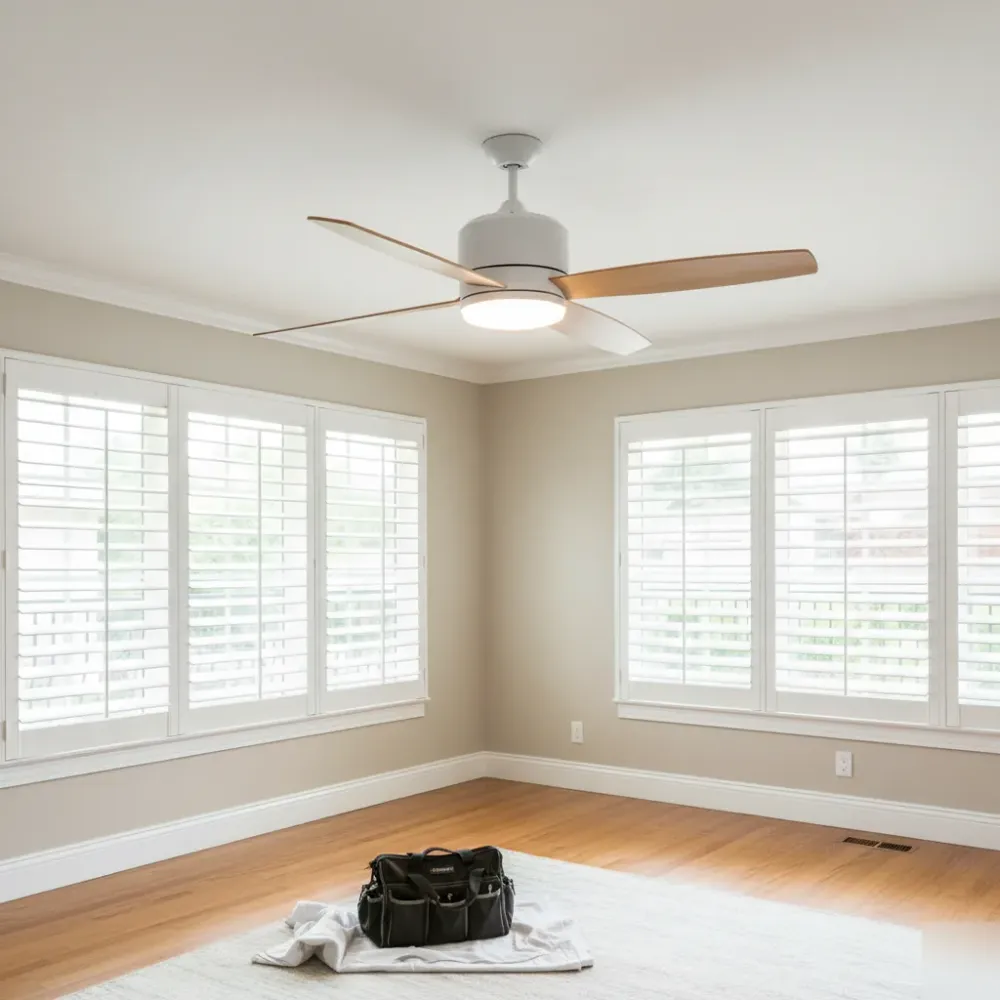
You called. We’re on the way. So what happens next?
Our electrician shows up on time, in a marked vehicle, with a full toolkit ready for ceiling fan repair. No guessing games. We start by listening to you describe the problem. Maybe the fan wobbles like it’s about to fly off the mount. Maybe it hums but the blades won’t spin. Or maybe you flipped the switch and heard a loud pop. Whatever you noticed, that’s valuable information, and we want every detail before we touch a single wire.
Next comes the hands-on inspection. We’ll check the wall switch, the pull chain mechanism, the wiring connections inside the canopy, and the motor housing itself. In older Oahu homes, especially around Kailua and Kaneohe, we often find outdated wiring that doesn’t meet current electrical code. That’s not something to ignore. We’ll let you know exactly what we find and explain it in plain language. No jargon. No pressure.
Nine times out of ten, we can diagnose the issue within the first fifteen minutes.
Once what’s wrong, we’ll walk you through the fix before we start any work. You’ll understand what needs to happen, why it matters, and how long it should take. If the capacitor is blown, we’ll explain what that part does and why replacing it restores proper speed control. If the mounting bracket is loose or corroded from Oahu’s salt air, we’ll show you the problem up close. Our licensed electricians carry common replacement parts on every service call, so most repairs get finished in a single visit.
We also protect your home while we work. Drop cloths go down. We’re careful on ladders, especially on vaulted ceilings where one wrong move can damage drywall or trim. And we clean up before we leave. You shouldn’t have to sweep up after your electrician.
Before we pack up, we run the fan through every speed setting and test the light kit if there is one. You’ll see it working properly with your own eyes. That’s the standard. Every visit from True Power Electrical Services ends with a working fan and a homeowner who feels good about the repair.
Need help with ceiling fan repair?
Schedule Electrical Service. True Power Electrical Services is ready to help.
How to Tell Your Ceiling Fan Was Repaired Correctly
You shouldn’t have to wonder. A proper repair speaks for itself the moment you flip that switch.
Start with the obvious. Turn the fan on and cycle through every speed setting. At each level, the blades should spin smoothly without any visible wobble. A little air movement at the pull chain is normal, but if the whole fan housing shakes or you hear a rhythmic ticking, something’s still off. We tell homeowners in Kailua and across Oahu the same thing: trust what you see and hear in that first minute. Your eyes and ears catch problems faster than any tool.
Now listen closely. A correctly repaired ceiling fan is quiet. Not silent, necessarily, but close. You might hear a soft hum from the motor at higher speeds. That’s fine. Grinding, clicking, or buzzing? Those aren’t normal. Nine times out of ten, those sounds mean a capacitor wasn’t seated right or a blade bracket is still loose. If your fan sounds worse after a repair than before, call back immediately.
Check the light kit if your fan has one. Flip it on and off a few times. The lights should respond instantly with no flickering or delay. Loose wiring inside the canopy is a common shortcut we see from handyman fixes, and flickering is the giveaway. A licensed electrician will make sure every wire nut is tight and every connection meets code.
Here’s something most people skip. Let the fan run for 20 to 30 minutes straight. Walk back into the room and feel the airflow. It should be consistent and even across the space below. If one side of the room gets more breeze than the other, the blades might be out of balance or pitched unevenly. A good repair accounts for that.
One more thing. Look up at the mounting bracket where the fan meets the ceiling. There should be zero movement at that junction. The canopy should sit flush and tight. Any gap or wiggle means the fan box in the ceiling isn’t rated for the weight, or it wasn’t secured properly. That’s a safety issue, not just cosmetic. The U.S. Consumer Product Safety Commission lists improperly mounted ceiling fans as a recognized fall hazard in homes.
A correct repair feels like the fan is brand new. Smooth, quiet, steady. That’s the standard our team holds on every job.
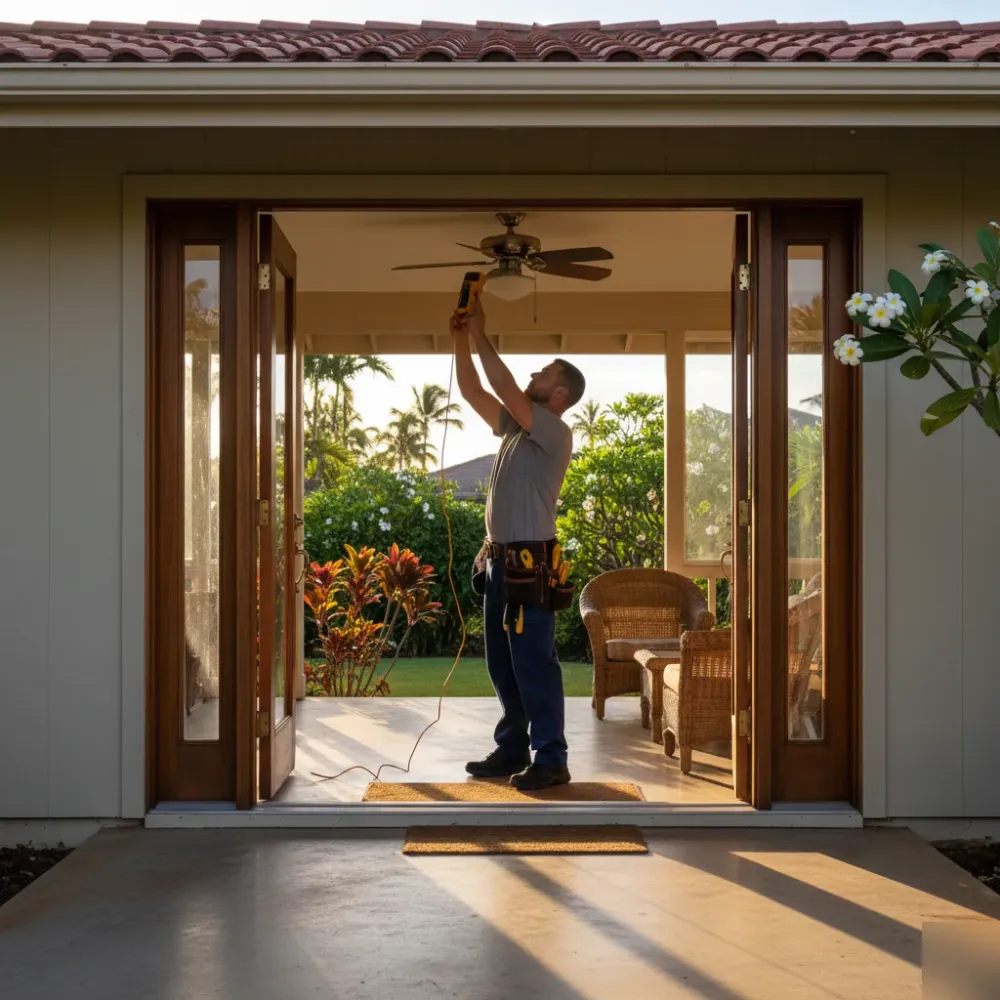
Simple Steps to Keep Your Ceiling Fan Running Longer in Oahu
Most ceiling fan problems we fix could’ve been avoided. That’s not a sales pitch. It’s just what we see every week on service calls across Oahu.
The salt air here is tough on everything metal and electrical. Your ceiling fan takes a beating you can’t always see. But a few simple habits will add years to its life and keep you from needing us sooner than necessary.
First, dust the blades once a month. Sounds basic, right? But dust buildup creates uneven weight on the blades. That leads to wobbling, which stresses the motor bearings over time. A damp cloth works fine. You don’t need special cleaners. Homes near the coast in Kailua or along the North Shore tend to collect more grime because of the humidity and salt, so you might want to wipe them down every two weeks instead.
Second, listen to your fan. A healthy fan is a quiet fan. If you start hearing a hum, a click, or a rattle that wasn’t there before, something’s loosening up or wearing down. Tighten the canopy screws and blade screws twice a year. Use a step ladder and a basic screwdriver. Takes five minutes.
Third, check the pull chains and switches. Don’t yank them. Gentle, steady pulls keep the internal switch from cracking. We replace broken pull chain switches constantly, and it’s almost always from rough handling over time.
And here’s one people overlook. Make sure your fan is on the right setting for the season. Counterclockwise in summer pushes air down to cool you. Clockwise in winter circulates warm air that rises to the ceiling. Running it wrong doesn’t break anything, but it makes the fan work harder than it needs to. The U.S. Department of Energy estimates that proper ceiling fan use can reduce cooling costs by up to 14 percent.
None of this replaces a professional inspection when something feels off. But these habits go a long way. You’re protecting your comfort and your investment. And if you ever notice something that doesn’t seem right, our licensed team at True Power Electrical Services is just a call away.
Frequently Asked Questions
Common questions about ceiling fan repair services in Oahu
Can a ceiling fan repair in Oahu be done the same day I call?
Yes, we offer same-day ceiling fan repair for most jobs across Oahu. Our electricians arrive in a marked vehicle with common replacement parts already on the truck. That means we can fix most problems — bad capacitors, loose mounts, worn bearings — without a second trip. If you call in the morning, there’s a good chance we can get to you that same afternoon. The sooner you call, the sooner your fan is running safely again.
Why does my ceiling fan wobble so much in my Oahu home?
A wobbling ceiling fan in Oahu is almost always caused by loose blade brackets, a warped blade, or hardware that has worked free over time. Oahu’s humid air makes it worse. Moisture gets into wooden blades and causes them to swell unevenly. That throws the whole fan off balance. Ignoring the wobble can lead to a loose mount or a burned-out motor. A quick repair now saves you from a full replacement later.
Is it safe to repair a ceiling fan myself instead of calling an electrician?
Ceiling fan repair is not a safe DIY job for most homeowners. Behind the canopy cover, you have live electrical connections tied directly into your home’s circuit. Reversed wiring, loose connections, and fans mounted to drywall instead of a rated box are all real fire hazards. Hawaii also has its own electrical code requirements that go beyond national standards. A licensed electrician knows what to look for and does the job to code every time.
Why does Oahu’s salt air affect my ceiling fan more than I expected?
Salt air corrodes wiring connections faster than almost anywhere else. That green oxidation you see on copper increases electrical resistance at connection points. More resistance means more heat. More heat means a higher risk of electrical trouble. Homes closer to the coast in areas like Kailua see this more often. When a licensed electrician inspects your fan, checking for corrosion inside the canopy and junction box is part of the job every single time.
What happens when the electrician arrives to repair my ceiling fan?
When we arrive, we start by listening to you describe exactly what the fan is doing. Then we inspect the wall switch, pull chain, wiring inside the canopy, and the motor housing. Most of the time we can diagnose the problem within the first fifteen minutes. We explain what we found in plain language before we start any work. You will know what is wrong, why it matters, and how long the fix will take before we touch anything.
Can a ceiling fan that stopped working completely be repaired, or does it need to be replaced?
A completely dead ceiling fan can often be repaired without a full replacement. The cause might be a tripped breaker, a faulty wall switch, a bad capacitor, or corroded wiring connections. On Oahu, salt air speeds up corrosion inside the junction box, which can cut power to the fan entirely. A licensed electrician can trace the problem back to the source and tell you whether a repair or a replacement makes more sense for your situation.
Ready to Get Started?
Schedule Electrical Service Call (808) 427-7200 today.
