
Ceiling Fan Installation in Oahu
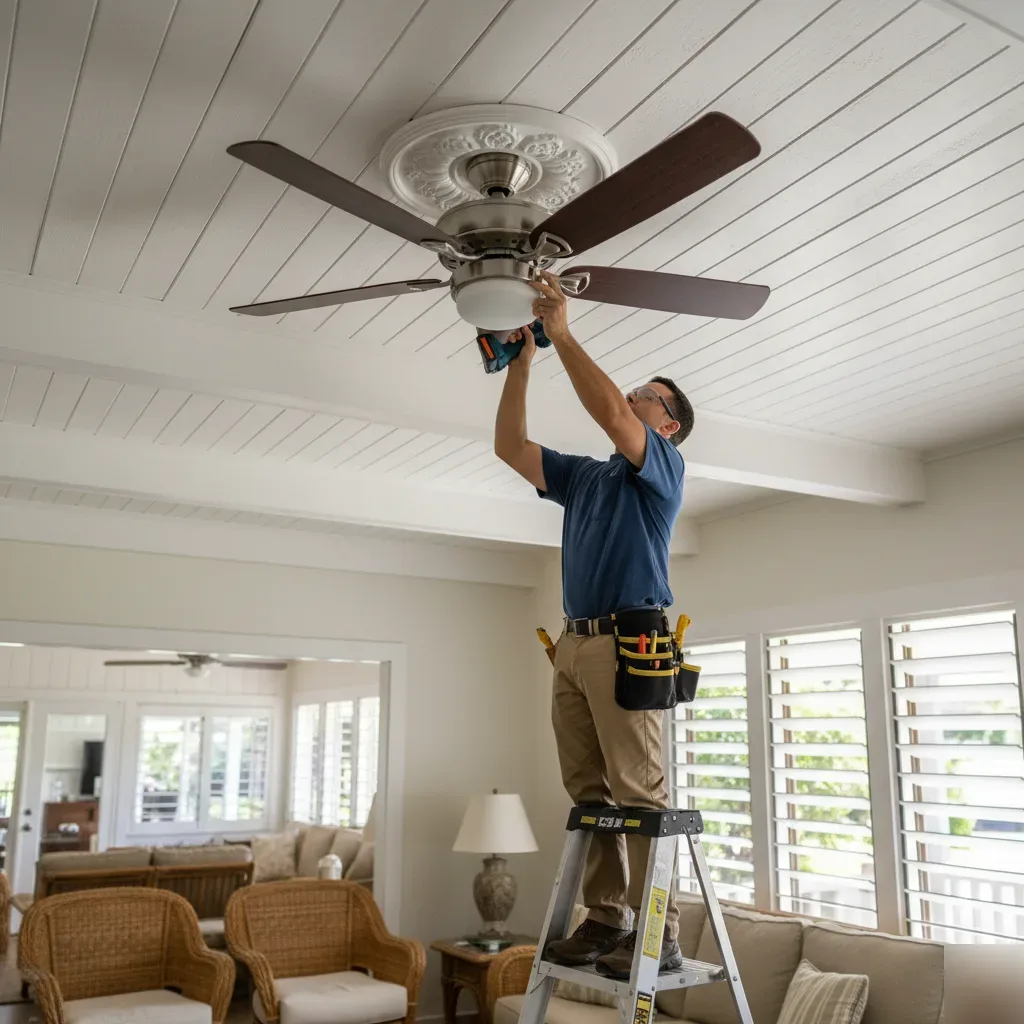
Quick Summary:
Ceiling Fan Installation in Oahu, Done Right the First Time
What’s Covered on This Page
- Why Oahu Homes Need Proper Ceiling Fan Installation
- What to Expect When True Power Electrical Services Installs Your Ceiling Fan
- Choosing the Right Ceiling Fan for Your Oahu Space
- How to Prepare Your Home for Ceiling Fan Installation in Oahu
- Verifying Your Ceiling Fan Works Safely After Installation
- Does my Oahu home need a special electrical box before installing a ceiling fan?
- Can ceiling fans be installed on concrete ceilings in Oahu condos?
- What happens when your electrician arrives to install my ceiling fan?
- Does Oahu’s salt air affect which ceiling fan I should choose?
- How do I know what size ceiling fan is right for my room?
- Is ceiling fan installation something I can do myself, or should I hire a licensed electrician?
Need ceiling fan installation?
Schedule Electrical Service. Call True Power Electrical Services now.
Why Oahu Homes Need Proper Ceiling Fan Installation
Living on Oahu means dealing with humidity year-round. Salt air, trade winds, and afternoon heat put real demands on your home’s comfort systems. A ceiling fan installation done right can cut your AC usage and keep every room feeling livable, even in the thick of summer.
But here’s the thing most people don’t realize. Not every ceiling box can hold a fan.
A standard light fixture box is rated for about 50 pounds. Most ceiling fans weigh more than that, and once the motor starts spinning, the dynamic load increases. If your fan isn’t mounted to a fan-rated electrical box that’s properly secured to a ceiling joist, you’ve got a safety hazard overhead. We see this every single week. Someone installed a fan on an old light box, and now it wobbles, hums, or worse, starts pulling away from the ceiling.
Oahu homes come with their own quirks, too. Older places in Kailua might have knob-and-tube wiring that can’t safely support a new fan circuit. Newer builds in Kapolei sometimes have shallow ceiling cavities that require low-profile mounting solutions. Condos in Honolulu often have concrete ceilings, which means standard toggle bolts won’t cut it. You need a licensed electrician who understands what’s behind each ceiling before drilling into it.
There’s also the code side. Hawaii’s electrical code requires ceiling fans to be on a dedicated switch, properly grounded, and installed with the correct wire gauge for the circuit. The U.S. Consumer Product Safety Commission has identified improper ceiling fan installation as a leading cause of fixture-related injuries in homes. That’s not something to gamble with.
And think about what a ceiling fan actually does for you here. Moving air across your skin makes a room feel four to six degrees cooler without changing the thermostat. In a place where electricity costs are among the highest in the country, that’s real money back in your pocket every month. A properly installed fan on Oahu isn’t a luxury. It’s one of the smartest comfort upgrades you can make for your home.
What to Expect When True Power Electrical Services Installs Your Ceiling Fan
Here’s how it actually goes. We show up on time, check the work area, and talk with you for a few minutes before anything comes out of the truck. That quick conversation matters more than people think. It’s where we figure out the details that make the job go smooth. residential and commercial electrical work we handle
First, we inspect the existing electrical box in your ceiling. Nine times out of ten, the old box isn’t rated for a fan. A standard light fixture box can’t handle the weight and vibration of a spinning fan. So we swap it out for a fan-rated brace and box that’s anchored into the ceiling joist. This is the step most DIY attempts skip, and it’s the one that causes fans to wobble or, worse, come crashing down six months later.
Next, we handle the wiring. If you’ve got a single-switch setup and want separate controls for the fan and light, we’ll run the extra conductor or install a smart switch solution. Homes in Kailua and across Oahu often have older wiring that needs attention before a new fan goes up. We check connections, confirm proper grounding, and make sure everything meets current electrical code. Faulty wiring is a leading cause of residential electrical fires, which is something we take seriously on every single job.
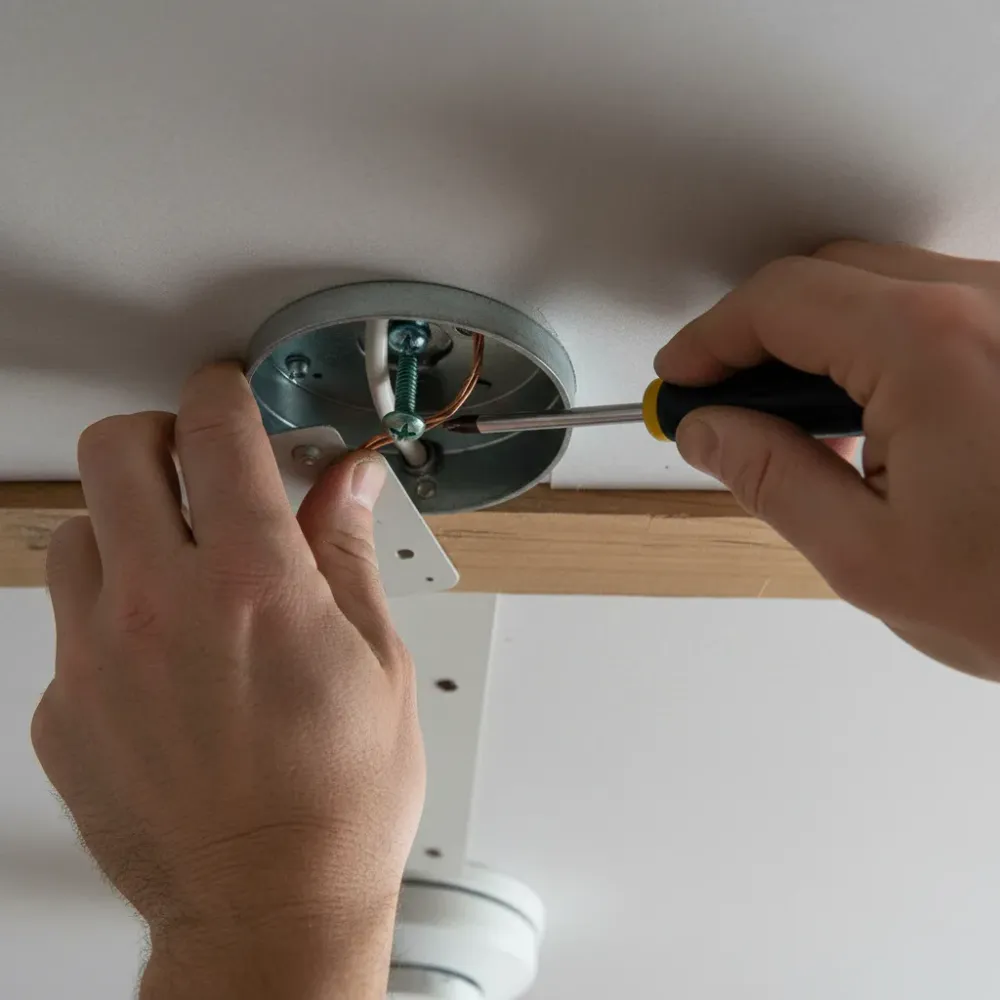
Then comes the actual mounting. We assemble the fan, secure the mounting bracket, connect each wire, and attach the blades. The whole process usually takes about an hour to ninety minutes for a straightforward swap. Trickier setups, like vaulted ceilings or locations without existing wiring, take a bit longer. We always test the fan on every speed setting and check the light kit before we pack up.
You don’t have to move furniture or prep the room ahead of time. We lay down drop cloths and clean up after ourselves. Want to see all the residential and commercial electrical work we handle? We keep things simple so you can get back to your day. And when we leave, you’ll have a fan that runs quiet, stays put, and moves air the way it should.
Choosing the Right Ceiling Fan for Your Oahu Space
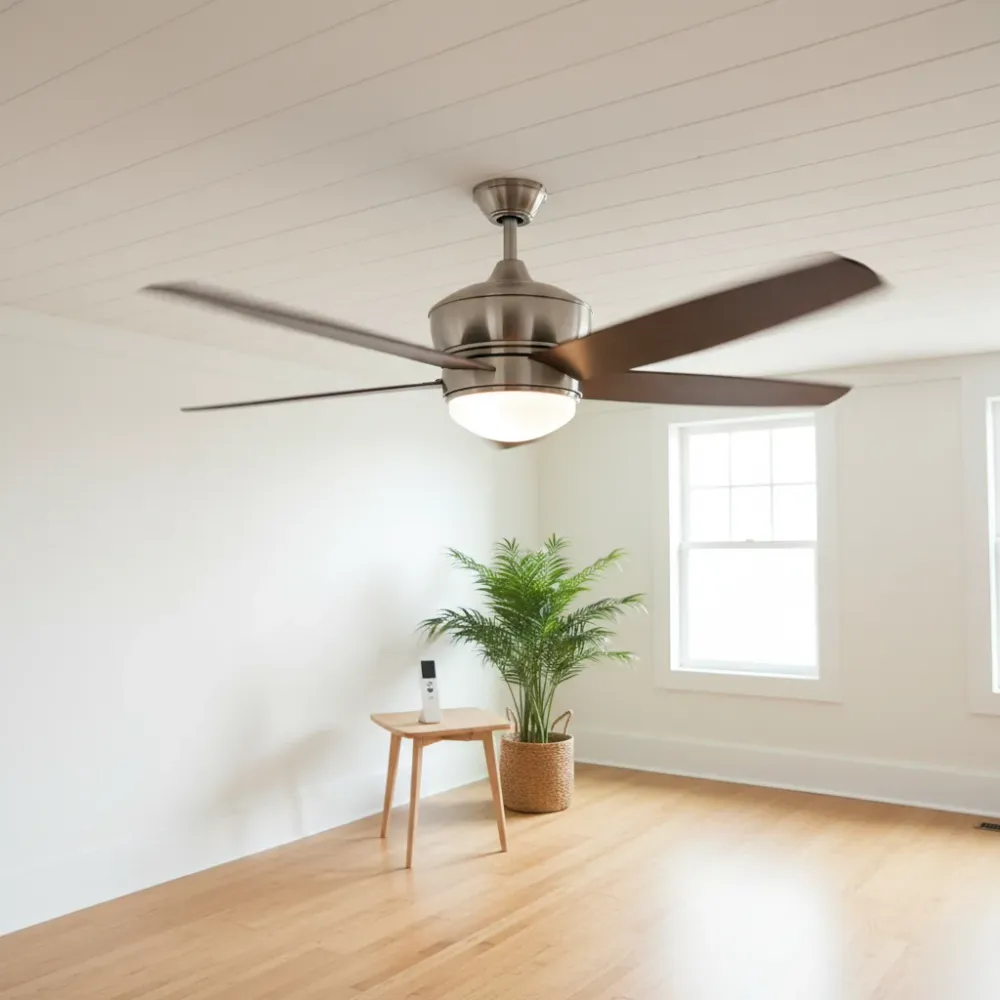
Not every fan belongs in every room. That’s something we tell homeowners in Kailua and Honolulu almost daily. The fan that works perfectly in your living room might be completely wrong for your lanai. Size, blade span, motor type, and mounting style all matter more than most people realize.
Start with room size. A bedroom that’s 10 by 12 feet needs a fan with a 42 to 44 inch blade span. Your great room or open-concept living area? You’re looking at 52 inches or larger. Put a small fan in a big space and it just spins without moving enough air. We see this all the time. Someone picks a fan they love the look of, but it can’t actually cool the room.
Oahu’s climate makes this decision even more specific. You want a fan rated for damp or wet locations if it’s going on a covered patio or near an outdoor shower. Salt air corrodes cheap hardware fast. So look for stainless steel or marine-grade finishes if the fan sits anywhere near the coast. Homes in Ewa Beach and along the North Shore deal with this constantly.
Ceiling height changes everything about how we mount the fan. Standard 8-foot ceilings usually call for a flush mount or hugger style. Got vaulted ceilings in your living room? A downrod mount keeps the blades at the right height for proper airflow. Nine times out of ten, the wrong mount is why a fan feels weak even though it’s the right size. Engineering innovations like ceiling fan angled mounting bracket design have expanded what’s possible for non-standard ceiling configurations, giving installers more options for tricky vaulted or sloped surfaces.
Think about what you actually need from the fan. Cooling only? Cooling and lighting? A fan with an integrated LED light kit can replace an existing fixture and give you both. That’s one less thing on the ceiling and a cleaner look overall. If you want a remote control or smart home integration, we’ll need to plan the wiring for that before installation day.
Wondering if your current electrical box can handle a new fan? That’s actually the most common question we get. Not every ceiling box is fan-rated, and using the wrong one is a safety hazard. We check this during every single install because it’s that important. The right fan choice paired with proper support makes all the difference between a fan that lasts years and one that wobbles loose in months.
Need help with ceiling fan installation?
Schedule Electrical Service. True Power Electrical Services is ready to help.
How to Prepare Your Home for Ceiling Fan Installation in Oahu
A little prep goes a long way. Before our team arrives at your door, there are a few things you can do to make the whole process faster and smoother for everyone.
Start by clearing the area directly below where the fan will go. Move furniture, rugs, and anything breakable out of the way. We need room to set up a ladder safely, and we don’t want your grandmother’s vase anywhere near the work zone. If it’s a bedroom, pull the bed away from the center of the room. If it’s a living area in Kailua or anywhere else on Oahu, just give us about a six-foot circle of open floor space. That’s usually plenty.
Next, think about your ceiling. Is there an existing light fixture where you want the fan? That’s the easiest scenario. We see this about seven out of ten times. But if you’re adding a fan where there’s nothing, just know we’ll need attic access or a way to run new wiring. Check whether you can get into your attic space and let us know ahead of time. Homes here on Oahu have all kinds of roof structures, from older post-and-pier places to newer slab construction, and access varies a lot.
Got your fan already picked out? Great. Have it unboxed and ready when we show up. Not assembled. Just out of the shipping box so we can check all the parts before we start. Missing a bracket or a canopy piece means a delay nobody wants.
One more thing. Know where your electrical panel is. We’ll need to shut off power to the circuit we’re working on, and a clearly labeled breaker panel saves real time. If your panel labels are a mess or missing entirely, don’t worry. We deal with that constantly. But pointing us in the right direction helps.
Turn off any ceiling-mounted smoke detectors in the room too. Dust from drilling can set them off, and that’s a headache you don’t need. If you have pets, it’s best to keep them in another room. Ladders, tools, and curious dogs aren’t a great combination.
Need help figuring out what else to do before your install? Give us a call.
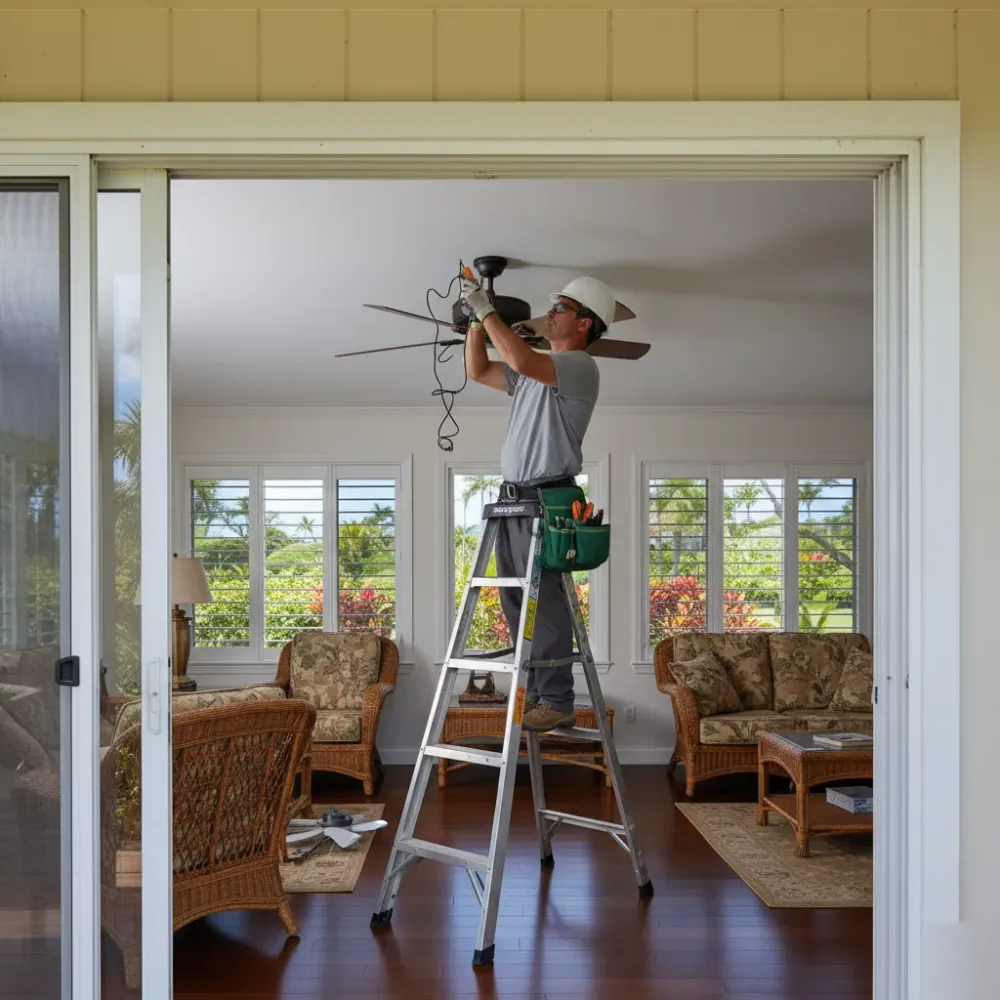
Verifying Your Ceiling Fan Works Safely After Installation
The fan’s up. Now what? This is the step most people skip. And it’s the one that matters most.
Our team runs through a full checkout before we pack up a single tool. First, we test every speed setting. The fan should move through low, medium, and high without hesitation, clicking, or stalling. If there’s a remote or wall control, we cycle through that too. We’ve seen brand-new controls arrive dead right out of the box. Happens more than you’d think.
Next comes the wobble check. A slight movement at startup is normal. Constant wobbling at full speed is not. Nine times out of ten it’s the same thing: a blade that’s slightly off balance or a mounting bracket that needs one more quarter turn. We check balance on every single install because even a small wobble puts stress on the motor and the ceiling box over time. In older homes around Kailua, where junction boxes have been sitting for decades, that extra stress can loosen connections fast.
Then we look at the electrical side. We verify the circuit is pulling the correct amperage and that all wire connections inside the canopy are tight and properly capped. Loose wire nuts cause arcing. Arcing causes fires. So we don’t rush this part. Ceiling fans are involved in thousands of fire and shock incidents each year, which is exactly why a licensed electrician should handle the final verification, not just the install.
We also confirm the light kit works if your fan has one. Dimmer compatibility, bulb type, pull chain function. Small details that save you a callback later.
Want to know something homeowners on Oahu often overlook? Checking the direction switch. Your fan should spin counterclockwise in our warm climate to push air straight down. That downdraft is what actually cools you. Wrong direction means you’re just moving warm air around the ceiling and wondering why the room still feels stuffy.
Before we leave, we hand-test the mounting one more time. A firm tug on the fan body tells us the bracket, screws, and support are solid. If anything feels loose or sounds off, we fix it right there. You shouldn’t have to wonder if your fan is safe after we walk out the door.
Frequently Asked Questions
Common questions about ceiling fan installation services in Oahu
Does my Oahu home need a special electrical box before installing a ceiling fan?
Yes, most homes need a fan-rated electrical box before we can safely install a ceiling fan. A standard light fixture box is only rated for about 50 pounds. Most ceiling fans weigh more than that, and the spinning motor adds extra force. If the box isn’t anchored to a ceiling joist, the fan can wobble or pull away from the ceiling. We replace the old box on almost every job we do across Oahu.
Can ceiling fans be installed on concrete ceilings in Oahu condos?
Yes, ceiling fans can be installed on concrete ceilings, but it takes a different approach than a standard wood-framed home. Standard toggle bolts won’t hold safely in concrete. We use concrete anchors and the right mounting hardware to get a solid, secure connection. Many condos in Honolulu have this setup. You need a licensed electrician who knows what method works for your specific ceiling type before any drilling starts.
What happens when your electrician arrives to install my ceiling fan?
When we arrive, we do a quick walkthrough with you before any tools come out. We inspect your existing electrical box, check your wiring, and confirm the mounting setup. Then we swap in a fan-rated box, handle the wiring connections, mount the fan, and test every speed setting before we leave. We lay down drop cloths and clean up after ourselves. Most straightforward installs take about an hour to ninety minutes.
Does Oahu’s salt air affect which ceiling fan I should choose?
Salt air can corrode cheap fan hardware faster than most people expect, especially near the coast. If your fan is going on a covered lanai or anywhere close to the ocean, you want a fan rated for damp or wet locations. Look for stainless steel or marine-grade finishes. Homes in Ewa Beach and along the North Shore deal with this regularly. Choosing the right fan for your location saves you from replacing it in just a few years.
How do I know what size ceiling fan is right for my room?
Room size is the starting point. A small bedroom around 10 by 12 feet works well with a 42 to 44 inch blade span. Larger living areas need 52 inches or more. Ceiling height matters too. Flush mount fans work best on standard 8-foot ceilings, while vaulted ceilings need a downrod to get the blades at the right height. A fan that’s too small for the space just spins without moving enough air to actually cool the room.
Is ceiling fan installation something I can do myself, or should I hire a licensed electrician?
You can replace a fan with an identical one on an existing fan-rated box, but most installs are more involved than they look. Hawaii’s electrical code requires proper grounding, the correct wire gauge, and a dedicated switch. Older homes in areas like Kailua may have wiring that needs attention before a new fan goes up. A licensed electrician catches those issues before they become safety problems. It’s a job where getting it right the first time really does matter.
Ready to Get Started?
Schedule Electrical Service Call (808) 427-7200 today.
